In parts of Northern New Jersey, high-end listings are moving faster and attracting more competitive offers than entry-level homes. For buyers who assumed affordable properties were the hot ...

New Construction Is Reshaping Pasco County, Florida, Faster Than Its Reputation Can Keep Up
Share via Facebook

Share via Linkedin

Share via X

Copy to clipboard

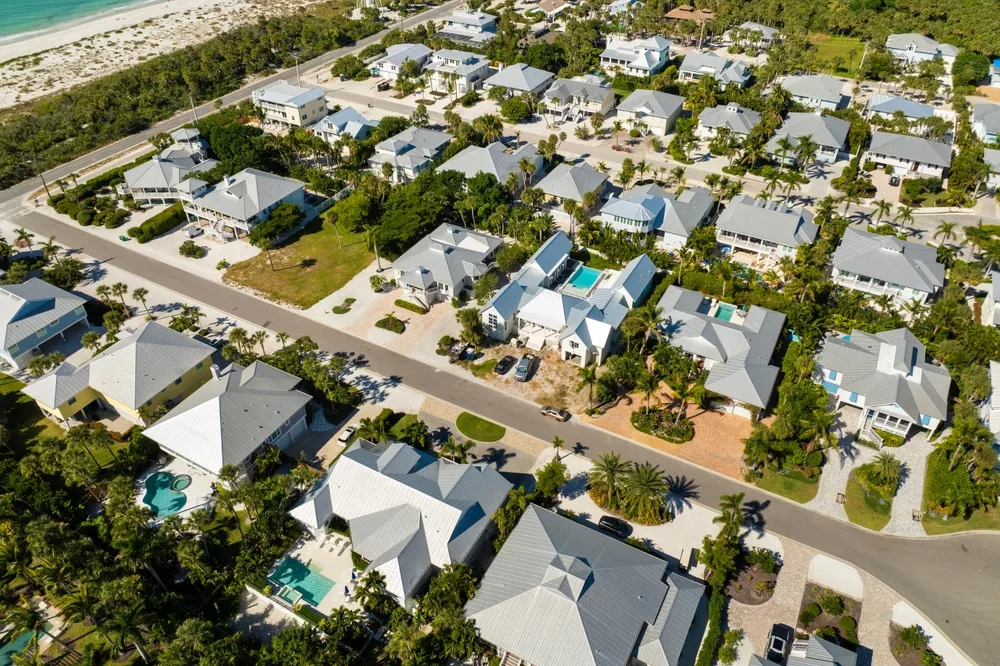
Ask someone from Tampa or Clearwater about Pasco County, and the answer has historically been predictable: old, rural, farmland, nothing going on. According to Cory Byrd, a Realtor with Coldwell Banker F.I. Grey & Son Residential, Inc., who grew up in the Tampa-Clearwater area before relocating to Pasco, that perception was once grounded in reality – but it no longer reflects what the county actually looks like.
Byrd says he held the same assumptions before moving to the area, despite living only 30 minutes away. That detail is telling: the perception gap is not just a problem for out-of-state buyers evaluating Florida from a distance. It persists even among residents of adjacent markets who have never had reason to update their mental model of the county. “People still might think there’s nothing out there,” Byrd says, “but it’s actually probably the opposite.”
For a real estate market, that kind of lag between perception and reality has direct consequences. Buyers who dismiss the area based on outdated assumptions never enter the consideration set. Investors who associate the county with retirees and farmland miss development-stage opportunities that are already well underway.
What the Ground Looks Like
Byrd describes a county in the middle of a construction surge that shows few signs of slowing. New residential communities, apartment complexes, and retail centers are appearing throughout the region, with particularly dense activity along major corridors. The pace of development, he says, has been relentless since the pandemic accelerated migration into the area.
“Everywhere you look in our area, there’s new construction, there’s a new community being built,” Byrd says. “Every highway, if there’s a part of green space, someone’s coming in to develop it.”
The Trinity and Odessa areas are among the submarkets Byrd identifies as particularly active, driven by newer communities, shopping, and restaurant development that attract younger families. Spring Hill and the broader Hernando County area are also drawing buyers who want larger lots – quarter-acre and above – at prices that remain below comparable properties closer to Tampa.
The demographic mix is also changing. Byrd notes an increase in younger Spanish-speaking families relocating from Puerto Rico and the Miami area, alongside the traditional snowbird and retiree population. That diversification reflects a county no longer defined by a single buyer profile.
The Moffitt Factor
Beyond residential growth, one development stands to alter Pasco’s economic identity more than any other. The Moffitt Cancer Center campus is taking shape in Central Pasco, where the county allocated approximately 800 to 900 acres to the project. Byrd describes it as the construction of a self-contained research and medical district.
“We’re going to be one of the epicenters of cancer research, medical research, which is going to bring more money into the area, more jobs,” Byrd says.
The implications of a development at that scale are substantial. Major medical research campuses generate employment across a wide range of income levels, attract ancillary businesses and services, and tend to stabilize surrounding residential markets by creating durable, non-cyclical demand. For a county historically associated with retirement and low-wage employment, the Moffitt campus represents a meaningful change in the underlying economic profile.
Byrd argues that this kind of institutional investment is precisely what differentiates Pasco from counties that have already been fully built out. Areas with established infrastructure have limited room for large-scale development; Pasco still has the land and the county-level willingness to accommodate it.
The Perception Gap
Byrd’s work is concentrated in the communities where this perception gap is most consequential: the 55-and-up communities in Hudson, the growing family submarkets near Spring Hill, and the transitional areas where older housing stock sits alongside new development.
Pasco remains a strong retirement market, Byrd notes, partly because of its medical infrastructure and relative affordability. But the county now serves a much broader range of buyers than its reputation suggests. “The big misconception is our areas were just old people and farmland, and that’s far from the truth now,” Byrd says.
What Comes Next
Whether the perception gap closes as the Moffitt campus and surrounding development become more widely known remains an open question. The county’s trajectory – new construction, demographic diversification, and institutional investment – suggests that the gap between reputation and reality will continue to narrow. But for now, Pasco’s outdated image still serves as a filter, keeping some buyers and investors from seriously evaluating a market where land remains available, prices are below those in neighboring counties, and large-scale economic anchors are already under construction. The investors who recognize that disconnect early stand to benefit most from a county whose present has already outgrown its reputation.
About the Expert: Cory Byrd is a Realtor with Coldwell Banker F.I. Grey & Son Residential, Inc., specializing in the West Pasco and West Hernando areas of the Tampa Bay region, including Hudson, New Port Richey, Spring Hill, and Holiday.
This article is intended for informational purposes only and does not constitute legal, financial, or investment advice. The views and opinions expressed herein reflect those of the individuals quoted and do not represent an endorsement of any company, product, or service mentioned. Readers should conduct their own due diligence and consult qualified professionals before making any investment decisions.
Similar Articles
Explore similar articles from Our Team of Experts.