
The real estate investment education space has become increasingly crowded with digital-first approaches, social media gurus, and high-volume strategies promising massive scale. Yet some of ...

Inventory Piles Up in Tampa's Northern Suburbs as Out-of-State Demand Fades

Written by:
Date:
10 Jun 2026
Share via Facebook

Share via Linkedin

Share via X

Copy to clipboard


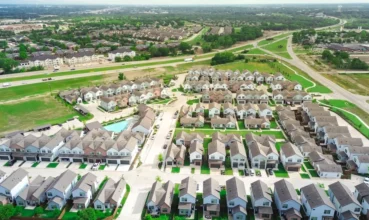
The Tampa Bay region has long attracted buyers seeking Florida’s lifestyle at a more accessible price point than its better-known coastal neighbors. But in the communities stretching north and west of Tampa, places like Hudson, New Port Richey, Spring Hill, and Holiday, the post-pandemic correction has been sharper and more prolonged than headline numbers often capture. For agents working these markets daily, the story on the ground is one of recalibration, selective demand, and cautious optimism about what comes next.
A Market Shaped by COVID-Era Gains and Their Aftermath
West Pasco and Hernando counties saw some of the most dramatic price appreciation in Florida during the pandemic years. The combination of remote-work migration, low interest rates, and a wave of out-of-state buyers, particularly from New York and California, pushed values to levels with little historical precedent in these communities.
Cory Byrd, a Realtor with F.I. Grey & Son Residential, Inc., who specializes in the West Pasco and West Hernando areas, says that before COVID, $150,000 bought a three-bedroom house with a pool. Today, comparable homes cost nearly double that. But wages in the region never kept pace with those price increases. When the migration wave slowed, local buyers, particularly younger ones, found themselves priced out of a market that had historically been defined by affordability.
That dynamic has since reversed. With out-of-state demand cooling and local purchasing power constrained, inventory has accumulated while the buyer pool has thinned. The result is a market that now clearly favors buyers, though many remain on the sidelines waiting for conditions to improve further.
Inventory Pressure and the Seller Mindset
One of the more notable shifts in recent years has been the influx of Canadian-owned properties coming to market. Rising insurance costs and property taxes have made it increasingly difficult for foreign owners to hold vacation and investment properties. Byrd says he listed close to ten or twelve Canadian-owned properties last year alone, all sold because the owners could no longer justify the carrying costs.
This wave of supply, layered on top of already elevated inventory levels, has put meaningful pressure on sellers throughout the area. Seller concessions have become standard rather than exceptional. Closing cost credits, rate buydowns, and price reductions are now common tools sellers use to complete transactions. “Unless you have something different, it comes down to price,” Byrd says. “You have to beat your competition because there are going to be ten other homes that are almost identical to yours.”
The homes that continue to attract attention are those with updated kitchens and bathrooms, newer mechanical systems, roof, HVAC, and water heater, and clean insurance histories. Properties that lack these features, particularly the older 1960s and 1970s homes common throughout West Pasco, take longer to move and require more aggressive pricing.
What’s Moving and What’s Sitting
The clearest pattern in the current market is driven by price point. Homes under $300,000 in reasonable condition continue to generate interest and move at a relatively steady pace. Above that threshold, properties sit on the market longer. Byrd notes that homes at or below $300,000 with solid four-point items, newer roof, AC, and water heater tend not to last long because that price range aligns with the most active buyer demographic.
New construction has added another layer of competition for resale sellers. Builders, facing their own inventory challenges, have been offering meaningful incentives to attract buyers, putting additional pressure on existing homeowners trying to compete on value.
Geographically, the Trinity and Odessa corridor, particularly around zip code 34655, has shown relative strength, driven by newer communities, updated retail and dining options, and continued infrastructure investment. Spring Hill in Hernando County has also maintained its appeal, largely because of its larger lot sizes, which attract families seeking more space than is typically available in denser parts of the region.
A Changing Buyer Profile
While the pandemic years brought a steady stream of relocating buyers from higher-cost states, the current buyer pool is more locally rooted and more income-constrained. One demographic growing in visibility is younger Hispanic families, including buyers relocating from Puerto Rico and South Florida. “We’re getting a lot more younger Spanish families coming in, which is nice to see,” Byrd observes.
The 55-and-older segment remains active, particularly during winter months when snowbirds are present, though this business slows considerably as summer approaches. Retirees continue to be drawn by relative affordability, proximity to medical facilities, and access to established active adult communities.
The Moffitt Effect and a Changing Perception
Beyond current market dynamics, one of the more significant long-term developments reshaping Pasco County’s trajectory is the arrival of Moffitt Cancer Center. Pasco County allocated roughly 800 to 900 acres for the development, which is being built out as a dedicated research campus. The project is expected to bring jobs, investment, and a higher-income professional demographic to an area historically associated with retirees and rural land use. “We’re going to be one of the epicenters of cancer research and medical research,” Byrd says.
This development speaks to a broader change in how the region is perceived. The image of Pasco and Hernando as sleepy, rural counties, an impression that even many Tampa-area residents held until recently, is increasingly out of step with reality. New shopping centers, residential communities, and commercial development have reshaped large parts of both counties over the past several years.
Investor Considerations
For investors evaluating the market, Byrd’s advice centers on positioning ahead of the next growth cycle rather than chasing current activity. The areas just north of Spring Hill, where land is still available at reasonable prices and new development is beginning to take hold, represent the kind of early-stage opportunity that tends to reward patient capital.
For rental investors, the calculus is more straightforward: acquire at today’s corrected prices, generate cash flow, and hold through what Byrd expects will be a market recovery. The potential passage of a property tax relief bill in Florida, expected to go before voters in November, could serve as a meaningful catalyst. If it passes, Byrd believes it will bring a significant number of sidelined local buyers back into the market, tightening inventory and putting upward pressure on prices.
The Bottom Line for Buyers and Sellers
The current window in West Pasco and Hernando may represent one of the more favorable entry points for buyers in recent memory. Inventory is ample, sellers are negotiating, and the long-term fundamentals, proximity to Tampa, ongoing infrastructure investment, and large-scale institutional development like Moffitt, remain intact.
For sellers, pricing to the current market rather than the COVID peak is essential, and presentation matters more than it has in years. Homes that stand out for their condition and value are still moving. Those who don’t are sitting, and the competition is not going away anytime soon.
About the Expert: Cory Byrd is a Realtor with F.I. Grey & Son Residential, Inc., specializing in the West Pasco and West Hernando areas of the Tampa Bay region, including Hudson, New Port Richey, Spring Hill, and Holiday.
This article is based on information provided by the expert source cited above. It is intended for general informational purposes only and does not constitute legal, financial, or real estate advice. Readers should conduct their own research and consult qualified professionals before making any real estate or financial decisions.
Similar Articles
Explore similar articles from Our Team of Experts.