The Austin metropolitan area’s rapid growth continues to challenge traditional development approaches, with Caldwell County alone expected to double its population by 2040. While many ...

What Sarasota's Buyer Hesitation and Condo Struggles Reveal About Florida's Gulf Coast Market

Written by:
Date:
19 Jun 2026
Share via Facebook

Share via Linkedin

Share via X

Copy to clipboard


Sarasota has long punched above its size – home to a nationally ranked school district, a thriving arts scene, and barrier island beaches that rival anything on the Florida coast. For a mid-sized Gulf Coast city, it carries the kind of livability credentials that tend to keep demand resilient even when market conditions turn unfavorable.
Florida’s Gulf Coast has long attracted buyers seeking an alternative to the crowded corridors of Miami and Fort Lauderdale. But mid-2026 finds the Sarasota market navigating a more complicated reality, shaped by post-pandemic price corrections, insurance pressures, and a condo sector under significant stress.
A Market Off Peak
During the pandemic years, Sarasota experienced the kind of price acceleration that characterized much of Florida. Values climbed roughly 36% before the correction set in. Since then, the market has given back most of those gains, with listing prices down approximately 12% over the past year alone.
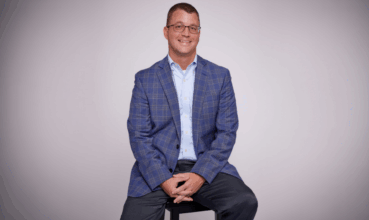
That correction has given buyers leverage. “We’re in a massive buyers market,” says Dan MacKinnon, founder of Local Life Homes, a residential brokerage serving the Gulf Coast from Bradenton and Lakewood Ranch south to Punta Gorda. The value proposition remains a genuine draw, particularly for buyers coming from higher-cost markets. But the correction has also introduced a new kind of buyer behavior that agents across the region are contending with.
Molasses Feet: Buyer Hesitation
MacKinnon has a phrase for the current buyer mindset: “We’ve been calling it molasses feet. They’re walking through molasses.” The hesitation does not mean buyers have walked away. In many cases, they simply lack the information needed to move forward with confidence. “Most of them are not actually saying no to buying, they’re just saying we’re not ready,” he explains.
A combination of factors is driving the caution. Insurance costs remain elevated, and buyers are increasingly focused on total monthly carrying costs rather than just mortgage rates. MacKinnon notes that after HOA fees and insurance are factored in, a $1,800 mortgage can easily become a $4,200 monthly obligation. “It doesn’t matter if you make $200,000 or $300,000 a year; monthly payments are a big deal,” he says.
This recalculation of affordability is changing what buyers prioritize. They are scrutinizing the condition of roofs, HVAC, plumbing, and electrical panels, because the cost of replacing them can quickly erode purchasing power.
Florida’s Four-Point Reality
The four-point inspection – covering the roof, plumbing, HVAC, and electrical systems – plays a central role in Florida’s insurance underwriting process. Insurance companies now require roofs to have at least 5 years of remaining useful life, and given that a new shingle roof in Florida typically lasts only 20 years due to the climate, the practical window for buyers is narrow. MacKinnon explains that buyers need to purchase a home within 7 years of the roof’s installation for it to last long enough to justify the investment.
A roof replacement runs $25,000 to $40,000. An HVAC system adds another $8,000 to $16,000. For buyers who have already stretched to afford a property, these near-term capital expenditures are deal-breakers. “People are really scared about being house poor,” MacKinnon says.
Who Is Actually Buying
Despite the hesitation, demand has not disappeared. MacKinnon describes three distinct buyer profiles, all of whom relocate from out of state, that account for roughly 90% of his transactions.
The first group is early retirees, typically between 55 and 65, arriving from the Northeast and Midwest. They are drawn by Florida’s healthcare infrastructure and relative affordability compared to South Florida. The second group is remote workers from Atlanta, the Carolinas, Tennessee, and the upper Midwest, choosing Sarasota partly for its school system. Sarasota County holds the second-ranked school district in Florida, with one elementary school ranked second nationally.
The third group occupies a middle ground between investor and vacation homeowner. With limited hotel inventory on the barrier islands due to longstanding building restrictions, demand for short-term rentals has been strong. Properties within Sarasota city limits with a minimum rental period of 7 days can generate nightly rates of $200 to $250. Single-family homes in areas like northern Siesta Key, priced in the $400,000 to $700,000 range, have attracted buyers looking to offset carrying costs through rental income.
The Condo Sector’s Problems
While the single-family market is working through a price correction, the condo sector faces deeper, more structural challenges. MacKinnon advises most clients to approach condos with considerable caution.
The issues trace back to the 2021 collapse of the Champlain Towers South in Surfside, which prompted Florida to enact new inspection and reserve requirements for older multifamily buildings. The milestone inspection program now requires buildings with three or more stories to undergo structural assessments. When a building fails its initial inspection, a far more costly second-phase inspection is triggered, and remediation costs can run into the hundreds of thousands of dollars per building.
Special assessments have been levied across many condo communities, sometimes reaching $20,000 or more per unit. For elderly owners on fixed incomes, that figure is unmanageable. MacKinnon describes owners who hold their units outright but face foreclosure because they cannot cover assessment payments. He points to a tower in St. Petersburg where assessment costs have reached $200,000 per unit, and owners are walking away.
Lenders will not finance units in buildings with unresolved structural issues or financially stressed associations, limiting the buyer pool to cash purchasers and compressing values. For investors with cash, however, the distress creates opportunity. Motivated sellers, including heirs liquidating inherited units, are willing to transact at steep discounts.
A Shifting Population Mix
These market dynamics are playing out against a broader demographic realignment. Florida, which historically absorbed hundreds of thousands of new residents annually, recently recorded a net population decline. But MacKinnon argues the composition of that change matters as much as the direction.
Long-term Florida residents – many of them business owners and farmers who built the state’s local economy – are selling and leaving for more affordable states like Alabama. Their replacements are arriving from California, New York, and Illinois, motivated primarily by the absence of state income tax. “The people who are leaving have their biggest worry, which is financially, month-to-month payments. The people who are moving here are moving for longer-term savings for their future,” MacKinnon observes.
The practical effect is visible in local communities. Independent restaurants and small businesses are being replaced by franchises and corporate tenants as longtime commercial property owners exit and new arrivals show less appetite for entrepreneurial risk.
Looking Ahead
For buyers considering Sarasota, the current environment offers genuine value relative to recent years but requires more diligence than the market demanded during the pandemic run-up. Understanding the full cost of ownership – from insurance and HOA fees to the condition of major systems – is no longer optional.
For investors, the short-term rental market remains active within the right zoning boundaries. At the same time, the condo sector offers a selective opportunity for cash buyers willing to conduct thorough financial due diligence on individual associations. The Gulf Coast’s fundamental appeal has not changed. What has changed is the level of preparation required to navigate it well.
About the Expert: Dan MacKinnon is the founder of Local Life Homes, a residential brokerage serving the Gulf Coast from Bradenton and Lakewood Ranch south to Punta Gorda, with a focus on the Sarasota market.
This article is based on information provided by the expert source cited above. It is intended for general informational purposes only and does not constitute legal, financial, or real estate advice. Readers should conduct their own research and consult qualified professionals before making any real estate or financial decisions.
Similar Articles
Explore similar articles from Our Team of Experts.

Master Mind Realty's Kevin Burgos on Building a Strategic Real Estate Presence in Medellín, Colombia
Real estate runs in Kevin Burgos’s blood. As the son of Colombian immigrants in the United States, he witnessed firsthand how the industry could create opportunities when his father be...