
The security technology landscape is experiencing a significant shift as property owners and managers increasingly seek solutions that go beyond passive monitoring to active crime interventi...

Miami's Luxury Buyer Pool Now Spans Latin America, the Middle East, and Asia. Domestic Migrants Are Still Leading

Written by:
Date:
09 Jun 2026
Share via Facebook

Share via Linkedin

Share via X

Copy to clipboard


Miami’s evolution from a seasonal retreat into a year-round business hub is playing out in real time across its luxury real estate market. With 166 new luxury developments currently underway between West Palm Beach and Coral Gables, the volume of activity across South Florida is unlike anywhere else in the world. Rising corporate relocations, sustained international capital flows, and domestic migration from high-tax states have converged to create demand that continues to attract buyers from Latin America, the Middle East, Asia, and high-tax domestic states such as New York and California. For agents working the market daily, corporate relocations and trends in permanent residency suggest a lasting shift in Miami’s role as a business hub.
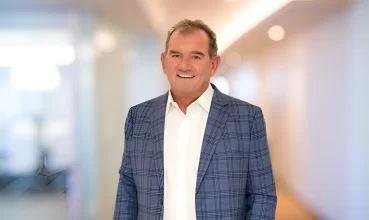
Steven Mikhli, Global Real Estate Advisor at Nest Seekers International, specializes in Miami’s urban core – Brickell, Edgewater, and the broader metropolitan area. His read on the market reflects that buyers who once dismissed Miami as a bubble are now reconsidering, citing major corporate arrivals as evidence that the market is legitimate, even as some outside observers remain skeptical about its sustainability.
Who Is Actually Buying
The composition of Miami’s luxury buyer pool has become notably more diverse in recent years. Latin American buyers remain a significant force, particularly in new development sales, where capital from across South America continues to flow into the city as a stable store of value. Middle Eastern and Asian buyers are also increasingly active, drawn by Miami’s relative political stability and the strength of dollar-denominated assets.
Mikhli notes that buyers from politically or economically volatile countries view Miami real estate as a safer store of wealth than their home markets. “Investing here is a much stronger and smarter investment than putting it into their country,” he says.
That distinction belongs to domestic migrants, particularly from high-tax states like New York and California, as well as from across New England, who are making Miami their primary home rather than a second address or a portfolio play.
The ultra-luxury segment – properties priced at $10 million and above – skews more toward part-time or flexible use. At that price point, buyers rarely commit to a single city full-time. What is notable, however, is how quickly those properties are moving. Mikhli observes that major buyers are acquiring ultra-luxury listings almost immediately after they hit the market. This pattern contrasts sharply with comparable markets like New York, where nine-figure listings can sit for years and often trade at steep discounts to the asking price.
Corporations Are Driving Confidence
One of the more consequential drivers of buyer confidence has been the arrival of major corporations. The relocation of firms like Citadel and Microsoft to Miami has done more than bring jobs – it has signaled to hesitant investors that the city’s growth has real staying power.
“Now people are opening up their eyes,” Mikhli says. “They see all these big companies coming here and they’re saying, okay, well, a year ago I didn’t see this.”
The downstream effect on residential demand is already visible in Brickell, which is absorbing a wave of new office and retail development. As that corridor fills with corporate tenants, the need for nearby housing is expected to accelerate pre-sales at projects that are currently 40 to 50 percent sold. Mikhli anticipates that available inventory will tighten across several of these developments within the next 12 months, with late buyers competing for the remaining units at projects such as 1428 Brickell and Nobu Residences.
Seller Behavior Has Quietly Shifted
On the supply side, a subtle but meaningful change is underway. Sellers who might have listed opportunistically a year or two ago are now pulling back, reconsidering whether offloading Miami real estate makes financial sense when the alternative is redeploying capital into a less favorable market.
Mikhli explains that many sellers who doubled their money over the past five to ten years see little reason to exit. “It’s not a solid investment strategy to take your money out of Miami,” he says, noting that without a clear plan to leave the city, most owners are choosing to hold.
This hesitancy is showing up in pricing behavior as well. The negotiating dynamic has moved away from listing high to leave room for offers. Genuinely motivated sellers are holding closer to their ask, reflecting greater conviction about where values are headed. Pricing has moderated from the peak years of 2022 and 2023. Still, it remains well above pre-pandemic levels, with most active participants viewing the adjustment as a normalization rather than the beginning of a broader correction.
Emerging Neighborhoods Worth Watching
Beyond the established corridors, several less prominent neighborhoods are showing early signs of momentum. While Miami Beach, Brickell, and Edgewater continue to absorb the bulk of luxury demand, Little Havana, Morningside, and upper Buena Vista are seeing significant commercial and residential development that outside investors have yet to recognize widely.
“Miami is a huge place,” Mikhli notes. “There are so many neighborhoods people don’t realize.”
What Comes Next
The question facing Miami’s luxury market is no longer whether demand is real, but how much further it can run. Mikhli draws comparisons to Manhattan neighborhoods like Tribeca before their full maturation – areas where early buyers who looked past sticker shock were rewarded over time. “I don’t even think Miami is a third of the way to where it’s going to be 10 years from now,” he says.
That view is gaining traction among buyers who spent the past few years waiting for a correction that has not arrived. Still, the primary variable is whether corporate-driven housing demand can absorb the volume of new development currently underway, particularly if corporate hiring slows or international capital flows shift.
For investors and agents evaluating where to focus in the second half of the decade, Miami’s combination of tax advantages, corporate migration, and deep international buyer interest presents an investment case Mikhli sees as unmatched in the United States – and arguably the world. The next 12 to 18 months will reveal whether late-stage development projects can maintain pricing momentum or whether the market begins to stratify further between established and emerging corridors.
About the Expert: Steven Mikhli is a Global Real Estate Advisor at Nest Seekers International, specializing in Miami’s urban core, including Brickell, Edgewater, and the broader metropolitan area.
This article is based on information provided by the expert source cited above. It is intended for general informational purposes only and does not constitute legal, financial, or real estate advice. Readers should conduct their own research and consult qualified professionals before making any real estate or financial decisions.
Similar Articles
Explore similar articles from Our Team of Experts.