

In private real estate lending, the question of capital structure matters as much as the deals you do. For We Lend, a New York-based private lender focused on the East Coast market, the clos...

Why Permitting Reform Is the Construction Industry's Most Urgent Policy Fight

Written by:
Date:
29 May 2026
Share via Facebook

Share via Linkedin

Share via X

Copy to clipboard

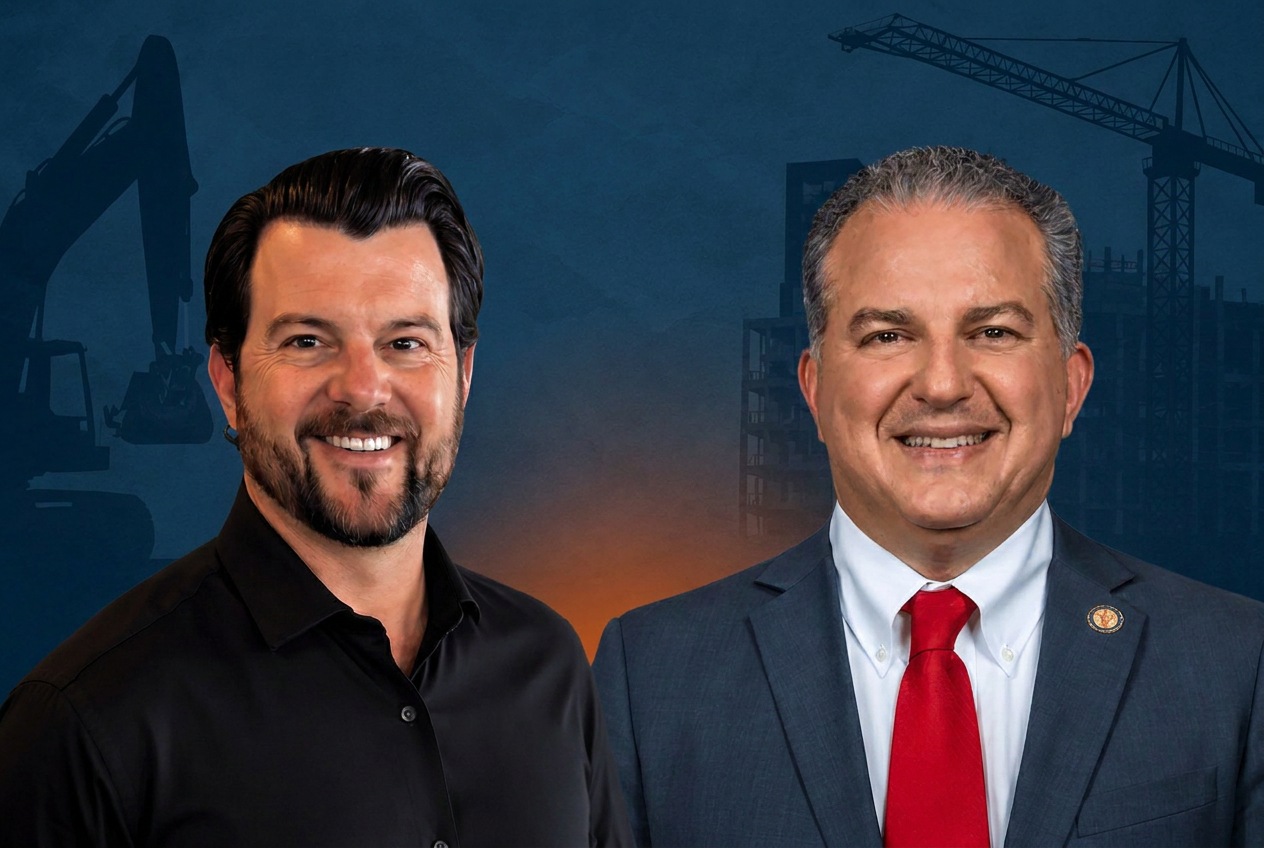
The construction industry has a long list of challenges. Material costs. Workforce shortages. Supply chain fragility. But according to one of Florida’s newest members of Congress, the one most directly solvable through policy, and the one generating the most frustration on job sites right now, is permitting.
Congressman Jimmy Patronis, who represents Florida’s First Congressional District and sits on the House Transportation and Infrastructure Committee, joined Kelvin Enfinger, Vice President at Greenhut Construction and past chair of ABC North Florida, on a recent episode of Beyond the Build, the official podcast of Associated Builders and Contractors North Florida. The conversation covered infrastructure funding, workforce development, and the regulatory environment facing contractors across the panhandle and the state.
On permitting, Patronis did not mince words.
The Soft Cost Problem Nobody Talks About Enough
When a project stalls waiting for a permit, the clock keeps running. Legal fees accumulate. Engineering firms keep billing. Surveyors return to sites they have already surveyed. These are soft costs – expenses that do not move a single cubic yard of dirt or place a single beam, but that can meaningfully erode project margins and strain contractor cash flow.
“I get very spun up when we have excessive delays that lead to excessive soft costs,” Patronis said. “Legal expenses, engineering expenses, survey expenses – because somebody is nickel-and-diming or challenging a development.”
His target is not just bureaucratic slowness. It is the institutional culture within agencies like the Army Corps of Engineers, where, in his assessment, a subset of career staff treat permit denial as a default rather than an exception. The new Corps leadership, he noted, has shown a genuine interest in refocusing the agency on its actual mission. Whether that shift holds is the question contractors should be watching closely.
For construction professionals managing federal and state-permitted projects, the practical message is this: pressure on permitting reform is building at the congressional level, and the political conditions, a cooperative White House, majority in both chambers, and roughly 70 outgoing members motivated to leave on a productive note, create a window that does not stay open indefinitely.
Infrastructure Funding: Where the Money Is Moving
Patronis sits on the Transportation and Infrastructure Committee, where the surface transportation authorization bill is a priority. This legislation authorizes federal spending on roads and bridges, the backbone of construction activity in markets like Northwest Florida, where population growth is outpacing existing road capacity on corridors like Highway 98.
The Warrior Road Act, which Patronis championed, addresses access to Hurlburt Field and the broader military corridor, a long-overdue fix that will have real construction volume attached to it. The US Department of Transportation’s $489 million port infrastructure development program is another signal that federal infrastructure investment is continuing under the current administration.
Enfinger’s question to Patronis, whether the industry should expect this level of federal infrastructure commitment to continue, got a measured but optimistic answer. The combination of a motivated outgoing class of members and an aligned White House creates an environment for sustained infrastructure appropriations, at least through this legislative cycle.
Skilled Trades and the 360,000-Worker Gap
The workforce conversation was equally direct. Enfinger cited the current national shortage of 360,000 construction workers, a number that could grow by another 100,000 within a year, and asked Patronis to make the case directly to young people considering their options.
Patronis drew on his own background. His first credential was a culinary arts degree. He started in the kitchen. The confidence he built doing skilled work with his hands, creating something tangible and completing something real, is what gave him the appetite and self-belief to pursue everything that followed.
“There is a satisfaction you get by creating something with your hands that you’re never going to get from taking a test and hopefully getting an A,” he said. “When you get that gratification – you’ve done something yourself, that’s a different type of confidence builder.”
It is a more honest and useful pitch than most workforce recruitment messaging, and it comes from someone who lived it. For the construction industry, which consistently struggles to communicate the dignity and opportunity of trades work to a generation steered toward four-year degrees, that kind of authentic testimony from a public official carries weight.
The workforce pipeline cannot be filled by the industry alone. It requires policy support, institutional buy-in from schools and community colleges, and elected officials willing to say plainly that a skilled trade is not a fallback; it is a foundation.
About Beyond the Build Podcast: Beyond the Build is produced in partnership with Associated Builders and Contractors North Florida and Florida Construction News, hosted by Kelvin Enfinger. Episodes are available on major podcast platforms and YouTube.
Proudly supported by ABC North Florida – the region’s leading commercial construction association and part of the largest private provider network of apprenticeship programs in the country.
This article is based on information provided by the expert source cited above. It is intended for general informational purposes only and does not constitute legal, financial, or real estate advice. Readers should conduct their own research and consult qualified professionals before making any real estate or financial decisions.
Disclosure: Individuals or companies mentioned may have a commercial relationship with KeyCrew.
Similar Articles
Explore similar articles from Our Team of Experts.