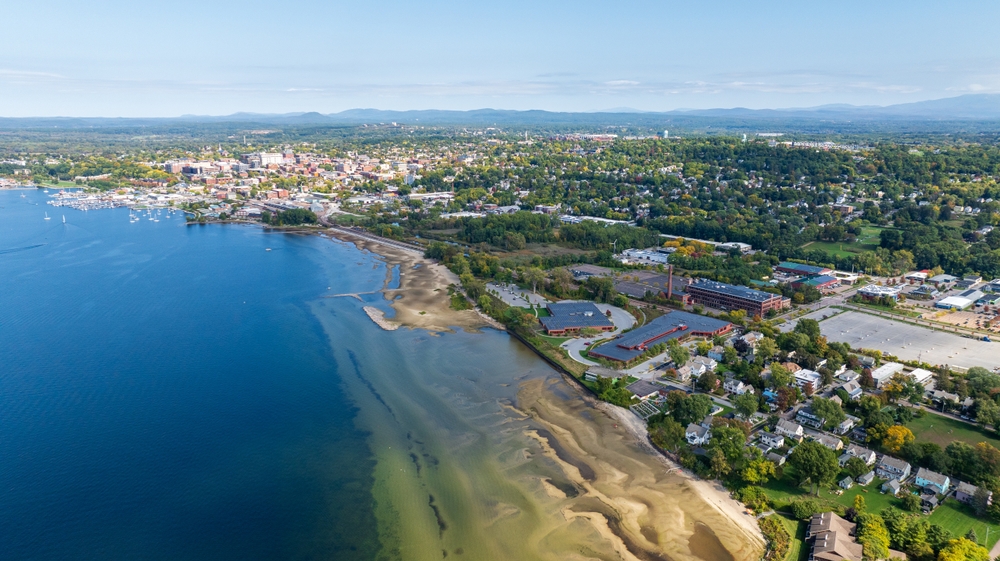
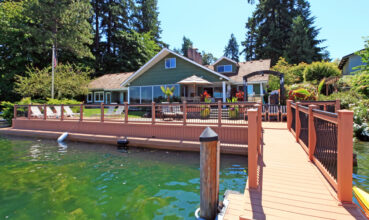
While housing markets across the country have cooled under the weight of elevated interest rates and rising inventory, Vermont’s residential market continues to appreciate. The state’s constrained supply and quality-of-life-driven buyer base are producing outcomes that diverge from nearly every national trend and that gap appears to be widening.
Vermont Buyers Aren’t Chasing Rates, They’re Chasing a Life
When interest rates climbed sharply over the past few years, residential markets across the country saw buyer demand drop almost overnight. Vermont, according to Darcy Handy, Co-Founder and Licensed Realtor at Elite Real Estate Partners, barely flinched.
The reason has less to do with financial conditions and more to do with why people choose Vermont in the first place. Buyers moving to Vermont are typically motivated by lake access, recreation, community feels, and proximity to cities like Burlington, not by affordability calculations. A higher mortgage rate doesn’t eliminate those motivations the way it might in markets where price per square foot drives decisions.
“Vermont is very resilient in that when interest rates increase, we don’t see a big shift in our market,” Handy says. “People move here for lifestyle reasons, not financial ones.” This dynamic has kept prices rising even as other markets have softened or corrected. Handy says Vermont is still seeing appreciation in property values, not the depreciation visible in more rate-sensitive regions.
Inventory Constraints Create a Floor Beneath the Market
The structural foundation of Vermont’s resilience is supply. While some national markets have seen a surge of listings that buyers can’t absorb, Vermont’s inventory remains limited relative to demand. According to Handy, the number of available homes has increased slightly from a year ago but still falls short of what buyers are seeking.
That supply-demand imbalance has prevented the kind of price corrections seen elsewhere. In markets where listings pile up, sellers are forced to cut prices to compete. Vermont sellers, by contrast, are operating in an environment where qualified buyers still outnumber available homes, even if the frenzied pace of 2021 and 2022 has cooled.
Handy draws a sharp contrast with the national picture. The large volumes of unsold listings sitting on the market in other regions don’t exist here. “We don’t really have that in Vermont,” she says. The absence of that overhang is what separates Vermont from markets experiencing genuine distress.
Pent-Up Demand Could Accelerate Activity
Rather than heading toward a correction, Handy sees Vermont’s market moving toward greater balance. She expects a noticeable increase in buyer activity driven by pent-up demand, buyers who have been waiting on the sidelines as rates remained elevated but who haven’t abandoned their desire to relocate.
“I don’t anticipate dramatic swings in Vermont because the inventory remains relatively constrained, and the demand for this lifestyle continues to be fairly strong,” Handy says. Her expectation is a gradual move toward a more stable market where buyers gain modest negotiating power as inventory ticks up, but where sellers don’t face the kind of capitulation seen in more volatile regions.
For investors and out-of-state buyers watching Vermont from a distance, this suggests the market may offer a degree of predictability that’s increasingly rare. The lifestyle-driven demand that insulates Vermont from rate sensitivity also tends to be durable; people don’t stop wanting to live near lakes and mountains because borrowing costs rise.
A Firm Built for Relationship-Driven Markets
Handy’s firm, Elite Real Estate Partners, operating under RE/MAX North Professionals, is structured around long-term relationship-building, the kind that Vermont’s lifestyle-driven market tends to reward. With a team of five agents and a partnership model that positions agents as future co-owners rather than subordinates, the firm is designed to attract experienced producers who want equity in what they’re building.
“Our agents eventually will become our partners as well,” Handy says. “It’s not your traditional team.”
That structure creates alignment between agent incentives and client outcomes – a model Handy believes is well-suited to a market where buyers make decisions based on quality of life rather than short-term financial opportunity. Handy has sold approximately 300 homes across Vermont over seven years and manages more than 500 rental units through her family’s portfolio, giving her a vantage point that spans both the transactional and investment sides of the market.
As Vermont continues to attract buyers seeking stability and lifestyle over speculation, firms with deep local roots and relationship-driven models are positioned to serve a buyer base that values trust as much as transaction speed.
About the Expert: Darcy Handy is Co-Founder and Licensed Realtor at Elite Real Estate Partners, operating under RE/MAX North Professionals in Vermont, with seven years of experience and approximately 300 home sales across the state.
This article is intended for informational purposes only and does not constitute legal, financial, or investment advice. The views and opinions expressed herein reflect those of the individuals quoted and do not represent an endorsement of any company, product, or service mentioned. Readers should conduct their own due diligence and consult qualified professionals before making any investment decisions.
The multifamily housing market is facing a severe and potentially long-lasting supply shortage that could reshape the industry, according to Jason Yarusi, Managing Member of Yarusi Holdings,...
A demographic shift is underway in the Pacific Northwest’s real estate markets, disrupting the simple narrative of pandemic-driven migration. On Camano Island, a lifestyle-focused communit...
For the first time in years, buyers touring waterfront homes in Northern Michigan are no longer rushing to make offers within hours. Open houses that once drew crowds now see only a handful ...
The Tampa Bay waterfront market is experiencing an unprecedented surge in property demolitions following last year’s hurricanes, with one barrier island alone potentially facing more than ...
Three years ago, buying a home in St. Augustine required waiving inspections, submitting offers without seeing the property, and competing against multiple bidders. Today, the pace has slowe...
If you’ve been reading that South Florida’s real estate market is “cooling off,” you’re missing the neighborhood-level detail that actually drives decisions. Th...