As Miami’s luxury market matures and Palm Beach remains firmly in the grip of established family wealth, Fort Lauderdale is drawing attention from a different kind of buyer, one who moves quietly, thinks generationally, and isn’t chasing headlines. For real estate professionals working this middle stretch of South Florida’s Gold Coast, the change feels structural rather than cyclical, driven by capital flows out of high-tax states, rising prices in neighboring markets, and Fort Lauderdale’s combination of coastal scarcity and relative affordability.
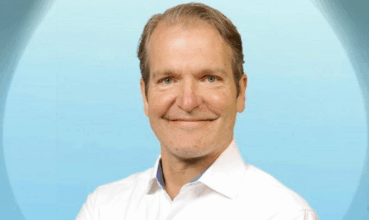
Shannon Grasso is Team Co-Leader and Global Real Estate Advisor with ONE Sotheby’s International Realty and has been watching this dynamic develop firsthand. Working alongside Glenn Wright, a second-generation builder with four decades in the Fort Lauderdale market, she operates at the intersection of new construction and high-net-worth capital allocation.
The Family Office Factor
Much of the conversation around South Florida wealth migration focuses on high-profile names and headline transactions. But Grasso points to a quieter, more consequential force: family offices – private wealth management firms that handle investments for ultra-wealthy families.
These entities control approximately $14 trillion in capital, according to Grasso, and many have pulled money out of public markets in favor of tangible assets. Their priorities differ from those of typical investors. Rather than chasing short-term returns, they focus on generational holds, lifestyle utility, and philanthropy.
Palm Beach County already holds the highest concentration of family offices per square mile anywhere in the world, according to Grasso. Miami functions as the region’s financial engine. Fort Lauderdale is increasingly becoming the connective tissue between these two poles of wealth.
Grasso aligns these clients centers on scarcity and longevity. The properties she represents feature new construction, wellness integration, and institutional build quality on finite coastal land. She frames them as irreplaceable holdings with 60-year economic lives, suited to offices comfortable evaluating assets on a 100-year timeline.
The concept of “lifestyle yield” is central to this approach. Rather than purely financial returns, these buyers seek assets that serve multiple purposes, properties a family can use, gather in, and enjoy while still appreciating over time. “No one goes to the warehouse and hangs out,” Grasso says, drawing a contrast with traditional asset classes these offices have historically favored.
Fort Lauderdale’s Structural Advantages
Beyond the family office angle, Fort Lauderdale benefits from geographic and economic fundamentals that support long-term demand.
The city is home to a $2.2 billion yachting and marine industry within a short radius of downtown Las Olas and claims the title of the world’s largest yachting capital, a distinction that carries weight with buyers who treat boats as lifestyle infrastructure. The local job market is projected to grow 38% over the next decade, adding economic depth that supports property values.
The capital rotation from high-tax states is playing out in real time. Grasso estimates a trillion dollars has already left California, with much of it funneling into South Florida. High-profile tech purchases in Miami have reinforced the region’s status as a destination for serious capital, and Fort Lauderdale is catching the overflow, particularly among buyers priced out of Miami’s most competitive submarkets or seeking comparable upside at a lower entry point.
“Where you’re sitting on the early curve and the opportunity for growth, Miami and Palm Beach, those markets have already passed,” Grasso says. “There’s a lot of meat on the bones here that those markets no longer offer.”
What Buyers Are Actually Asking For
On the ground, the buyer conversation has become more specific. Purchasers have more options than in recent years, which means they’re being more deliberate. The consistent triggers Grasso sees are build quality, location specificity, and wellness integration.
That last point has become central to how Wright positions his product. The homes go well beyond standard residential code. Concrete second floors, reinforced steel, whole-home generators, hospital-grade air purification systems, copper drinking lines, circadian lighting, infrared saunas, and pH-balanced water systems are standard features.
The approach also addresses durability concerns specific to coastal climates, materials chosen to withstand salt air, humidity, and storm conditions over decades. Even the drywall specification illustrates the broader philosophy: Wright uses a high-grade product with minimal VOC emissions, reducing the off-gassing common in lower-quality materials. According to Grasso, the product also provides up to an hour of fire resistance for evacuation.
“These homes are really wellness performance homes versus just the old style of house,” Grasso explains.
A New Product Category Takes Shape
While large estates still dominate the luxury conversation, Grasso is developing a smaller-footprint collection aimed at ultra-high-net-worth buyers who want a South Florida presence without the overhead of a full-scale property. These homes, under 2,400 square feet, are designed as turnkey vacation villas, fully wellness-integrated, with finish options ranging from entry-level to fully custom.
“Everybody doesn’t want the upkeep of a $10 million home,” she notes. “A smaller vacation villa aligns with their needs. They’re in France for three months, South Florida for three months.”
The commercial strategy is also notable. Grasso is exploring a model where tranches of these homes are sold to institutional buyers, leased up, and then offered to individual ultra-high-net-worth buyers as coastal holdings. It’s a structure that reflects how sophisticated capital increasingly approaches real estate – not as a single transaction, but as a portfolio play.
A Different Kind of Agent
What ties this together is Grasso’s deliberate positioning in a market crowded with agents competing on visibility and social media presence. She’s made a calculated choice to model her communication style on the clients she’s trying to reach.
“My family offices aren’t flashy. They’re quiet and understated,” she says. “The more I can mimic their comfort zones, the more they’re going to communicate with me.”
Rather than casting a wide net, she focuses on depth over volume, targeting a small number of serious prospects rather than thousands of leads. Family offices don’t move on impulse. They research, deliberate, and when they commit, they tend to commit at scale.
For Fort Lauderdale, still early in its institutional recognition compared to Miami and Palm Beach, that kind of targeted relationship-building may be precisely what the moment requires. The city’s next chapter won’t be written by headline buyers. It will be shaped by capital that prefers to move without fanfare, acquiring irreplaceable coastal positions while the pricing gap between Fort Lauderdale and its neighbors still exists.
About the Expert: Shannon Grasso is Team Co-Leader and Global Real Estate Advisor at The GG Team with ONE Sotheby’s International Realty, covering the Fort Lauderdale market in South Florida. She works alongside Glenn Wright, a second-generation builder with four decades in the Fort Lauderdale market, focusing on new construction and high-net-worth residential transactions.
This article is based on information provided by the expert source cited above. It is intended for general informational purposes only and does not constitute legal, financial, or real estate advice. Readers should conduct their own research and consult qualified professionals before making any real estate or financial decisions.
“This is fundamentally a segment of industrial real estate with physical assets,” explains Everett Thompson, Founder and CEO of Wired Real Estate Group. “What makes it comp...
The standard formula for flipping houses, buy low, renovate fast, sell at a premium, depends on assumptions that have eroded in Tampa Bay over the past two years. Insurance costs have spiked...
The Coachella Valley real estate market is splitting along price lines. Properties above $1 million are still moving. Below $500,000, activity has slowed noticeably, a dynamic that complicat...
In the dynamic landscape of South Florida real estate, few stories embody the region’s transformative potential quite like that of Fabio Faerman, CEO of FA Commercial, the commercial t...
The Dallas luxury real estate market continues to attract high-caliber professionals, driven by major corporate relocations and significant commercial investment. Recent PwC rankings placed ...
Few real estate markets in the Northeast tell a more layered story than Newburgh, New York. Situated on the Hudson River about 90 minutes north of Manhattan, this small city of roughly 30,00...