
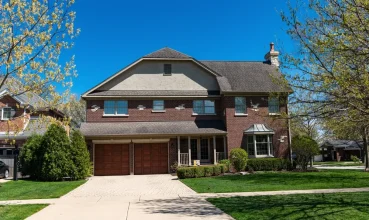
Rising inventory usually signals a cooling market. In the Minneapolis–St. Paul metro, it signals something else: more people choosing to move at the same time. The Twin Cities are carrying...

Inside the Monmouth, New Jersey Real Estate Market: Low Inventory, High Stakes, and Local Obstacles

Written by:
Date:
13 May 2026
Share via Facebook

Share via Linkedin

Share via X

Copy to clipboard


The Monmouth County residential real estate market is navigating a stretch of competing pressures — rising mortgage rates, historically low inventory, and buyer hesitation that is reshaping how homes are priced, marketed, and sold. The conditions are not unique to New Jersey, but local factors are creating dynamics specific to this market that go beyond the national headlines.
Barbara Berg, a Realtor with Keller Williams Realty West Monmouth, has worked the Monmouth County market since 1979. Over nearly five decades, she has seen interest rates rise to over 19%, watched multiple boom-and-bust cycles unfold, and observed how the pandemic has permanently altered buyer priorities. That experience provides a useful lens for understanding what is actually happening on the ground in mid-2026 — not in broad strokes, but in the specific details that determine whether a transaction closes or collapses.
Inventory Shortage Squeezes Buyers
The inventory problem in Monmouth County did not appear overnight. It traces directly back to the pandemic refinancing wave, when large numbers of homeowners locked in mortgage rates between 2.5% and 3%. Many of those same owners also reinvested in their properties during that period — adding pools, finishing basements, and building additions. Moving now, at rates between 6.5% and 7%, means surrendering a financial position that is nearly impossible to replicate. For most, it simply does not make sense unless they are downsizing significantly.
The result is a market that remains tilted toward sellers, though the edges are beginning to soften. Berg estimates the current balance is around 70-30 in favor of sellers, though that figure varies by pocket within the county. Since January, homes have been staying on the market longer, and price reductions have become more common — a pattern that was largely absent in the prior year. Some developments still draw multiple offers on the first day. Others are sitting with 17 active listings because the location or housing stock is simply harder to move.
Oil Tanks Killing Local Deals
Beyond rates and inventory, a quieter obstacle is complicating transactions across Monmouth County: underground oil tanks. Properties with oil heat, and particularly those with buried tanks, are proving difficult to sell even when there is no evidence of leakage or contamination. The problem lies with insurance. A growing number of carriers are unwilling to insure homes where oil remains underground, which effectively narrows the pool of buyers who can successfully close on those properties.
The issue becomes more layered when other factors stack on top of it. Some of these same homes also feature electric cooking, which creates a secondary sticking point for buyers who are unwilling to give up gas stoves. Individually, these may read as minor preferences. In a market where buyers already have limited options and are making significant financial commitments, they become real filters that can stall or end a transaction entirely.
New Construction Misses Key Buyers
New construction is adding some inventory to the Monmouth County market, but the relief is narrow. Most of the building activity in the county is concentrated in adult communities and condominium developments — housing stock that directly addresses demand from older buyers looking to downsize. For buyers under 55 searching for single-family homes, that pipeline offers very little. The segment most in need of options is largely being passed over by the segment getting built.
New developments that do come to market tend to move fast, drawn by modern finishes, high ceilings, and move-in condition. That demand signals there is genuine appetite for new inventory — it simply is not being directed toward the buyers who need it most. Until construction activity shifts toward single-family homes accessible to younger buyers, the inventory gap for that segment is unlikely to close.
Investors Still Winning in Monmouth
While traditional buyers face a difficult environment, investors have continued to find opportunities in Monmouth County. The gap between distressed or unrenovated properties and move-in-ready homes has created room for buyers with capital and access to contractors to bridge it profitably. A property that sells today in the high $300,000s can realistically return $600,000 to $700,000 after renovation — a spread that continues to attract experienced investors even as overall market conditions tighten.
The investors finding the most consistent success are those with established systems — reliable contractors, efficient turnaround timelines, and the ability to close quickly without financing contingencies. For those newer to real estate investing, the recommendation is to start smaller — a condominium rather than a single-family home, where the homeowners association absorbs major maintenance responsibilities and the operational complexity is more manageable while experience is still being built.
Transit Proximity Commands Higher Prices
Monmouth County’s commuter orientation has long made proximity to train and bus lines a meaningful pricing factor. The county draws residents who work in both New York City and Philadelphia, and access to transit infrastructure has historically supported a premium in neighborhoods where it exists. That dynamic appears poised to strengthen. Rising fuel costs are adding a new layer of financial pressure on commuters, making the cost savings associated with train and bus access more tangible and more relevant to buying decisions.
If fuel prices continue climbing, the gap between transit-accessible properties and those dependent on car commutes is likely to widen further. Homes near train stations are somewhat insulated from that pressure in a way that car-dependent locations are not — a distinction that may carry increasing weight as buyers run the numbers on long-term ownership costs. In a market already defined by tight supply and careful financial calculation, transit access is becoming less of a lifestyle preference and more of a practical consideration that shows up in offers and final sale prices.
About the Expert: Barbara Berg is a realtor with Keller Williams Realty West Monmouth, covering the Monmouth County, New Jersey residential market. She has been active in the market since 1979, spanning nearly five decades of experience across multiple market cycles.
This article is based on information provided by the expert source cited above. It is intended for general informational purposes only and does not constitute legal, financial, or real estate advice. Readers should conduct their own research and consult qualified professionals before making any real estate or financial decisions.
Similar Articles
Explore similar articles from Our Team of Experts.