Naftali Credit Partners is making bold moves in the private credit space, with plans to raise a billion-dollar fund that would triple the size of its current lending platform. The ambitious ...

South Florida Luxury Real Estate: What Fort Lauderdale and Miami Buyers Need to Know

Written by:
Date:
27 Apr 2026
Share via Facebook

Share via Linkedin

Share via X

Copy to clipboard

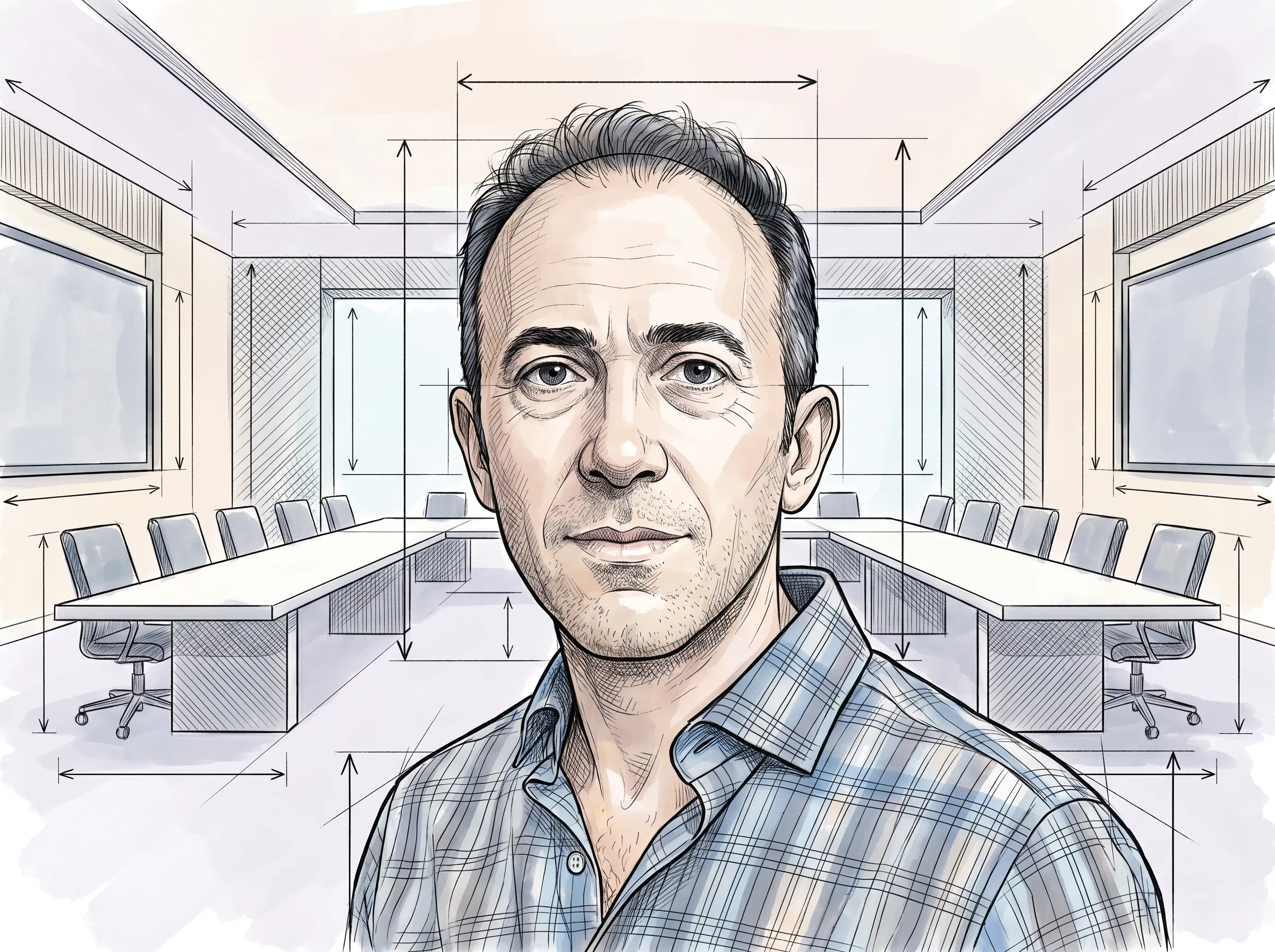
South Florida has always sold a fantasy — sun, water, and space at prices that made buyers from New York or California feel clever. That era is over. What replaced it is something more complicated: a market reshaped by a pandemic, a wave of migration, and a decade of rising costs, now one of the most competitive luxury landscapes in the world.
Jerry Lechter, managing partner of Sunlight Homes LLC, has watched every phase of that transformation from the inside. He began as a distressed-property investor buying homes for under $300,000 and now develops ultra-luxury properties in the $20 million range. His experience reveals where South Florida stands today and what that means for prospective buyers.
The Permanent Price Reset
For most of its modern history, South Florida’s appeal was straightforward: buyers got more for their money than almost anywhere else in America. That calculus changed permanently around 2020. Remote work freed buyers from expensive coastal cities. They arrived in South Florida in large numbers, bringing their budgets with them. Prices rose, inventory tightened, and costs that had been suppressed for years began catching up all at once. Insurance premiums climbed steeply and, in some cases, became difficult to obtain. Construction costs jumped. According to Lechter, the overall cost of living reset by an estimated 50 to 60 percent in just a few years.
That reset was not a temporary spike. It reflects a structural shift in who South Florida is for. Middle-income buyers and retirees on fixed incomes face a genuinely difficult market. But for buyers at the top of the wealth spectrum — those already owning multiple homes — the region’s value proposition did not disappear. It shifted form.
Fort Lauderdale’s Luxury Surge
As the mid-tier market tightened, the ultra-luxury segment opened up. Developers who understood the incoming buyer profile recognized that the region still offered something valuable. These buyers were wealthy, often purchasing with cash, and comparing South Florida not to its own past prices but to Bel Air, Beverly Hills, or the Hamptons. The region offered exceptional properties at prices below comparable global luxury markets, in a state with no income tax and year-round appeal.
Fort Lauderdale emerged as a focal point. Less dense than Miami and less saturated than Palm Beach, it offers waterfront access and large lots in a city undergoing a significant cultural and architectural upgrade. Buyers from Latin America, Europe, and domestic markets such as California and the Northeast have increasingly looked there — not for a deal in the old sense, but for value in the new one. The relevant comparison is no longer Fort Lauderdale against its 2015 prices. It is Fort Lauderdale against what an equivalent property costs in Malibu.
The Ultra-Luxury Buyer Profile
The buyer profile at the ultra-luxury level is specific. These are typically cash buyers, which means interest rate fluctuations affect them less directly than mid-market buyers. Their wealth frequently originates in technology or cryptocurrency. As a result, their purchasing confidence is tied more closely to financial market performance than to mortgage rates. They are not buying a primary residence. They are adding to a portfolio of homes they may use only a few weeks each year. The home functions as both an asset and an expression of taste. These buyers are purchasing in a market where the supply of exceptional new construction is limited.
That scarcity matters. Ground-up ultra-luxury development takes years of planning, involves significant financial risk, and requires a level of construction quality that most developers are not equipped to deliver. Buyers who understand this are less exposed to a broad market correction than mid-tier buyers, precisely because what they are buying cannot easily be replicated or rapidly oversupplied.
A Narrowing Buying Window
Markets in the early stage of a luxury transition do not stay early-stage for long. Fort Lauderdale still offers a window in which buyers can acquire exceptional properties at prices that may look prescient within a decade. That window is not permanent. As more global wealth discovers the city, as new development raises the baseline of what is available, and as the broader South Florida brand continues to strengthen internationally, pricing will follow.
The risks are real and worth weighing. Insurance costs remain a significant and unresolved variable. Broader economic volatility could soften demand at the top. Lechter predicts a five to ten percent price correction in the mid-market over the next 12 months, though he expects the ultra-luxury segment to hold firm given its supply constraints. For buyers already considering South Florida, the more relevant question may not be whether to buy. It is whether waiting improves the outcome or simply raises the cost.
About the Expert: Jerry Lechter, managing partner of Sunlight Homes LLC, an ultra-luxury residential developer active across South Florida’s most sought-after markets. His current projects include an 8,000-square-foot Polynesian modern home in Miami’s Sans Souci neighborhood and an ultra-luxury property in Fort Lauderdale’s Las Olas, scheduled for completion in fall 2026.
This article is based on information provided by the expert source cited above. It is intended for general informational purposes only and does not constitute legal, financial, or real estate advice. Readers should conduct their own research and consult qualified professionals before making any real estate or financial decisions.
Similar Articles
Explore similar articles from Our Team of Experts.