

Stress in commercial real estate lending is not distributed evenly across the banking sector. Institutions with assets between $2 billion and $50 billion are generating a disproportionate sh...

How Property Risk Assessment Really Works – And Where Most Buyers Get It Wrong

Written by:
Date:
24 Mar 2026
Share via Facebook

Share via Linkedin

Share via X

Copy to clipboard

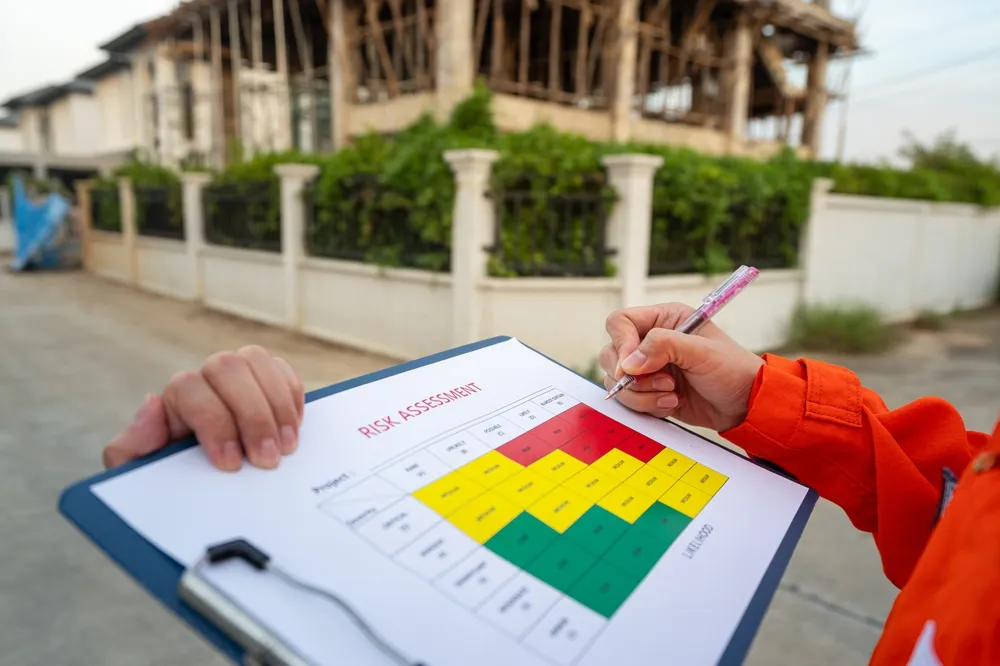
Property due diligence sounds simple until you’re the one trying to untangle what reports you actually need. Suddenly, you’re sorting through appraisals, inspections, flood maps, and a stack of other documents, and it’s still unclear if you’ve addressed the biggest risks. Overlooking a single step can cost thousands or even kill the deal.
Albert Slap, president and co-founder of RiskFootprint, has guided property owners, lenders, and investors through risk assessments for decades. He explains that what passes for due diligence today is often incomplete. “It’s devolved into four things: the appraisal, the environmental site assessment, the FEMA flood map, and maybe an earthquake score,” he says. For most properties, that isn’t enough.
Here’s how property risk assessment actually works, step by step – and the most common mistakes buyers, sellers, and lenders make.
Step 1: Know What You’re Actually Assessing
Most buyers focus on mold or termites, but the bigger threats are environmental hazards – floods, high winds, wildfires, earthquakes, landslides, and storm damage. These can destroy property value overnight or make a building uninsurable.
Slap notes that exposure to a hazard doesn’t always mean your building is at risk. For example, being in a flood zone doesn’t guarantee flooding; it depends on the building’s height and construction.
Step 2: Get the Standard Reports – But Understand Their Limits
Lenders typically require four basic reports: an appraisal, a Phase I environmental site assessment, a FEMA flood map, and an earthquake risk score. These usually take a week or two and cost $300 to $2,000, depending on the property.
But these reports leave out major risks. FEMA flood maps, for example, do not account for flooding from heavy rainfall – a growing problem in many regions. You could be outside the official flood zone and still face significant flood risk during a storm.
Step 3: Order a Comprehensive Hazard Report
Most buyers skip this step, but it’s the only way to see the full risk picture. Comprehensive hazard reports analyze over 30 risks, including rainfall flooding, wind speed, wildfire proximity, landslide zones, and sea level rise. These reports cost $50 to $500 and are usually returned within a few days. Technology now allows this level of analysis to be performed quickly and affordably, but most buyers and even lenders don’t request it.
Step 4: Assess Vulnerability – Not Just Exposure
Being in a hazard zone (exposure) is one thing; having a building that’s likely to suffer damage (vulnerability) is another. A well-built structure on high ground in a flood zone might be safe, while a poorly built home just outside the zone could flood repeatedly.
This assessment involves checking first-floor height, foundation type, roof construction, drainage, and overall structural integrity. Some firms use satellite imagery and AI to estimate these factors, while others send engineers for on-site inspections. A full vulnerability assessment takes one to three weeks and costs $1,500 to $10,000, depending on size and complexity.
Step 5: Calculate Damage Potential and Mitigation Costs
Knowing your risks isn’t enough – you need to understand what it will cost to address them and what it could cost if you don’t. For example, Slap’s team worked with two hotels that faced repeated flooding. They calculated the cost to protect against different hurricane categories: $250,000 for a Category 1 and $10.5 million for a Category 5. The owners ultimately spent $2 million to guard against a Category 3, which meant that when hurricanes struck, their downtime dropped from a year to just three days.
Ask for clear numbers: What does it cost to protect against a 100-year flood? A 500-year event? What is the expected annual loss if you do nothing? This information helps you decide whether to invest in upgrades, renegotiate the price, or walk away.
Where Buyers Get It Wrong
Myth 1: “If I’m not in a FEMA flood zone, I don’t need flood insurance.”
FEMA maps only show river and coastal flooding, not flooding from heavy rainfall. Many properties outside official zones still flood.
Myth 2: “A 500-year flood won’t happen in my lifetime.”
A 500-year flood has a 0.2% chance every year. These events can and do occur more frequently than the name suggests.
Myth 3: “I can fix problems after I buy.”
Lenders, insurers, and future buyers will all scrutinize property risks. Skipping due diligence now can mean higher insurance costs, forced upgrades, or lower resale value.
Red Flags and Smart Questions
If someone tells you not to worry about hazards or tries to skip risk assessment, that’s a warning sign. Slap has seen buyers and lenders avoid comprehensive reports because they fear uncovering problems they’d have to fix. This short-term thinking can lead to higher costs later.
Ask these questions: What hazards affect this property? How high is the first floor compared to likely flood levels? Are upgrades needed to meet current codes or insurance requirements? What will it cost to reduce the biggest risks?
The Bottom Line
Property risk assessment is not complicated, but it’s easy to miss a step that could have major consequences. By knowing what to expect and which questions to ask, you can avoid costly surprises and make informed decisions. As Slap puts it, “Every year there’s something – winter storms, heat, floods, fires. You need to know what you’re up against.”
About the Expert: Albert Slap is president and co-founder of RiskFootprint, a technology and advisory firm specializing in environmental hazard and climate risk assessment. With decades of experience in environmental law, Slap helps property owners, lenders, and investors understand and mitigate risks from natural hazards.
This article is based on information provided by the expert source cited above. It is intended for general informational purposes only and does not constitute legal, financial, or real estate advice. Readers should conduct their own research and consult qualified professionals before making any real estate or financial decisions.
Similar Articles
Explore similar articles from Our Team of Experts.