
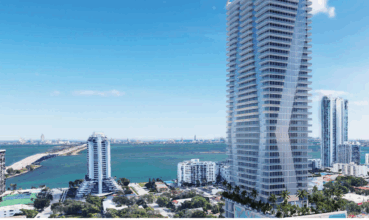
Limited by water to the east and protected wetlands to the west, Miami’s path forward is clear: it must rise. In a city where horizontal expansion is no longer an option, vertical developm...

Supply Chain Professionals Are Driving Industrial Real Estate Deals, Not Traditional Tenant Requirements

Written by:
Date:
20 Feb 2026
Share via Facebook

Share via Linkedin

Share via X

Copy to clipboard


The industrial real estate market is no longer driven by the traditional process of companies identifying space needs and hiring brokers to fulfill them. According to Joe Santaularia, president of CORFAC International and EVP/Director of Strategic Investor Relationships at Bradford Commercial Real Estate, deals are now emerging from within supply chain professional networks. Brokers who are not actively involved in these logistics ecosystems are missing out on significant transaction opportunities.
Santaularia points to a recent example illustrating this new dynamic. He was introduced to a staffing professional through a contact at a third-party logistics (3PL) firm. That staffing contact then connected him to a client seeking 200,000 square feet in Dallas. Meanwhile, a warehouse specialist had a shoe brand client seeking 200,000 square feet. By merging these requirements, Santaularia was able to pursue a much larger transaction – a combined search for 400,000 to 500,000 square feet of space.
He emphasizes that deals like this do not originate from traditional prospecting methods. Instead, they arise from being present and engaged in the right professional circles. “If I weren’t in that room, I wouldn’t see either of these transactions,” Santaularia says. The ability to connect multiple needs in real time allows brokers deeply embedded in supply chain networks to identify and combine opportunities that others would miss.
The Ecosystem Approach
Santaularia has cultivated what he calls a “supply chain ecosystem” of 800 professionals, including 3PLs, supply chain consultants, and logisticians. This network functions as both a LinkedIn group for ongoing discussion and a regular call series in which participants share opportunities beyond their own capabilities.
This approach works because modern supply chain operations are too complex for any single provider to address every need. For example, a 3PL expanding into a new region requires more than just warehouse space – it also needs staffing, technology infrastructure, and introductions to potential customers. A broker who only offers real estate services plays a limited role. In contrast, a broker within a supply chain ecosystem can connect clients to multiple solutions simultaneously.
Santaularia describes this as a reciprocal system where participants “feed opportunities and partners to each other.” By actively helping others in the network find solutions, members build relationships that lead to future referrals and collaborative deals.
Why Dallas Is a Model Market
Dallas demonstrates how these supply chain dynamics play out at scale. Santaularia notes that Dallas is one of the largest inbound logistics markets in the country. This status is not simply the result of geography or random growth, but a reflection of the sophisticated supply chain networks that have chosen to establish operations there.
As more supply chain professionals and companies cluster in Dallas, the city attracts additional service providers, consultants, and specialized vendors. This concentration of expertise creates a self-reinforcing cycle: companies are drawn to Dallas by its established networks, and their presence further strengthens the market’s appeal to others considering expansion.
For brokers and service providers, understanding the nuances of supply chain activity is more valuable than tracking broad market metrics such as vacancy rates or lease prices. Knowing which logistics companies are expanding, which are consolidating, and who is seeking new partnerships provides a competitive edge in identifying real opportunities.
Cross-Border Connections Expand Opportunities
Santaularia’s network extends internationally, offering access to deals that brokers focused solely on the U.S. market would never see. He recalls meeting a professional from Slovenia who manages a large e-commerce supply chain. That connection quickly led to a referral for a 3PL seeking 100,000 square feet in the Dallas-Fort Worth area.
He notes that modern communication tools, such as WhatsApp and email, make it easier to maintain global relationships and share information quickly. “Networking has always been around. It just took longer for news to travel. Now, news can travel really quickly,” Santaularia says. As supply chains become more global, these cross-border connections are translating directly into new real estate activity in markets like Dallas.
Implications for Traditional Brokerage
The rise of supply chain-driven dealmaking signals a shift in clients’ expectations of industrial real estate brokers. Simply showing available space and negotiating leases is no longer enough, as these functions have become commoditized. The brokers who are consistently closing the most valuable transactions are those who can connect logistics providers, staffing firms, e-commerce operators, and consultants – often across multiple markets and even countries.
Santaularia encourages brokers to identify their strengths and leverage them to help others build collaborator networks. “Everyone’s good at something. Find out what that is and use it to help other people find collaborators and create your own ecosystem,” he says. This approach relies more on cultivating relationships and orchestrating complex networks than on traditional transaction execution.
Looking Forward
Whether large brokerage firms adapt to this new ecosystem model or whether it remains the specialty of a few individual experts could determine who captures the most lucrative industrial real estate deals in major logistics hubs over the next several years. As supply chain complexity grows and global connections deepen, brokers who invest in building genuine networks across disciplines and borders are positioned to lead the next wave of industrial real estate activity.
Similar Articles
Explore similar articles from Our Team of Experts.