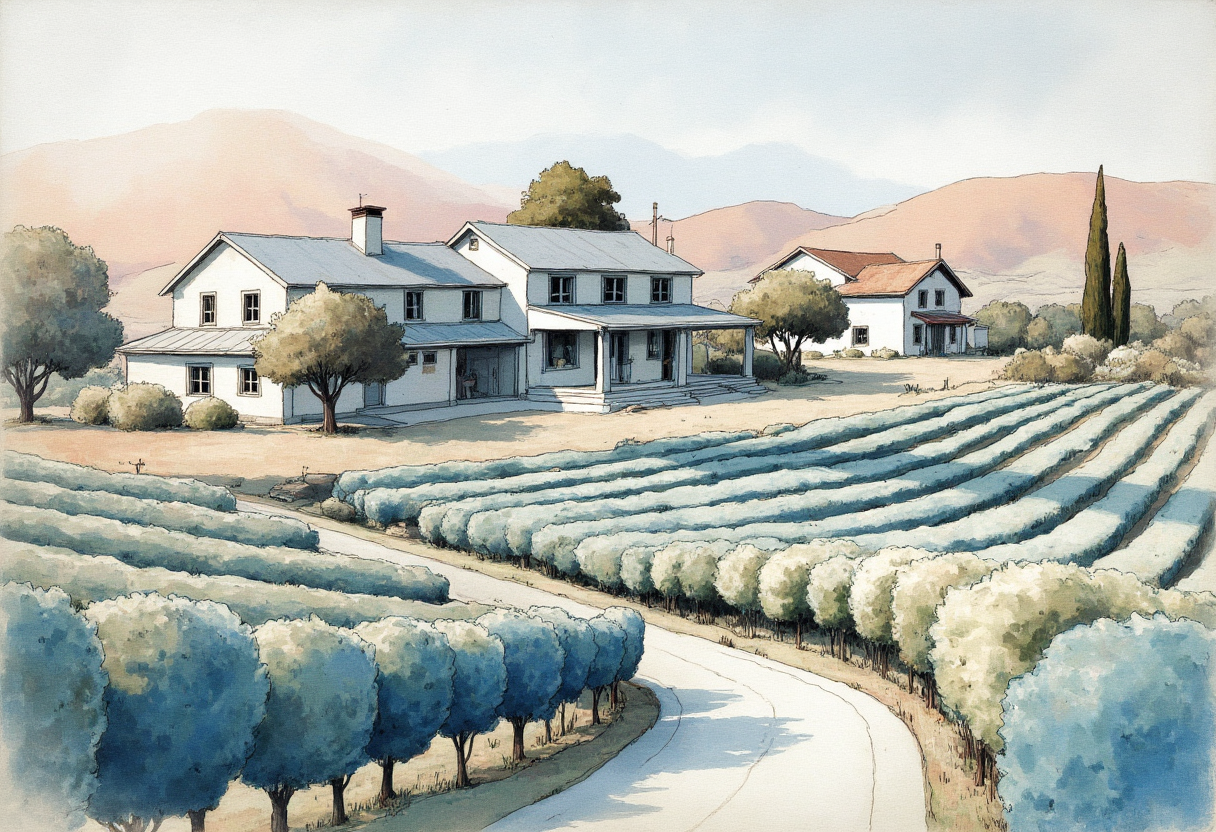
The wine country real estate market in California is facing significant challenges that threaten the industry’s traditional structure, according to Daria Walker, Principal at Walker Realty Capital. In a recent interview, Walker outlined the main obstacles affecting the wine country landscape and raised concerns about potential consolidation.
“The listings aren’t moving, because I think that even the smaller wineries that would like to expand don’t necessarily have the capital to do so, especially when you’re looking at declining revenue across the board,” said Walker, who has worked in commercial real estate since 2013.
The California wine country sector has encountered declining revenue and limited access to expansion capital, resulting in a stagnant transaction market where traditional buyers have been sidelined.
Walker outlined several major challenges currently shaping the wine industry. Capital constraints are making it difficult for wineries to justify expansion, as declining revenues have thinned out the traditional buyer pool of smaller operators seeking to grow.
She also pointed to a lack of government support, noting that unlike their European counterparts in France, Spain, and Portugal, California wineries receive no subsidies to cushion downturns. Finally, she warned of a growing private equity threat, predicting that distressed assets will increasingly be acquired by large investment firms, a trend he believes could harm the long-term character and sustainability of the sector.
Walker pointed out that smaller family vineyards are especially vulnerable and emphasized their importance to the industry’s quality. “If you’re a wine drinker, you understand that the smaller family vineyards make the best wine,” she explained.
These family operations lack the financial resources to withstand extended downturns and face the greatest risk of being forced to sell to larger corporate buyers.
Walker suggested government intervention as a possible remedy, while acknowledging the political challenges. “I guess perhaps we could have the USDA step in, or state government step in and start subsidizing some of these,” she noted, while expressing doubt about the likelihood of such support.
She emphasized that without intervention, the wine country faces likely consolidation that could fundamentally change California’s wine industry.
The wine industry in California has responded to these conditions by largely pulling back from expansion and acquisitions, leading to the current transaction drought Walker observes in her practice. “I don’t want Behringer buying up any more of our freaking life,” Walker noted, expressing frustration with the idea of institutional ownership replacing family operations.
Looking forward, Walker expects a troubling transformation of California wine country if current trends persist. “I think we’re going to see a lot of that wiped out. I think it’s going to see private equity on the label there,” she said, predicting that financial distress will force family wineries to sell to institutional buyers.
Walker also expressed worry about the potential conversion of wine properties to other uses, stating, “I’m just hoping that these beautiful wineries that we have don’t start turning into resorts.” This concern reflects broader fears about the loss of agricultural heritage and the commercialization of wine country’s traditional character under new ownership.