40-year industry veteran observes fundamental change in American housing preferences. The traditional American dream of a large home with a spacious yard is giving way to a new vision focused on quality over quantity, according to Lisa Clark, Senior Vice President of Master Planned Communities at W Land Development, who has observed this shift over her four-decade career in real estate development.
The Quality-Size Tradeoff
“Used to everybody’s dream was owning a home with a white picket fence,” Clark says. “The demand is still there, it’s just not as high. It’s switched to smaller lot sizes.”
This shift isn’t solely driven by affordability concerns, Clark argues. “People are not looking for the larger home and the larger lot, but they are looking for the quality. So they put the quality in the smaller home.”
The ‘Lock-and-Leave’ Lifestyle
Clark points to a growing preference for what she calls a “lock-and-leave” lifestyle. “We want to lock and leave,” she explains. “We don’t want to worry about the house. We want to be able to go out, vacation, do whatever we want to do.”
This trend spans demographics, from young professionals to empty nesters, suggesting a broader cultural shift in how Americans view homeownership.
Market Response
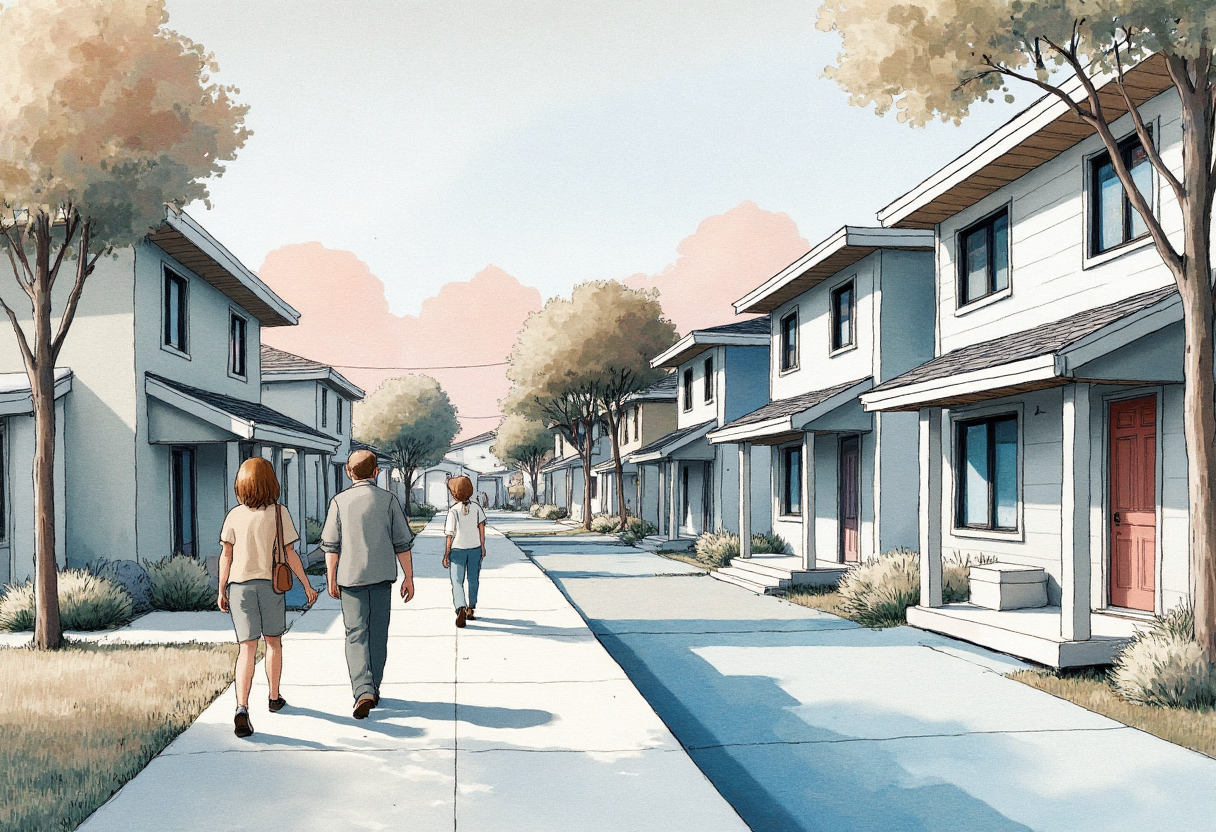
Developers are adapting their community designs to meet these evolving preferences. Clark notes that typical master-planned communities now start with 40-foot lots (usually 120 feet deep) and gradually introduce larger options.
“We don’t bring in the 70 [foot lots] and above until after we’ve built some value into the community,” Clark explains, describing how developers phase different lot sizes to match market demand while maintaining community value.
The Solution: Flexible Development
W Land Development’s approach to this market evolution involves careful phasing and product mix. Their communities offer various lot sizes to accommodate different buyer preferences while maintaining overall community value.
“We just decided, what is it that our residents want?” Clark says. “They don’t want to be squeezed in so tight. They want to feel the airflow and have space free.”
As the housing market continues to evolve, this flexible approach to development may become increasingly important in meeting changing consumer preferences while maintaining community appeal.