
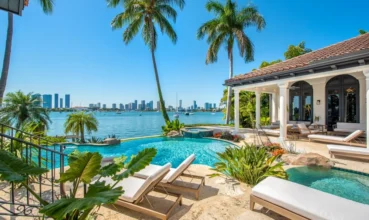
At $20,000 a week and up, a villa listing is never really the product. What’s actually being sold is certainty: that the pool is heated, the beach isn’t buried in seaweed, the ge...

Panama Real Estate Surges as International Buyers Seek Residency and Investment Security in 2026

Written by:
Date:
17 Feb 2026
Share via Facebook

Share via Linkedin

Share via X

Copy to clipboard


Panama’s luxury real estate market is entering its strongest phase in nearly 20 years, fueled by a new wave of international buyers seeking second residences and portfolio diversification. After enduring multiple economic cycles, the Central American nation now stands out as a preferred destination for North American, European, and, increasingly, Asian investors seeking both lifestyle and financial security.
Jeff Barton, Managing Director of Punta Pacifica Realty, has overseen this evolution since founding his Panama operations in 2007. His firm primarily serves foreign clients, with 60–70% coming from North America, split between the United States and Canada, while European, South American, and Asian buyers make up the remainder. This influx has reshaped the market’s dynamics, introducing new priorities and expectations that set Panama apart from other regional destinations.
Residency Visas Drive Buyer Motivation
A notable change in buyer motivation has emerged over the past 18 months: more investors are purchasing properties primarily to qualify for Panamanian residency. Barton estimates that about a quarter of his firm’s recent transactions are tied to residency-focused purchases, a marked increase from previous years. Another 25–30% of buyers are acquiring primary residences, while the remaining half is split between rental investments and second homes.
This trend reflects heightened global uncertainty and the desire for a “plan B” among buyers outside their home countries. Many are not planning immediate relocation but want to secure a foothold for future use. Barton notes that these buyers often intend to move in several years but are locking in 2026 pricing now to hedge against future cost increases or geopolitical shifts. “We’re seeing people buy who might not move until 2027 or 2028, but they want today’s price and the flexibility that residency provides,” he explains.
Cash Transactions Set Panama Apart
Panama’s banking environment directly affects how deals are structured. While foreign buyers can technically obtain financing, the process is slow and complex, leading to about 80% of Barton’s clients purchasing with cash. This prevalence of cash deals enables buyers to negotiate more aggressively, close transactions quickly, and access a broader range of inventory.
The dominance of cash transactions also insulates Panama’s market from the financing-related deal failures seen in other countries, where rising interest rates or tighter lending standards can derail sales. In Panama, when deals fall through, the cause is usually confusion over legal procedures rather than financing obstacles.
Navigating Panama’s Title System
One of the most common challenges for foreign buyers is understanding Panama’s title and closing process. Unlike many countries that rely on private escrow and title companies, Panama uses a government-certified public register. Title transfer and verification are managed directly by government authorities, which may be unfamiliar to buyers accustomed to private-sector intermediaries.
Barton emphasizes that this system is secure, despite being different from what most international buyers are used to. “People come expecting escrow and title companies, but here it’s all handled by the government, which actually makes it as secure or more secure than private systems,” he says. This process requires buyers to adjust their expectations and understand the local legal framework before committing to a purchase.
Short-Term Rental Rules Limit Investor Options
Panama’s short-term rental laws are stricter than many investors assume. By law, only properties with a hotel rental license can be leased for less than 45 days. Despite frequent marketing of “Airbnb-friendly” buildings, most new developments lack the necessary licensing, making this a critical due diligence point for buyers focused on rental income.
Barton cautions clients against relying on short-term rental income unless the property is legally structured for it. “We always advise clients not to buy based on short-term rental potential unless the licenses are in place,” he says. This reality narrows the field for investors seeking cash flow from platforms such as Airbnb and underscores the importance of understanding local regulations before making a purchase.
Limited Luxury Inventory Creates Competition
Contrary to some reports of oversupply, Barton observes that luxury inventory is actually tight, especially at the highest price points. New high-end developments have been scarce for the past five or six years, with only a handful of truly innovative projects now entering the market.
This limited supply gives well-funded buyers fewer options and intensifies competition for standout properties. “Buyers with substantial budgets are having a challenging time finding available properties,” Barton says. The result is a market where quality listings move quickly, and buyers must act decisively to secure top-tier homes.
Pre-Construction Properties Command Premiums
New developments in Panama are priced at a significant premium over resale properties. Pre-construction homes typically range from $3,500 to $5,000 per square meter, with the most exclusive projects reaching $6,000–$7,000 per square meter. This pricing reflects both higher construction costs and the appeal of enhanced amenities and modern design.
Developers are responding to demand with more creative architecture, upgraded finishes, and amenities that set projects apart from older buildings. The payment structure for pre-construction — usually requiring 30–50% paid in stages over several years — also attracts buyers who prefer to spread out their investment rather than pay in full upfront. Despite the higher cost, demand for these properties remains strong among buyers seeking the newest and most distinctive homes.
Expanding Interest in Beachfront and Resort Properties
While Panama City remains the core of the luxury market, demand is rising for resort-style living outside the capital. Punta Pacifica Realty has expanded its operations into beachfront areas, with a particular focus on Playa Caracol and branded projects such as Margaritaville residences.
Many international buyers arrive expecting the kind of beach offerings found in Costa Rica or the Caribbean. Historically, Panama’s coastal development lagged, but that is changing as new projects are transforming beachfront areas into viable options for both investment and personal use. “Panama does not have as developed a beach offering as some neighboring countries, but that’s changing now,” Barton says.
Advice for Prospective Buyers
For those considering a purchase in Panama, Barton stresses the importance of selecting reputable developers with proven track records. He warns that attractive marketing can mask underlying quality issues, and that genuine long-term value comes from properties with unique features and strong construction standards. “Flashy brochures are easy to make, but high-quality buildings are not,” he says. Buyers should look for projects that offer something distinctive — whether in location, amenities, or architecture — to support appreciation and future demand.
Panama’s Fundamentals Attract Global Interest
Panama’s core strengths — political stability, a favorable climate, a dollarized economy, and low exposure to natural disasters — are increasingly recognized by international investors. As awareness of these advantages spreads, more buyers are looking beyond traditional markets in search of both security and upside.
The rise of residency-driven purchases, prevalence of cash deals, and emergence of new luxury developments signal Panama’s growing importance in the global real estate landscape. With uncertainty still shaping decision-making worldwide, Panama’s combination of accessibility, legal clarity, and lifestyle benefits is positioning it as a top choice for investors seeking both immediate value and long-term security.
In 2026, Panama is not just attracting foreign capital; it is offering a stable, well-regulated environment where international buyers can secure residency, diversify portfolios, and access a market that continues to evolve in response to global demand. For those seeking a reliable foothold outside their home country, Panama’s real estate market is now among the most attractive in the Americas.
Market Outlook
Looking ahead, Barton sees more optimism in Panama’s real estate sector than at any point in the past two decades. Several factors support this outlook: record tourism arrivals, a surge in residency applications, and high hotel occupancy rates. Most major developers and real estate firms reported their best year ever in 2025, signaling strong demand and confidence in the market’s fundamentals.
This momentum is drawing interest from a broader range of global investors, many of whom are seeking alternatives to more volatile or saturated markets elsewhere. The combination of stable governance, a US dollar-based economy, and relative immunity to natural disasters enhances Panama’s appeal as a haven for both lifestyle and investment.
Similar Articles
Explore similar articles from Our Team of Experts.