

Just a few years ago, oceanfront condos in Vero Beach, Florida, were in high demand, selling quickly and often at a premium. Today, many of those same units are lingering on the market, and ...

South Florida’s Mixed-Use Boom Is Redefining Daily Life — Here’s What’s Actually Different

Written by:
Date:
17 Mar 2026
Share via Facebook

Share via Linkedin

Share via X

Copy to clipboard

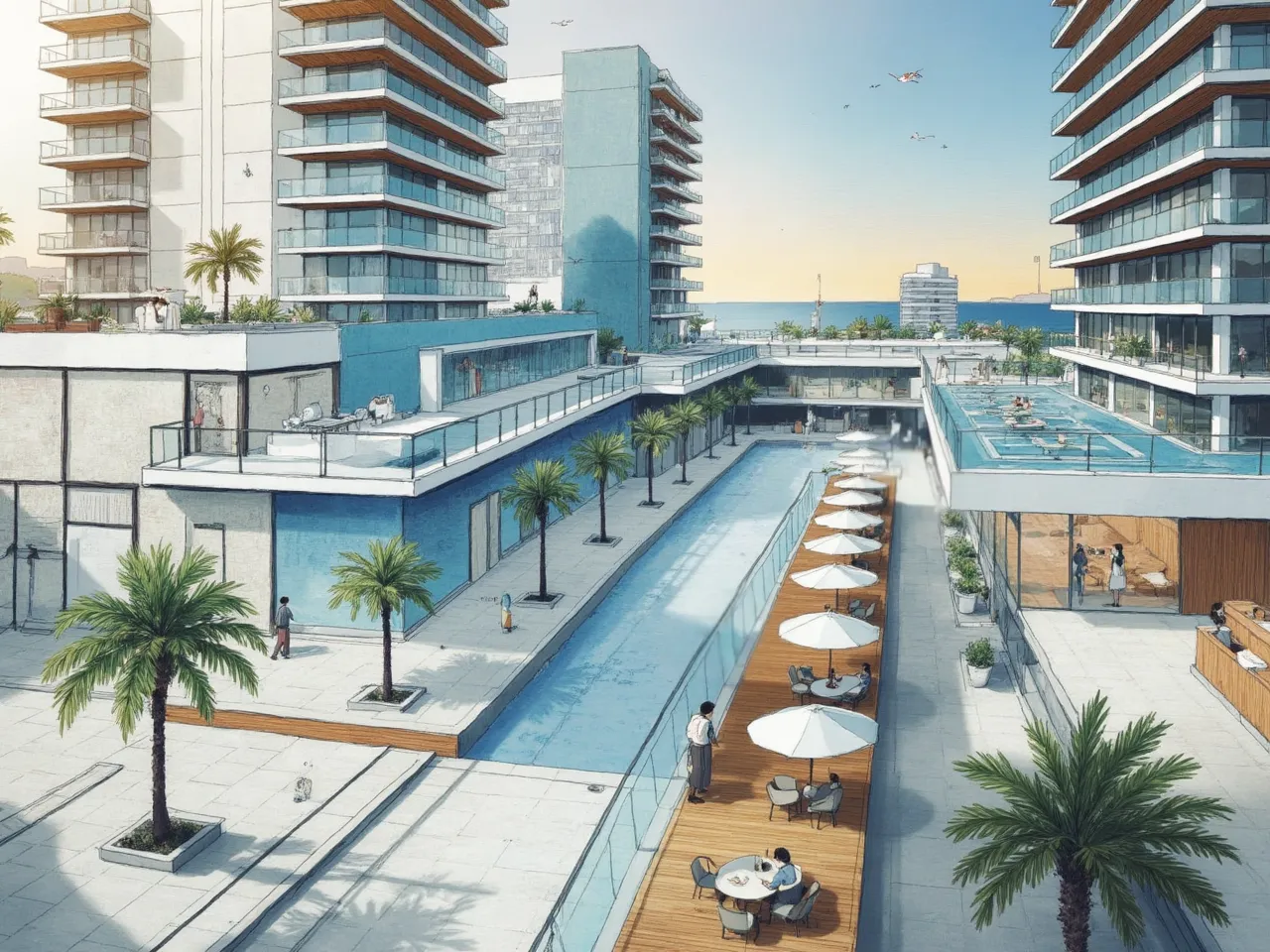
If you’ve noticed new apartment towers with ground-floor restaurants or shopping centers adding office space in your neighborhood, you’re seeing South Florida’s most significant real estate shift in years. Instead of building single-use homes or retail, developers are creating compact neighborhoods where residents can live, work, shop, and socialize within walking distance — minimizing the need to drive.
“Mixed-use projects should be like the central square of a city, where people gather, and life happens,” says Nicolas Pinzon, associate principal at RSP Architects, who recently joined the company’s Miami office after decades designing large-scale projects across Europe and Latin America.
This new approach is driven by necessity. South Florida’s automobile traffic continues to worsen, and long commutes are wearing on residents. By stacking residential units above shops, adding co-working spaces, and including gyms or entertainment venues, developers are betting that convenience will outweigh the old preference for separated uses.
Why Mixed-Use Is Accelerating
Three main forces are driving this rapid expansion of mixed-use development. First, the pandemic shifted priorities toward outdoor spaces and fresh air. South Florida’s climate allows for open-air plazas and rooftop terraces year-round, unlike cities with harsher weather.
Second, consumer behavior has changed. Physical retail is shrinking as online shopping grows, but people still want experiences. Shopping centers are evolving into places where you can meet friends for coffee, join a fitness class, or relax while your children play nearby. Retailers are reducing traditional sales floors to add pickup areas and more flexible spaces, but in-person browsing and social activity remain important.
Third, rising housing costs are forcing developers to rethink what attracts tenants and buyers. Buildings that bundle amenities — such as gyms, shared workspaces, and ground-floor cafés — command higher rents and sale prices. Convenience and lifestyle integration are now selling points, not just add-ons. “You’re avoiding long commutes and giving people more time to enjoy these new environments,” Pinzon says.
The state’s Live Local Act, which allows developers to build taller if they include workforce housing, is further accelerating mixed-use construction. Projects that once would have been strictly luxury condos are adding affordable units and shared amenities to qualify for higher density.
How It Looks on the Ground
Coconut Grove’s CocoWalk illustrates the shift. Once a standard outdoor shopping center, CocoWalk now blends office space, restaurants, a gym, and entertainment venues. It’s become a neighborhood gathering spot, not because of a single anchor tenant, but because there’s always activity and a mix of uses.
Developers are reimagining old malls, opening them up and adding residential or office towers above. Former big-box stores are being divided into smaller shops with outdoor seating, creating street-level energy. New projects near transit stations are designed to enable residents to use the Metrorail and avoid driving altogether.
Orlando is seeing similar development near Disney, with major projects combining entertainment, retail, and hotels — though some lack housing. In Miami, even residential towers that focus on condos or apartments are now including retail and co-working spaces on lower floors.
What This Means
For renters and buyers, expect more choices that come with built-in conveniences. Ground-floor retail, shared workspaces, and rooftop lounges are increasingly standard features. When touring properties, these amenities are no longer just bonuses — more and more they’re becoming expectations.
For homeowners considering a sale, proximity to mixed-use hubs is becoming more important to buyers. Walkability and access to amenities can increase a property’s appeal and value.
For small investors, mixed-use projects offer a way to diversify. Buildings with a mix of retail, office, and residential tenants spread risk across different income streams, providing more stability in changing markets.
What’s Next
Several factors will determine how quickly mixed-use development continues to spread. If mortgage rates fall below 6%, more buyers are likely to enter the market, especially for units in new mixed-use buildings near transit. Ongoing traffic congestion is expected to increase demand for neighborhoods where daily needs can be met on foot. If more local governments adopt zoning changes along the lines of the Live Local Act, developers will have greater flexibility to combine uses and build higher, accelerating the trend.
The question isn’t whether mixed-use development will continue to shape South Florida — it’s how far the model will spread and how quickly. The region is still early in this transition. Many neighborhoods that could support walkable, mixed-use density remain dominated by strip malls and surface parking lots. As infrastructure investment catches up and zoning barriers continue to fall, those areas are likely to be next.
About the Expert: Nicolas Pinzon, Associate Principal at RSP Architects in Miami, specializes in mixed-use, retail, and master planning projects across South Florida and Latin America, two of the world’s fastest-growing regions.
This article is based on information provided by the expert source cited above. It is intended for general informational purposes only and does not constitute legal, financial, or real estate advice. Readers should conduct their own research and consult qualified professionals before making any real estate or financial decisions.
Similar Articles
Explore similar articles from Our Team of Experts.