
The multifamily syndication market has changed significantly over the past two years, leaving many investors and capital raisers reassessing their strategies. While headlines have focused on...

Market Reality Check: A 40-Year Real Estate Veteran's Unfiltered Take on Tampa Bay's Housing Market

Written by:
Date:
19 Jan 2026
Share via Facebook

Share via Linkedin

Share via X

Copy to clipboard


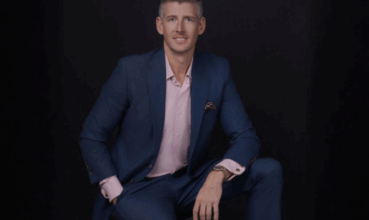
The Tampa Bay real estate market presents a complex picture that defies national headlines and generalized predictions. While media coverage often highlights broad market downturns or recovery narratives, experienced professionals like John Hoffman, team leader at Tampa Home Group, see a reality shaped by local dynamics, inconsistent agent expertise, and persistent supply-demand mismatches.
Hoffman, licensed since 1986, has witnessed multiple real estate cycles in both upstate New York and Tampa. His approach centers on in-depth market analysis and client-focused service rather than high-volume sales, providing a grounded perspective on the region’s current conditions.
A Market of Contrasts
Tampa Bay’s residential market is marked by a sharp divide between homes that sell quickly and those that linger unsold. “The biggest change is the number of homes that come on the market, and don’t sell,” Hoffman says that the number is up 200-300% in the last two years, based on the area.
Yet, these averages conceal a more detailed story. In neighborhoods such as Lutz, Land O’ Lakes, Wesley Chapel, New Tampa, and Odessa, 30% to 40% of pending listings go under contract within 30 days. Well-priced, move-in-ready homes continue to attract strong demand, while outdated or overpriced properties remain on the market for extended periods. “That tells me there’s still strong demand for homes in good condition and priced correctly. Most buyers can’t afford to renovate, and most sellers don’t want to discount their price to reflect needed updates,” Hoffman explains.
Pandemic-Era Pricing Fallout
The roots of today’s pricing challenges trace back to the frenzied buying during the COVID-19 pandemic. “In the COVID market, people were paying crazy numbers whether the house needed updating or not,” Hoffman says.
This is especially evident in new construction neighborhoods. In Wesley Chapel, buyers who paid $550,000 for new homes two and a half years ago, often with $30,000 in builder incentives, now see similar homes selling for $490,000, with comparable incentives still on offer. “Those people who bought at the peak can’t compete,” Hoffman notes. “If they want to sell, their best case might be $480,000 to $500,000, but they paid $530,000. After 7% closing costs, they’re underwater and would have to bring cash to closing if they only put 5% down.”
This scenario leaves many homeowners unable to sell or rent out their properties without taking significant losses. “We just had a client who would have lost $12,000 a year if they turned their house into a rental,” Hoffman says.
Insurance: Stabilizing but Uneven
Florida’s property insurance market, notorious for high costs and volatility, is showing early signs of stabilization thanks to recent regulatory changes. “Insurance is becoming a little bit more affordable over the last few years,” Hoffman reports, attributing this to reforms targeting legal abuse. He points out that although Florida holds about 15% of all U.S. homeowner policies, it accounts for 90% of litigation against insurers, mainly due to incentives that encouraged lawsuits over small claims.
However, insurance costs remain highly variable based on property age and construction. “In Zephyrhills, new construction might be $1,600 a year, but a 30-year-old home costs $4,500 a year to insure,” Hoffman says. While the overall trend is improving, older properties and those in specific locations still face steep premiums.
Agent Inexperience: A Growing Problem
Hoffman is direct in his criticism of the industry’s growing inexperience. Nearly half of licensed agents sold zero homes in 2024, and 73% sold fewer than three. “In my view, one of the worst things that has happened to the real estate industry is the rise of companies like Zillow and Realtor.com—not because of the platforms themselves, but because they allow inexperienced agents to enter the market without the necessary training. These platforms provide a steady stream of buyers and sellers to large teams, but last I checked, many of these agents are only closing 7 or 8 transactions a year. That’s simply not enough to build real expertise.”
The consequences are real for consumers. Hoffman describes meeting a young buyer last week whose agent had made only one sale over three years. “ The buyer was frustrated with his agent for lack of effort and for sending properties to review. That agent doesn’t know how to price real estate or evaluate construction quality,” he says. He has seen other agents lose three escrow deposits on one of our listings a few years ago because their agents didn’t fully understand the purchase contract. Those buyers lost tens of thousands of dollars due to poor advice.
Neighborhood-Level Nuances
Tampa Bay’s market is highly segmented, with significant differences even within single zip codes. “Take New Tampa as a whole—it’s down about 3% year over year in residential resale. But West Meadows is down 6.5%, and Tampa Palms is only down 2%,” Hoffman notes.
Differences extend to property types within the same neighborhood. “A 3,000-square-foot two-story home is often worth less than a 2,000-square-foot one-story home because it’s cheaper to build up than out,” he explains. These nuances require local knowledge, and many agents lack the experience to guide clients accurately, resulting in frequent pricing errors.
Condo Market Under Pressure
The condominium sector faces unique challenges due to stricter regulations following the Surfside collapse and mounting deferred-maintenance issues. “Depending on the age and height of the building, new engineering requirements and expensive repairs are now mandatory,” Hoffman explains. Combined with rising insurance costs, these factors have led to a more than 20% decline in condo values, compared with a 4% drop in single-family home values. The result is a much slower condo market, especially for older buildings facing high assessments and insurance premiums.
Cautious Optimism for the Future
Despite these headwinds, Hoffman remains optimistic about Tampa Bay’s long-term outlook. “Tampa’s rock solid. Hillsborough County is 98% year-round residents, with an average age of 35. It’s a tech-driven, growing market,” he says. The area’s strong job growth and steady population increase support underlying housing demand. “There’s a shortage of homes, which is why when people say the market’s crashing, you’ll see certain areas only down 1% or up half a percent. This is not a crash.”
Interest rates are a key factor for the near future. Rates have dropped from over 7% to the high 5% range, improving affordability. “The government has started quantitative easing again, printing about $250 to $300 billion a month. When that happens, interest rates go down,” Hoffman says.
If mortgage rates fall below 5.5%, Hoffman expects a notable boost in sales and new construction. “I’m looking at the number of transactions in my market going up anywhere from 12 to 15%. I think 2026 will be better than 2025 for both sales volume and prices.”
Bottom Line: Expertise Matters
Tampa Bay’s real estate market illustrates broader industry challenges: a persistent gap between inventory and buyer preferences, widespread agent inexperience, and the ongoing impact of pandemic-era pricing. Yet beneath these short-term fluctuations, the market remains fundamentally healthy, driven by population growth, economic diversification, and limited land for development.
For real estate professionals, success depends on hyperlocal expertise, candid communication, and the ability to navigate increasingly complex transactions. As Hoffman puts it, “You do your job right, and you focus on how many transactions you want to do a year, the money will come.”
Similar Articles
Explore similar articles from Our Team of Experts.