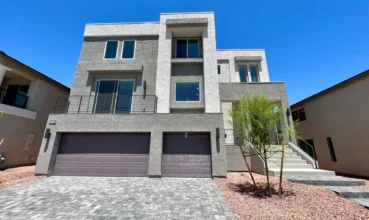

The Atlanta real estate market is experiencing a notable shift, particularly in the luxury segment where values have declined over the past six months. For seasoned professionals like Keiann...

West Whiteland Township Emerges as Philadelphia Suburbs' Development Hotspot

Written by:
Date:
12 Dec 2025
Share via Facebook

Share via Linkedin

Share via X

Copy to clipboard


West Whiteland Township in Chester County, Pennsylvania, has emerged as one of the most active development hubs in the Philadelphia metropolitan area, fueled by its strategic location, robust demographics, and strong housing demand that has persisted through recent economic uncertainties.
The township’s appeal centers on its position at “the crossroads of Chester County,” situated at the intersection of Pennsylvania Route 100 and U.S. Route 30. This location provides exceptional connectivity, including two commuter rail stations and Amtrak service to Manhattan.
“Chester County is the westernmost county of the Philadelphia metropolitan area, and our county commissioners are very proud to note that we have the data to support that we are the healthiest, wealthiest, and best educated county,” explains John Weller, Director of Planning & Zoning at West Whiteland Township. “Our township is right where the main north-south route is crossed by the main east-west route.”
This advantage creates what Weller calls a “sweet spot,” maintaining suburban character yet providing easy access to Philadelphia and Manhattan. From his office, Weller can walk to the Exton train station in 10 minutes for a 30-minute ride to central Philadelphia, or use Amtrak for Manhattan in two and a half hours.
Residential Development Dominance
West Whiteland’s development landscape is dominated by residential projects, from age-restricted communities to apartments, townhouses, and single-family homes. Prices reflect demand and economic strength.
“About a year, year and a half ago, one of our projects came through—single-family homes, about a hundred of them—and they were advertising that prices for the houses were starting at $1.1 million, which we all just found a little breathtaking around here,” Weller notes. “When you suddenly realize that a lot of our houses are now crossing the million-dollar mark, it’s kind of breathtaking.”
Despite national concerns about mortgage rates, demand remains high. “We’re just not seeing that here,” Weller observes. “There is still a high demand for housing, both rental and for sale.”
During the COVID-19 pandemic, demand stayed strong; a 340-unit apartment project completed just as the pandemic hit continued to lease successfully, with tenants often signing after virtual tours.
The Exton Square Mall Redevelopment
A major development story is the planned redevelopment of Exton Square Mall. The site is prime real estate, with the owner investing $34 million to purchase it and facing $20 million in demolition costs.
“You’re looking at something that’s a $50 million site before you even have anything on it,” Weller explains. “But again, here we are at the crossroads of the healthiest, wealthiest, and best educated county, and people see this is a place that people want to be.”
Although the board of supervisors denied the initial proposal, legal proceedings are ongoing. “We know something is going to happen there,” Weller says.
Market Dynamics and Developer Activity
Local developers drive most activity, recognizing market strength. Unlike many markets experiencing financing challenges, West Whiteland’s desirability supports capital availability.
“The developers know that they can build a residential project here, and they can sell the units,” Weller explains. “Right in the smack in the middle of COVID, we had a groundbreaking for a residential project, townhouses in this case, and I said, ‘How are you doing the sales?’ And it’s like, ‘We literally cannot build them fast enough.'”
National builders have also taken notice. A 100-acre tract originally approved for office use was recently purchased for a 317-unit age-restricted community, later acquired by Toll Brothers.
Infrastructure and Planning Strategy
Traffic congestion is a concern, but higher-density projects are kept near major roads, and much of the traffic is pass-through.
“Because of our crossroad situation here, we find that a lot of the traffic that we have doesn’t come from here and it isn’t going here, it’s just passing through,” Weller notes. “So the new projects don’t really add very much to it.”
West Whiteland also promotes bicycle and pedestrian infrastructure. “Most developers now recognize that having a bicycle and pedestrian trail on or adjacent to their project is a real asset and something they can market,” Weller says.
The Chester Valley Trail, connecting to Philadelphia’s Circuit network, exemplifies these recreational assets. Weller notes he can bike from his office to the Philadelphia Art Museum on dedicated trails.
Limited Greenfield Development
With very little undeveloped land, West Whiteland is focused on redevelopment. “What we are seeing is developers coming looking at sites that were developed maybe in the 60s or 70s that are now definitely tired, and people are just kind of tearing those down and building them up anew,” Weller explains.
Sustainable Growth Factors
The township’s appeal is supported by top public schools and strong land appreciation. Chester County has some of Pennsylvania’s strongest land value trends, reinforcing these fundamentals.
“This has historically been a desirable place, and we would like to keep it that way,” Weller emphasizes. Exton Park’s 700 acres provide green space, while the “virtuous cycle” of desirability continues.
“Even going back to the colonial era, this is a valley called the Chester Valley or the Great Valley, and it was basically an easy way for people to go from the bigger cities like Philadelphia and move west,” he notes. “We were just kind of right on that path.”
Future Outlook
Weller expects sustained development over the next two years, mainly from redevelopment. The Exton Square Mall will likely be central, while the township’s location and quality of life keep attracting residents and developers.
“We are blessed by our geography, by the access to transit routes, and just the livability of our community,” Weller concludes. For institutional investors and developers, West Whiteland Township remains, as Weller says, “literally a no-brainer” —a place where strong fundamentals and strategic location ensure appealing opportunities despite high prices.
Similar Articles
Explore similar articles from Our Team of Experts.