

A wave of commercial property refinancing challenges is looming as higher interest rates collide with loans made during the zero-rate era, according to Joel Miller, Managing Partner at Wall ...

Limited Land Supply Constrains Phoenix’s Real Estate Expansion

Written by:
Date:
04 Nov 2025
Share via Facebook

Share via Linkedin

Share via X

Copy to clipboard

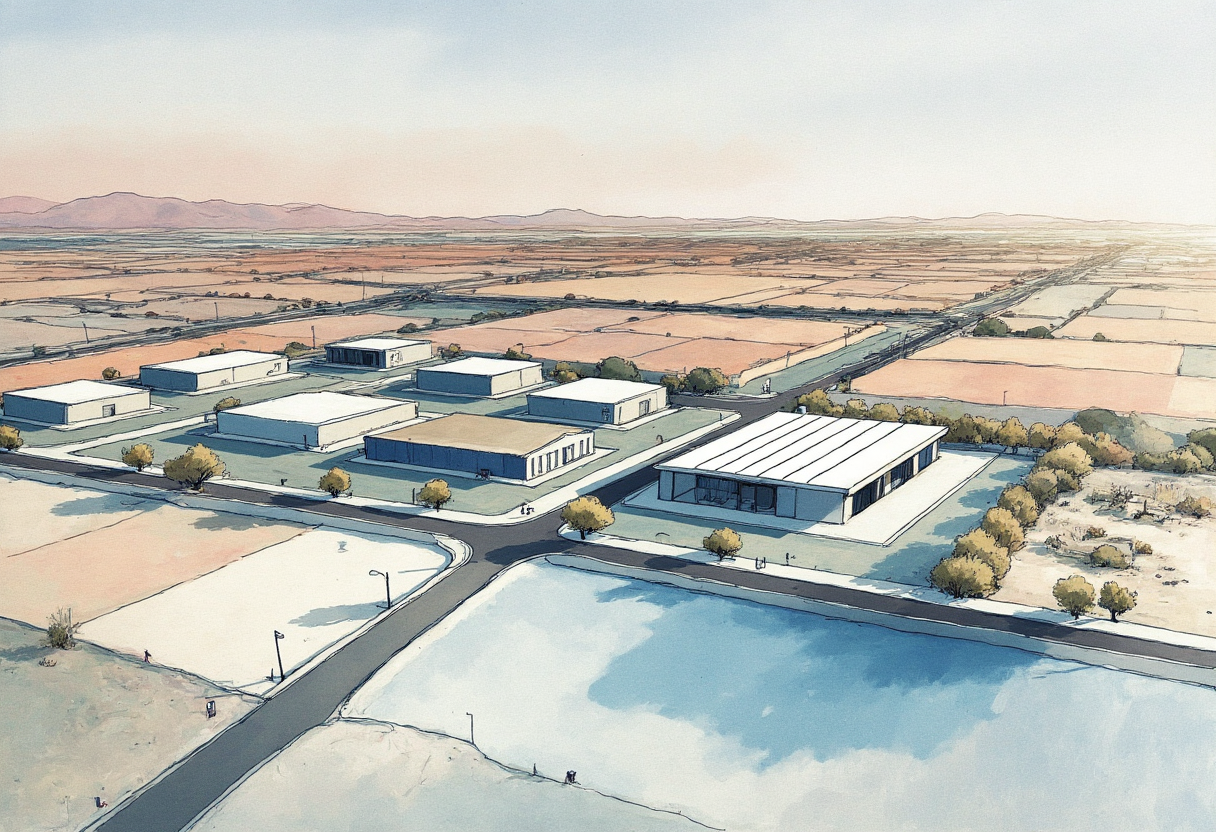
The land market in Phoenix is experiencing a significant supply-demand imbalance, creating challenges for developers while benefiting cash-rich landowners, according to Alex Bluth, Vice President of Investments at Menlo Group Commercial Real Estate. In a recent interview, Bluth explained how this dynamic is reshaping development economics across the metro area.
“Land is really tricky in Phoenix right now,” said Bluth, who specializes in off-market industrial and land transactions throughout the Phoenix MSA. “Most land, because it’s not generally cash flowing, is usually owned outright in cash. So they don’t have the same issues that your typical investor developer who’s utilizing debt, they don’t have the same issues.”
The Phoenix land market currently shows a clear divide between supply and demand, with cash-rich landowners holding significant pricing power over developers who face increasing pressure to deliver projects.
Bluth pointed to several supply-side dynamics that are intensifying market pressures in Phoenix. Many landowners, he explained, are in strong financial positions and face no immediate incentive to sell. “A lot of these landowners are going, ‘Hey, I already own this outright. I’m not forced to sell, and I am also not forced to change my land basis if I’m going to sell this property.’ So they’re choosing to just mark it up at a high number and wait,” he noted, highlighting how this behavior keeps prices elevated.
Because many of these landholders own their properties outright, they are shielded from the refinancing pressures affecting leveraged owners. This creates a cash position advantage that allows them to wait out market cycles. Compounding this, major land banking families hold tens of thousands of acres across the Phoenix metro area, strategically controlling the pace of land release and effectively shaping the region’s development trajectory.
Bluth noted that several interrelated factors are shaping the demand side of Phoenix’s development landscape. Certain industries, particularly medical facilities, are constrained by location-specific requirements that force them to build within tight geographic boundaries. This dynamic has driven up both land and rental prices, creating a ripple effect across multiple property sectors.
Rising land costs, in turn, are fueling a broader cost escalation cycle, as higher acquisition expenses translate into more expensive developments and, ultimately, increased rental rates. Despite these pressures, developers face limited flexibility; many must maintain active pipelines to sustain operations, even when market conditions make new projects financially challenging.
Bluth observed that the supply-demand imbalance is especially pronounced in sectors needing specific locations, where developers have little negotiating leverage against landowners who can wait for their preferred price.
This situation marks a departure from traditional dynamics, where development pressure could lead to negotiated land pricing. Instead, Phoenix developers are facing a seller’s market with few options for relief.
Similar Articles
Explore similar articles from Our Team of Experts.

Perspectives, Commercial Real Estate, Market Analysis & Policy, Industry News, Residential Real Estate
The University of Florida’s significant presence in Gainesville shapes the local real estate market in ways that reach far beyond student housing, according to international real estate ex...