
Atlanta, Oct. 10, 2024 (GLOBE NEWSWIRE) — Piedmont Office Realty Trust (NYSE: PDM), an owner of Class A office properties located primarily in major U.S. Sunbelt markets, including Orl...

Turning Distressed Properties into $25M Success Stories: A Developer’s Playbook

Written by:
Date:
16 Oct 2025
Share via Facebook

Share via Linkedin

Share via X

Copy to clipboard

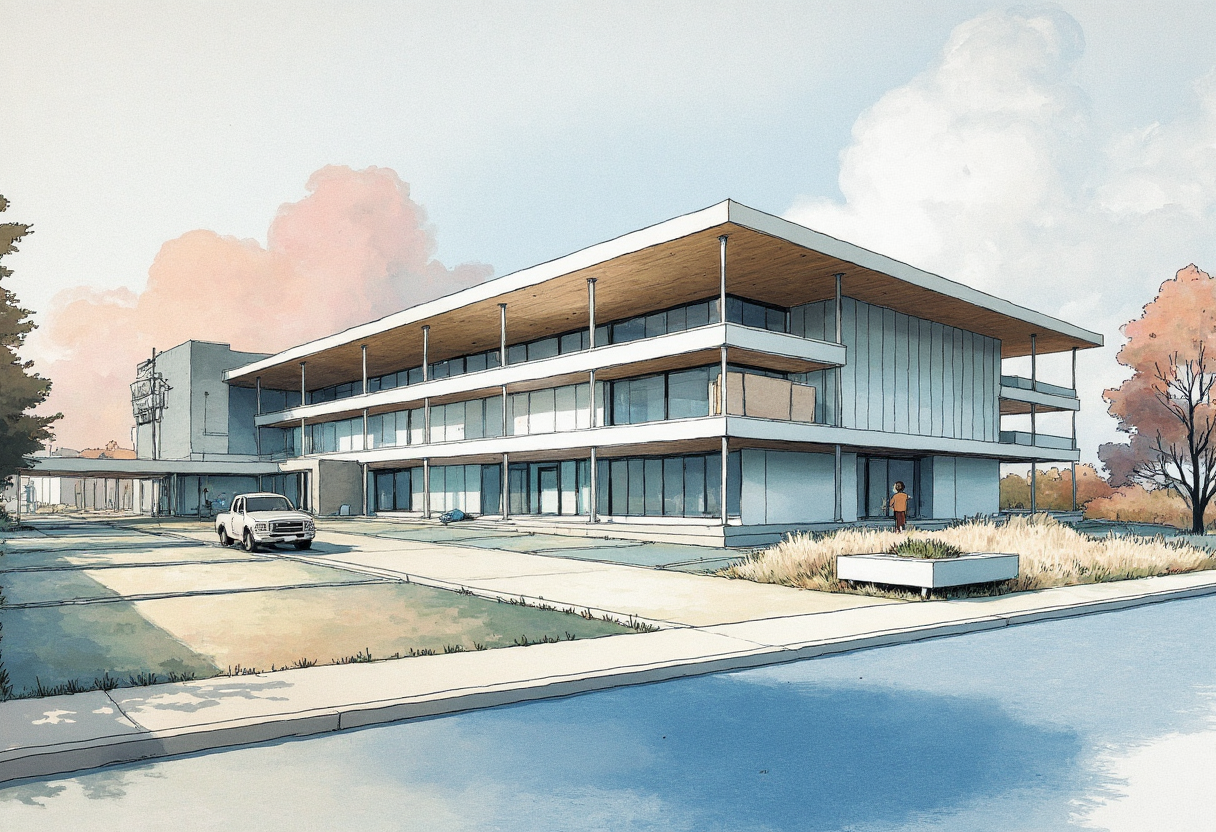
A decommissioned hospital in a blue-collar neighborhood near Daytona Beach might seem like an unlikely prize property. But according to Mark Fansler, CEO of M Vincent Assets (MVA) LLC, such overlooked assets represent major opportunities for investors willing to completely reimagine their use.
“We’re buying big, abandoned buildings or failing buildings, and converting single-use buildings into multi-use buildings,” Fansler says, describing his company’s approach to adaptive reuse.
Reading Market Realities
The key, according to Fansler, is understanding what the local market can actually support. In the case of the hospital project, traditional conversions wouldn’t work: “Being in a blue-collar neighborhood, I couldn’t stick 100,000 square foot of office users in it, because there’s no white-collar labor around.”
Healthcare uses were equally problematic. “Within a 15-or-so block radius, there were 13 healthcare systems, assisted living, skilled care, hospital outpatient care, and they were all partially vacant,” Fansler notes. “It didn’t make sense to add to the vacancy by adding yet another facility.”
Engineering Creative Solutions
Instead, Fansler’s team developed an unconventional solution. Using steel from his building materials company, they modified the structure to support climate-controlled storage, a use with steady demand and lower operating costs.
“We did that by reducing the span, and put steel in the middle so the spans were shorter on each side, which made it stronger,” he explains. This increased the building’s live load capacity from 100 to 125 pounds per square foot.
Maximizing Asset Value
The transformation didn’t stop there. “I didn’t need the same amount of parking for storage that was needed for the hospital patients and visitors,” Fansler says. “So I turned the parking lot into out parcels and sold it to national convenience stores and drugstores, for the same price I bought everything.”
Through creative deal structuring, Fansler says, “I ended up with a building that I paid nothing, essentially, for that’s worth about 25 million.”
M Vincent Assets’ Approach
This example illustrates the company’s broader philosophy toward distressed assets. “We take things that have outlived their lives and turn them into things that make sense now,” Fansler explains.
The approach requires deep market knowledge and creative problem-solving. But for properties that others might write off, Fansler argues the potential returns justify the effort: “You can take it, sell it, and get money back. In real estate, historically, everything you’re doing is increasing in value.”
Similar Articles
Explore similar articles from Our Team of Experts.

Perspectives, Real Estate Investment, Industry News, Residential Real Estate, Market Analysis & Policy
A notable migration trend is transforming Orlando’s luxury real estate market, with California buyers increasingly opting for Central Florida over established high-end destinations lik...