Orange County’s housing market has split into two. Some homes attract multiple offers within days, while others sit for weeks with no interest. For buyers and sellers, knowing which side o...

'The Missing Middle: Why Medium-Density Housing is South Florida's Next Frontier'

Written by:
Date:
25 Jul 2025
Share via Facebook

Share via Linkedin

Share via X

Copy to clipboard

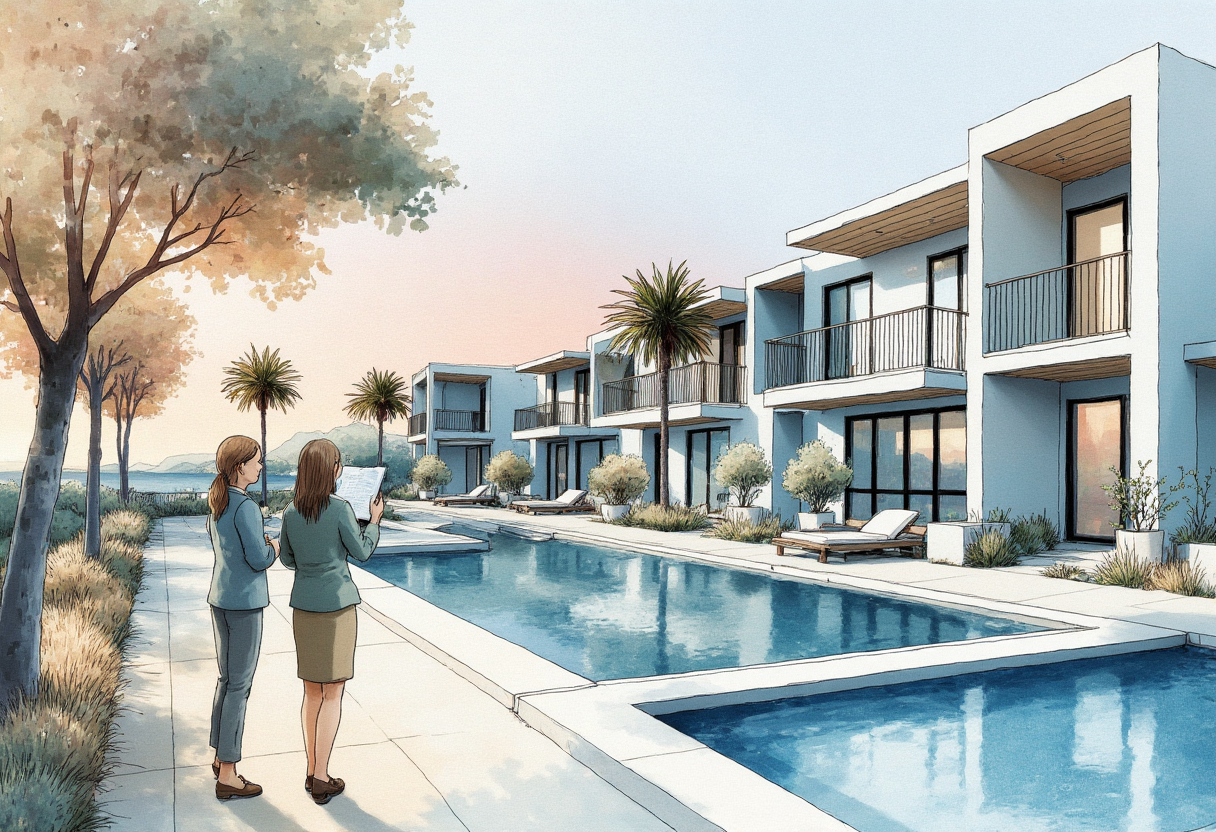
A critical gap exists in South Florida’s residential market that most developers have overlooked, according to Jerad Graham, Development Principal at Kastelo Development. “The medium density residential hasn’t been built for both economic reasons and also for policy and regulatory reasons,” Graham says, highlighting an opportunity that could reshape the region’s housing landscape.
The Market Gap No One’s Addressing
According to Graham, South Florida’s current residential offerings fall into distinct but limited categories: “There’s the large apartment complexes… the high-rise condos that are waterfront… and then there’s the suburbs.” This polarization has left a significant void in the middle market, particularly for boutique multifamily developments in prime urban locations.
“We want to have a true demand generator that’s naturally occurring,” Graham explains, pointing to locations like Atlantic Avenue in Delray Beach as prime examples. These established urban corridors offer natural appeal that can’t be manufactured in suburban developments.
The Economics Behind the Gap
Graham argues that both market forces and regulatory frameworks have historically discouraged medium-density development in South Florida. While developers have focused on either maximizing density with high-rises or pursuing suburban sprawl, the “missing middle” has remained largely unexplored.
“I think that right now there’s a shift in the consumer mindset and where the opportunities lie,” Graham notes, suggesting that market conditions are finally aligning to make medium-density projects viable. This shift comes as buyers increasingly seek walkable neighborhoods and human-scaled developments.
Bridging the Gap with Innovation
Graham’s firm is pioneering this approach with projects like Casa Avenida, which introduces California-inspired design elements to South Florida’s urban landscape. “We’re trying to take these little details that don’t usually get brought into a project like this, or you don’t get it in this type of an urban setting, and apply it on smaller sites,” he explains.
The development features unique elements like rooftop decks with air-conditioned spaces and elevated cocktail pools, amenities typically reserved for larger luxury developments but reimagined for boutique properties.
Market Response and Future Outlook
While still early in its execution, Graham’s vision appears to be resonating with buyers. “We’re priced below most of the other projects that are under construction or in the pre-sales phase,” he notes, suggesting that this middle-market approach can deliver premium features while maintaining competitive pricing.
Looking ahead, Graham sees significant potential for expansion of this model. His firm is already pursuing similar opportunities, having recently received acceptance on another LOI for a comparable project. This suggests that the “missing middle” may represent not just a gap in the market, but a significant opportunity for innovative developers willing to challenge conventional development patterns.
Similar Articles
Explore similar articles from Our Team of Experts.