
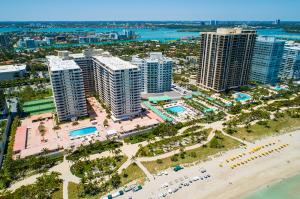
Why FL Residents Rely on Property Records of Florida for Accurate Property History Reports_ Why FL Residents Rely on Property Records of Florida for Accurate Property History Reports MIAMI, ...

Why You Can’t Regulate Your Way Out of a Housing Shortage

Written by:
Date:
12 Dec 2025
Share via Facebook

Share via Linkedin

Share via X

Copy to clipboard


Image Source: KeyCrew Media, generated with Google Imagen 4
How rent controls, supply gaps, and real-world economics shape what happens next in NYC and beyond.
New York City’s new mayor-elect, Zohran Mamdani, campaigned on a vision centered on tenant protections, affordability mandates, and large-scale public investment. The proposals vary in scope, but they share a core assumption: that tighter oversight of private landlords will stabilize the city’s housing market. The experts we spoke with say may not be so likely. Regulations can change incentives, but they can’t substitute for the one condition every healthy housing market relies on: enough homes to meet demand.
The lesson isn’t limited to New York. Comparable attempts overseas, particularly in the Netherlands, offer a useful roadmap. Landlords, developers, lenders, and renters all respond to the same economic forces, regardless of the city or the political moment. And when regulation tries to manage outcomes without increasing supply, the long-term effects are remarkably consistent.
The Essential Problem
Ron Kutas, who oversees thousands of multifamily units along the East Coast and in the South, puts it bluntly: “You can’t regulate your way out of a supply shortage.” Even the most ambitious rent caps, freezes, or stabilization rules don’t change the underlying math. New York adds households faster than it adds housing. Construction costs continue to rise, and a decade of missed production goals has left the city short by hundreds of thousands of units.
Mamdani’s call for 200,000 new affordable homes over ten years points in the right direction, but developers have immediately flagged two barriers: labor costs and financing. Union labor requirements add roughly 30 percent to total expenses, and federal funding for major housing programs looks increasingly uncertain. Economically, this target is far harder to execute than it is to announce.
In a market with too little housing, rent caps don’t create more apartments – they simply hold existing units in place. Kutas points out that when regulated rents fall well below what the open market would bear, tenants tend to stay put longer, turnover drops, and fewer units ever become available. At the same time, landlords are less inclined to add new rental supply if they’re not going to receive market rate rents for their efforts. The result is a tighter market overall, which makes it harder for newcomers to secure an apartment, not because they’re competing with current tenants, but because fewer units are being listed in the first place.
The Landlord Response
Rent control has a long history in New York, and landlords have seen the pattern before. Regardless of what happens with rents, costs for taxes, insurance, utilities, labor, and maintenance continue to rise. When rent ceilings don’t keep pace, owners adjust by cutting back on repairs or capital improvements.
Sean Sedaghatpour, a principal at Elisheva Realty, says this is already visible in stabilized and affordable units. “It discourages investors who aren’t highly proficient in navigating New York’s regulatory landscape,” he explains. “The ones who stay cut costs, because the math no longer supports anything else.” That doesn’t mean units disappear. They simply stagnate. Buildings age faster. Minor issues linger longer. In extreme cases – as seen in several European markets – landlords eventually exit by selling to owner-occupiers or to the city itself.
Amsterdam offers a sharp parallel. Reza Sardeha, who leads a property-tech company in the Netherlands, points to the country’s mid-rent regulations, which prompted many owners to sell rather than operate under stricter caps. Instead of being purchased by other investors, a large share of those properties were bought by first-time homeowners. The mix of listings changed quickly: fewer homes were available as rentals, and more were offered for sale to owner-occupiers. Existing tenants benefited from protection, but the private rental pipeline dried up because the long-term financial model no longer worked for landlords.
This example reinforces the same message that U.S. experts are emphasizing: rent controls alter behavior quickly, but not always in the ways policymakers expect.
Tenant stability vs. long-term availability
Every expert we spoke with agrees that helping renters stay housed is essential. But they also emphasize that stability measures only succeed when paired with policies that expand the overall number of homes. Monick Halm, who teaches women to build rental portfolios nationwide, has watched the same pattern emerge in multiple cities: protections can prevent sudden rent spikes, but without new construction or conversions, they do nothing to ease the underlying shortage.
Halm argues that the real gains come from combining targeted safeguards with policies that open the door to more housing: zoning that allows denser development, permitting processes that move faster, and incentives that make office-to-residential conversions financially possible. When those tools work together, they support both current tenants and future ones.
That pairing – stability for renters plus steady growth in supply – is the only approach that reliably improves affordability over time. Cities that lean heavily on protections without providing the means by which cities can expand housing tend to see short-term relief followed by the same crunch they started with, only deeper.
New York Sets the Tone
The significance of New York’s experiment reaches well beyond its borders, according to Jeff Biebuyck, who advises luxury buyers and investors in Southern California. Major coastal markets often watch one another closely, and New York’s policies tend to set expectations for how far other blue-state cities might go. If New York leans more heavily toward regulation without pairing it with new development, he expects that shift to echo outward.
The immediate effect isn’t collapse – it’s hesitation. Developers postpone projects until they understand the new rules. Lenders become more conservative. Investors redirect capital toward metros where the regulatory environment feels steadier. That slowing of momentum in New York can ripple into places like Los Angeles, San Francisco, Seattle, and Boston, where political leaders face many of the same affordability pressures and may be tempted to adopt similar measures.
Biebuyck describes this as a recalibration rather than a downturn: pipelines thin, deals take longer to underwrite, and capital becomes more selective about which markets to bet on. But those adjustments shape the choices available to renters and buyers in ways regulation alone cannot. If fewer units get financed or built in the first place – in New York or in the cities influenced by it – the shortage deepens nationwide.
The Implementation Gap
One overlooked piece of the affordability puzzle is how slowly major housing changes actually move through the system. Mamdani can propose an aggressive agenda, but he doesn’t control the full process: the state needs to approve most major shifts in rent regulation, zoning, and public-housing expansion. And even if Albany signs off, the institutions responsible for carrying out those policies – planning departments, housing agencies, financing partners, and the construction pipeline – are already stretched thin.
Ron Kutas notes that in cities with aggressive tenant protections, the gap between policy adoption and practical execution often defines the real impact. Regulations move quickly; development capacity does not. That mismatch shapes outcomes as much as the policies themselves. Caps or freezes can take effect immediately, but new housing – the only lasting solution experts agree on – arrives years later, if it arrives at all.
The What-Next Moment
Mamdani’s proposals will take months – likely years – to move through the state approval process. Some may never happen. The early phase will be defined less by results than by signals: how Albany responds, how lenders put a price on risk, how developers adjust, and whether the city can meaningfully speed up the production side of the equation. The first clues will come from permitting data, construction starts, and whether owners decide to hold, sell, or convert regulated units.
The real test isn’t whether rents are frozen or capped; it’s whether the city can expand the number of homes fast enough to keep pace with demand. Experts agree that tenant stability matters, but they also warn that New York’s long-term outlook hinges on building more — and building faster — than it has in decades.
As Sardeha puts it, “You can pause rents. You can rewrite rules. But without more homes, you’re just moving the pressure around.”
Similar Articles
Explore similar articles from Our Team of Experts.