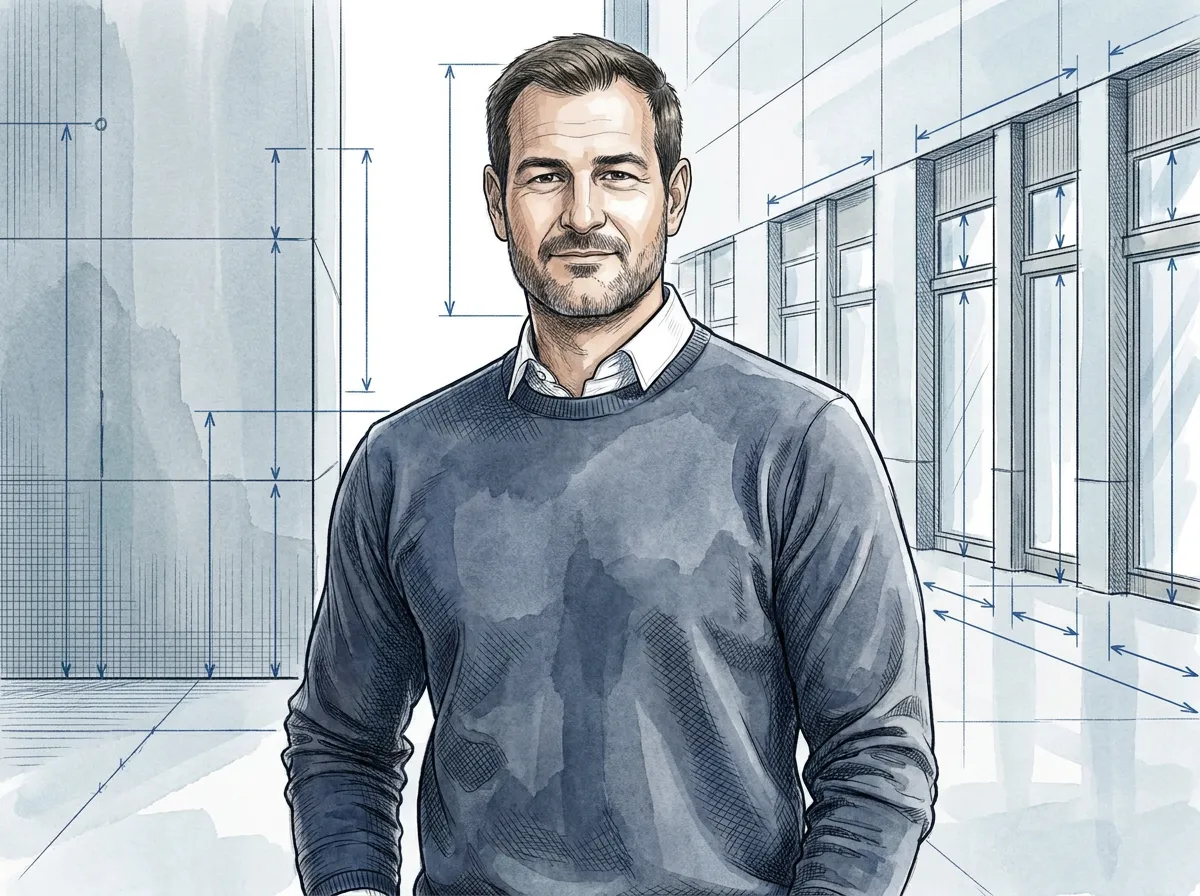
As construction costs remain stubbornly high and capital stays cautious heading into the second half of 2026, a growing number of boutique developers are rethinking not just where they build, but how. For Tyson Dirksen, Founder and Principal of Evolve Development Group, that rethinking has led to a focused bet on two converging forces: mass timber construction and the demand wave being driven by artificial intelligence.
Dirksen runs two parallel operations. Evolve Development Group handles the firm’s own projects. At the same time, Durata Advisory provides pre-development consulting to smaller boutique developers who lack the in-house capacity for early-stage feasibility and site selection work. His day-to-day focus sits at the front end of the development process, site selection, pricing, entitlements, and permitting. That front-loaded discipline, he argues, is exactly what separates projects that perform from those that bleed cost overruns in the field.
Building Before You Break Ground
Mass timber has been gaining ground steadily in commercial and mixed-use construction, growing at roughly 10 percent annually, though it still accounts for only about 1 percent of total construction activity. Dirksen attended the International Mass Timber Conference in Portland in early April, where 3,000 attendees from 30 countries gathered to examine the material’s future. Projects on display ranged from Amazon and Meta facilities to a 12-story, 90-unit residential building in Portland called Julia West House, delivered in 20 months.
That schedule compression is often cited as mass timber’s headline benefit, but Dirksen reframes the real advantage as process discipline rather than speed. Because mass timber components are prefabricated off-site, design and engineering decisions must be locked in roughly 12 months earlier than a comparable concrete project. That forces coordination up front and eliminates the improvisation that drives cost overruns. “In the field, you’ve already essentially paid for your meal, and you’re just getting the receipt,” he says.
Evolve pairs this approach with passive house construction standards, focusing on tight building enclosures, external insulation, and what Dirksen describes as the “perfect wall assembly” developed by building scientists John Straube and Joe Lstiburek. The firm pursues these performance levels whether or not a project seeks formal certification.
A Boise Bet on Student Housing
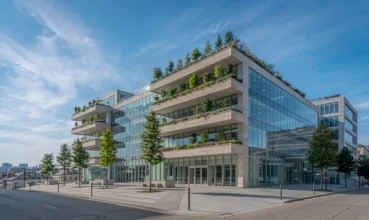
The project Dirksen is currently running feasibility on is a seven-story, roughly 200-unit mass timber development concept in Boise, Idaho, sited approximately half a mile from Boise State University. The ground floor is planned for retail, the second floor for commercial use, and the remaining five floors for residential. The project is still in due diligence and feasibility, but it reflects a deliberate read on where Boise stands in its growth cycle.
Dirksen has been watching the Boise market for years, partly through regular trips to fly into the Idaho backcountry. He held back during the pandemic surge, when year-over-year appreciation was strong, but the market felt speculative. Since then, prices have stabilized, and the city’s development patterns have matured. “It still has so much land outside that you don’t have a ton of urban infill yet,” he says, “but we feel like it’s coming to its tipping point where it’s a good investment to start building more densely.”
The plan is to hold and rent the asset rather than sell, targeting students and university-adjacent renters. Dirksen describes it as an institutional product with low yields and low vacancies driven by proximity to the university, not a spec luxury play, but a response to Boise State’s housing shortage.
On the capital side, the market remains cautious. Construction financing is tight, and persistent inflation continues to weigh on consumer confidence. “It’s hard to get anything to pencil right now,” Dirksen says. “That’s really why we don’t have anything vertical at the moment.” A 200-basis-point rate reduction, he suggests, would quickly change the calculus, improving both construction financing terms and project returns across rental and for-sale products alike.
San Francisco’s AI-Driven Rebound
While his current active feasibility work is in Boise, Dirksen’s primary focus market remains the San Francisco Bay Area and what he calls the gateway cities of the peninsula and Southern Marin County. That market has strengthened considerably over the past 18 months, driven largely by AI companies absorbing commercial office space and generating a new class of high-income buyers.
The demand is visible in pricing. Per press coverage of the SF market (Redfin / World Property Journal), houses are selling for $900,000 over asking and luxury condo prices are up around 27 percent in the city, fueled in part by young AI employees receiving six-figure signing bonuses. “You’re getting 22-year-olds receiving half-million-dollar signing bonuses from AI companies, and they’re going out and buying things,” Dirksen says.
The result is a bifurcated market. Luxury residential and office space tied to AI tenants like Anthropic and OpenAI are performing strongly, while more affordable segments remain constrained. Dirksen is candid about where Evolve focuses: “I wouldn’t be building affordable in San Francisco. It’s not my expertise yet.”
He also sees mass timber as well-suited to the commercial office recovery underway in the Bay Area. Research links biophilic design, the use of natural materials in built environments, to higher tenant productivity and fewer sick days, and major tech companies are already building office spaces with mass timber. That alignment between tenant preference and material performance reinforces Evolve’s thesis.
Entitlements and the Housing Shortage
On the regulatory front, Dirksen reports meaningful improvement in both markets. San Francisco, long criticized for slow entitlement and permitting timelines, has become noticeably more cooperative. Boise has historically moved faster on construction permits and has grown more helpful on entitlements as well. The common driver is straightforward: housing shortages have made municipalities more willing to approve residential projects.
Dirksen also notes that the height-bonus mechanics differ between his markets. Boise offers additional height for either sustainability commitments or affordable housing components, giving developers two paths to density. California’s state density bonus law unlocks height only in exchange for higher affordable set-asides.
Looking Ahead
Dirksen is currently evaluating projects in Boise, Idaho, southern Idaho, and Nicaragua, while continuing to watch the San Francisco Bay Area market closely. A resort project in Nicaragua, discovered during a surfing trip, is among those under evaluation, reflecting the opportunistic lens he brings to site selection.
His broader outlook for the next 12 months centers on two themes. AI demand continues to reshape what gets built and where, particularly in coastal California. And mass timber, still at the early edge of mainstream adoption, is positioned for faster growth as more project teams gain experience with the material and its front-loaded process requirements.
“Right now it’s growing at a CAGR of 10 percent,” Dirksen says. “I think it will go up to 20 or 30 percent. It’s the product of the future for urban mixed-use mid-rise.”
For developers willing to invest in the design discipline of mass timber demands, the schedule certainty and product quality that follow may prove to be the real competitive edge, particularly as financing conditions improve and AI-driven demand continues to concentrate in markets where density and speed both matter.
About the Expert: Tyson Dirksen is the Founder and Principal of Evolve Development Group, focused on mass timber and passive house construction in the San Francisco Bay Area and Boise, Idaho markets. He also operates Durata Advisory, which provides pre-development consulting to boutique developers on feasibility and site selection.
This article is based on information provided by the expert source cited above. It is intended for general informational purposes only and does not constitute legal, financial, or real estate advice. Readers should conduct their own research and consult qualified professionals before making any real estate or financial decisions.