

Panama’s luxury real estate market is entering its strongest phase in nearly 20 years, fueled by a new wave of international buyers seeking second residences and portfolio diversification....

Why Jersey City Multifamily Homes Are Selling While Single-Family Houses Sit

Written by:
Date:
17 Mar 2026
Share via Facebook

Share via Linkedin

Share via X

Copy to clipboard

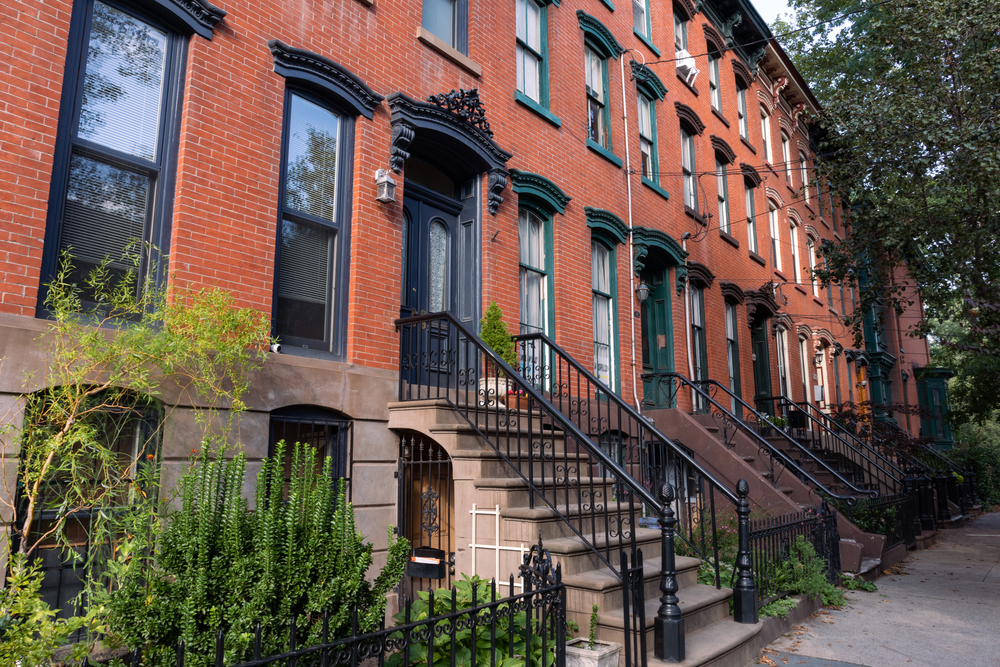
If you’ve been watching the Jersey City real estate market, you’ve likely noticed an emerging pattern: single-family homes are lingering on the market, while two- and three-family properties are selling quickly. Sandy Cuevas, sales associate with Weichert Realtors specializing in North Jersey, says the trend is being driven by buyers seeking ways to manage today’s high mortgage rates.
“I’m seeing a lot more movement on the multifamily side,” Cuevas says. With mortgage rates above 6% and home prices still high, buyers are looking for properties that generate additional income. Rental units in a two- or three-family home can offset a significant portion of the monthly payment, making homeownership feasible for buyers who might otherwise be priced out.
Multifamily Properties in Demand
In Jersey City’s residential neighborhoods, “For Sale” signs on single-family homes are staying up for weeks, while multifamily properties go under contract within days. The math is simple: a single-family home priced at $600,000 with a 6.5% mortgage rate costs about $4,500 per month. By contrast, a two-family home at $650,000, with one unit rented for $2,000 a month, reduces the owner’s out-of-pocket payment to $2,600.
Buyers aren’t just investors. Many first-time buyers and families are turning to multifamily homes because rental income is the only way to afford current mortgage payments. Cuevas says clients are recalculating what kind of property makes financial sense.
Three Key Factors
Higher Mortgage Rates: Mortgage rates above 6% have pushed many buyers out of the single-family market. A home that was affordable at a 3% rate now costs hundreds or even thousands more per month. Buyers who want to stay in the market are seeking properties with built-in rental income. Cuevas notes that a two-family home with a tenant can cut the owner’s monthly payment by nearly half.
Pooling Resources: Some families are teaming up to buy multifamily homes together. “We see family members getting together, buying a house between two or three people, and just moving into one floor,” Cuevas explains. This approach allows households that might not qualify individually to combine resources and build equity, each occupying a separate unit.
Single-Family Inventory Is Growing: As more buyers shift to multifamily options, single-family homes are accumulating on the market. Increased inventory means more competition among sellers and longer days on market. Cuevas observes that many sellers still expect the quick sales and bidding wars of recent years, but buyers now have more choices and are prioritizing properties with income potential.
What Buyers and Sellers Should Consider
For Buyers: Consider two- and three-family homes, even if you initially preferred a single-family property. Calculate what you can afford using potential rental income. Some buyers are partnering with family members to purchase a multifamily property, allowing everyone to save compared to renting separately. If you’re determined to buy a single-family home, use the slower pace to your advantage by negotiating on price and seeking seller concessions.
For Single-Family Sellers: Price competitively from the start. Overpricing leads to longer days on the market as buyers focus on properties with income potential. Offer incentives, such as repair credits or assistance with closing costs, to attract interest. High-quality staging and professional photos are increasingly important when buyers have more options.
For Multifamily Sellers: While demand for multifamily properties remains strong, accurate pricing remains important. Highlight rental income in your listing and provide documentation to help buyers understand the financial benefit. Listing just before the weekend can maximize showings, as buyers are actively seeking these opportunities.
The Bottom Line
Jersey City’s multifamily market may be reshaping how a generation thinks about homeownership. As long as mortgage rates stay elevated, buyers will keep running the numbers and landing on the same answer: a property that pays for itself, at least in part, is simply a smarter entry point into the market.
The bigger question is what happens next. If rates eventually ease, will single-family demand bounce back, or will buyers who discovered multifamily investing stick with what works? Cuevas believes many will. “Once buyers see how rental income changes the math,” she says, “it’s hard to go back to looking at a single-family home the same way.”
About the Expert: Sandy Cuevas is a sales associate with Weichert Realtors, specializing in North Jersey. Cuevas focuses on first-time buyers, investors, and multifamily properties, with nearly a decade of experience across multiple market cycles.
This article is based on information provided by the expert source cited above. It is intended for general informational purposes only and does not constitute legal, financial, or real estate advice. Readers should conduct their own research and consult qualified professionals before making any real estate or financial decisions.
Similar Articles
Explore similar articles from Our Team of Experts.

Real Estate Investment, Residential Real Estate, Market Analysis & Policy, Industry Profiles, Top Articles
Pinellas County’s coastal real estate market is undergoing a period of rapid adjustment, shaped by new regulations, hurricane impacts, and changing economic conditions. For investors and i...


Commercial Real Estate, Real Estate Investment, KeyCrew Studio, Industry News, Market Analysis & Policy
In a recent Beyond the Build podcast conversation, Florida West EDA’s Chris Platé reveals the site selection process, infrastructure priorities, and strategic focus areas positioning ...