Miami’s real estate market has attracted significant international attention over the past several years, but the nature of that interest is changing. Where early post-pandemic investment focused heavily on established neighborhoods like Brickell and Miami Beach, a growing number of cross-border investors are looking further north – toward Wynwood. Among them is ALP.X Group, a Munich and Miami-based firm with verticals spanning real estate development, renewable energy infrastructure, and corporate growth investments. The firm is expected to break ground this year on a mixed-use development in the neighborhood that reflects both a specific thesis about Miami’s urban evolution and a broader strategy for European capital entering the US market.
Florida as a Gateway
For European investors, the traditional entry points into the US have long been New York and South Carolina – the latter driven largely by German manufacturing clusters around Greenville and Spartanburg. But that geography is changing. Florida currently ranks second in the US for positive net migration, and its business-friendly tax environment, lighter regulatory framework, and maturing economic base are drawing European capital that once defaulted to higher-tax coastal markets.
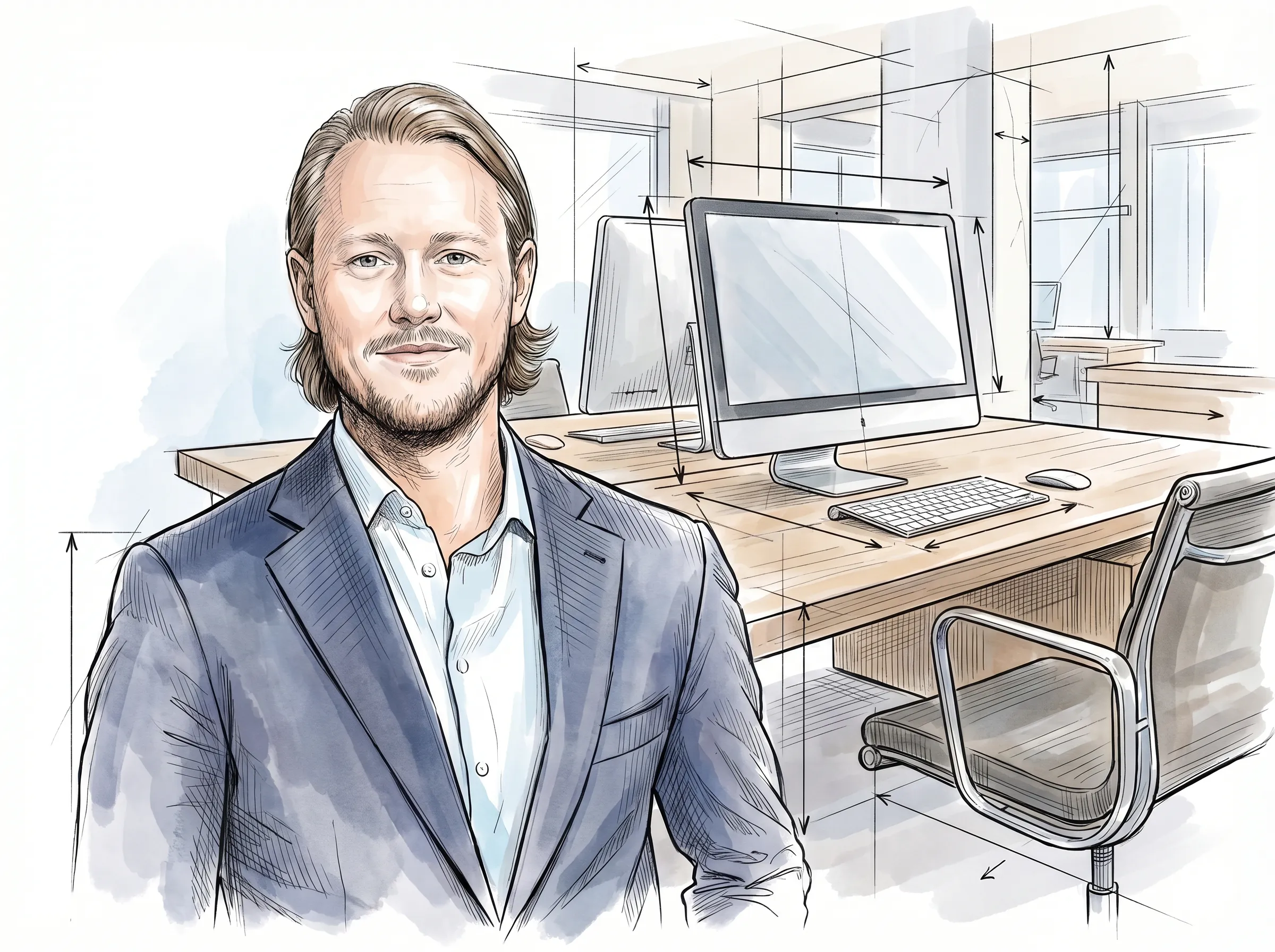
“Florida and Miami have really evolved to become the third major gateway into the US,” says Sebastian Lüdke, Founder and CEO of ALP.X Group, who completed his postgraduate studies at Columbia University before building out the firm’s transatlantic platform.
A recent memorandum of understanding between Germany’s new US ambassador and the state of Florida – not the federal government, but Florida specifically – illustrates how directly European governments are engaging with the state. The agreement focuses on collaboration in the automotive, commercial space travel, healthcare, and research and development sectors. “With Germany being the third largest economy in the world, signing that kind of agreement with Florida specifically, you can really see a maturing of the economy there,” Lüdke notes. The relocation of major financial and technology firms to the state has reinforced that momentum.
The Case for Wynwood
Within Miami, ALP.X has concentrated its development activity in Wynwood, a neighborhood the firm views not just as promising but as the city’s likely future urban core.
The argument starts with geography. Wynwood sits roughly 15 minutes from Brickell, Miami International Airport, and Miami Beach, and five minutes from the Design District. It is one of the higher-elevation areas in Miami, placing it outside most flood zones and reducing insurance costs for both developers and buyers.
But the sharper argument concerns where Brickell’s growth runs out. Traffic congestion has made access to Brickell increasingly difficult, and with limited room to expand southward into the water, Lüdke argues the natural direction of urban growth is north – through downtown, toward Wynwood, Edgewater, and the Design District. “People start canceling their appointments if those appointments take place in Brickell, because it takes you an hour to get from Surfside to Brickell,” he says.
Wynwood’s existing character supports that thesis. The neighborhood is notably walkable by US city standards, has an established food and beverage and arts scene, and benefits from zoning that encourages mixed-use density – office, retail, entertainment, and residential together. That combination tends to anchor long-term urban vitality in ways that single-use residential towers do not.
A Mixed-Use Model Built Around Optionality
The development itself reflects what ALP.X sees as a gap in Miami’s current market. The project includes more than 200 hotel keys, over 80 condominiums, food and beverage retail, parking, and rooftop amenities. The hotel component operates under the Cloud One brand, part of the Motel One Group – one of Europe’s more established hospitality brands – giving the project immediate recognition among European buyers.
The condo structure is designed to offer genuine flexibility. Buyers own their units outright and have no obligation to participate in any hotel rental program. But they can access hotel services – room service, concierge, housekeeping, and amenities – on an à la carte basis whenever they choose. Condo residents also have a separate entrance and occupy separate floors from hotel guests, preserving residential privacy while retaining access to the full service offering.
The distinction matters in a market crowded with branded residential towers. Lüdke is measured in his assessment of that trend: “I’m personally not really sure what another car brand is going to bring in terms of the experience of somebody living in the building.” The case ALP.X is making is that proximity to genuine hospitality infrastructure – rather than a brand name on a facade – is a more durable differentiator. Other Miami developments have pursued similar hybrid models, but the European hospitality pedigree and the opt-in structure set this project apart from most branded competitors.
Where Buyer Interest Is Coming From
Sales officially launched last June, with all condominium documents and legal materials in place roughly a month before this interview. The joint venture is working with Douglas Elliman on the condo sales side and expects to use the remainder of 2026 to drive sales before moving toward construction, which is expected to begin later this year or in early 2027.
Buyer interest is arriving from several directions. California-based buyers, many motivated by proposed high-net-worth tax measures in that state, represent one active segment. New York buyers, responding to the city’s elevated tax environment, are another. Latin American buyers account for a significant share of Florida condo purchases broadly – estimates put that figure above 50% statewide – and are active in this project as well. European buyers, particularly from Germany, are drawn in part by familiarity with the Cloud One hospitality brand.
Fundamentals Over Trends
ALP.X’s investment approach is worth noting for what it avoids as much as what it pursues. Lüdke is deliberate about distinguishing between durable fundamentals and momentum-driven sectors. Asked about areas of caution, he points to data centers as an example where the underlying demand picture remains genuinely uncertain. “Nobody really knows whether, if you build a data center today, the technology built in there will be completely outdated in three years,” he says.
That discipline shapes how ALP.X approaches all three of its verticals – real estate, renewable energy infrastructure, and corporate growth investments in areas like parking operations, modular construction, and rental data standardization. The common thread is a preference for sectors with clear structural demand, identifiable growth drivers, and markets where the firm has genuine operational knowledge.
For the Wynwood project, the bet is specific: Miami’s economic base will continue maturing, the city’s center of gravity will keep moving north, and buyers will increasingly value residential ownership paired with hotel-grade convenience over branded facades. Whether that thesis holds will depend on how quickly Wynwood’s infrastructure and density catch up with developer ambitions – and whether the neighborhood can absorb the wave of new supply without diluting the mixed-use character that makes it appealing in the first place.
About the Expert: Sebastian Lüdke is the Founder and CEO of ALP.X Group, a Munich and Miami-based investment firm with verticals spanning real estate development, renewable energy infrastructure, and corporate growth investments. A Columbia University postgraduate alumnus, Lüdke has built ALP.X into a transatlantic platform that bridges European capital and operational expertise with high-growth US markets, with a current focus on mixed-use development in Miami’s Wynwood neighborhood.
This article is based on information provided by the expert source cited above. It is intended for general informational purposes only and does not constitute legal, financial, or real estate advice. Readers should conduct their own research and consult qualified professionals before making any real estate or financial decisions.