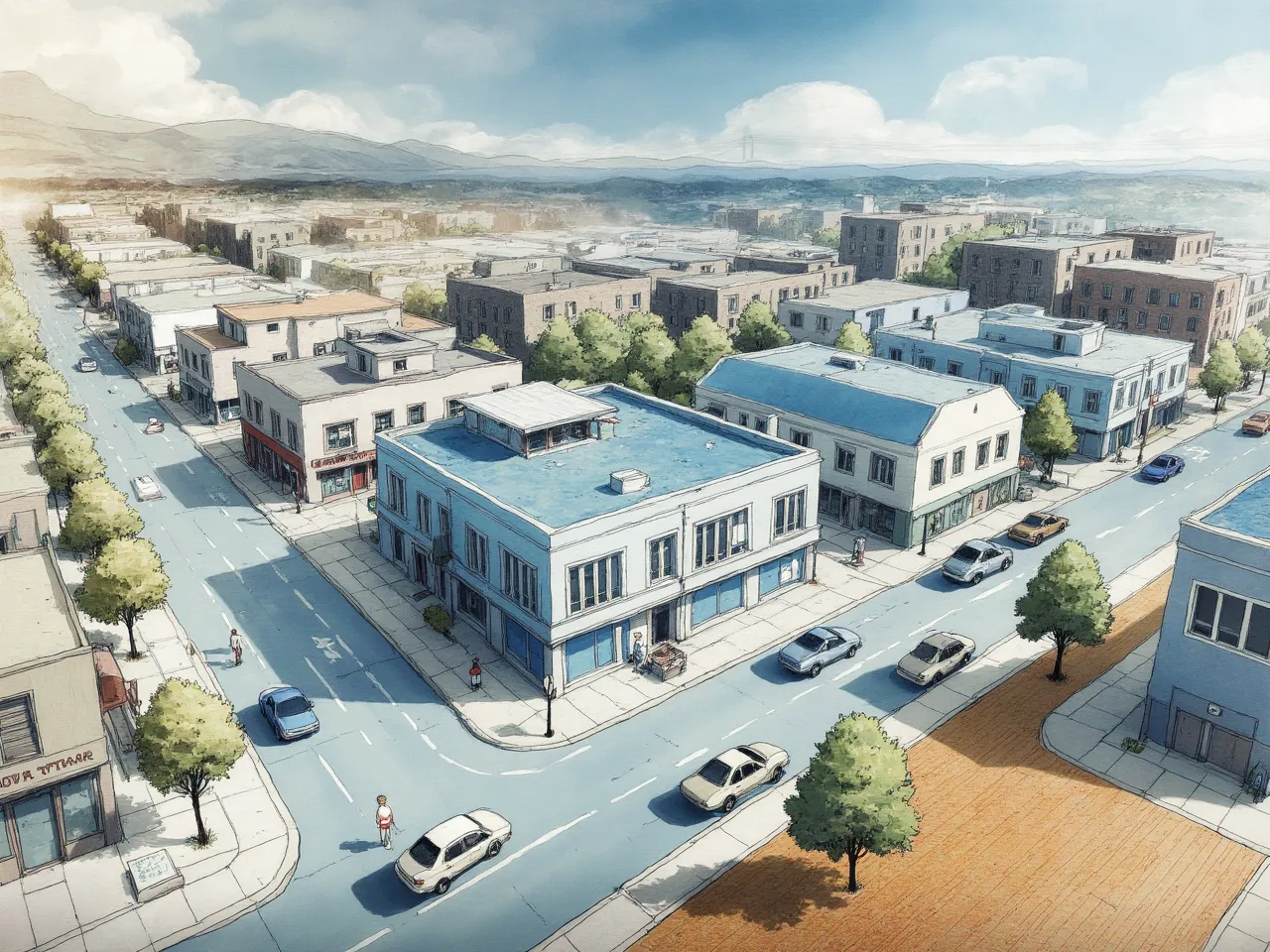
Farmington Hills has overhauled its zoning code, updated its master plan, and begun actively courting new development over the past several years. The changes respond to post-pandemic shifts in how residents live, work, and spend, and are quickly reshaping the local real estate market. Some property types are now in high demand, while others are struggling or being reconfigured for new uses. Here’s a clear look at what’s moving and what isn’t.
Property Types Seeing Increased Demand
Mixed-use and Walkable Retail
Farmington Hills is moving away from sprawling parking lots and single-use buildings. The redevelopment of Hunter Square on Orchard Lake Road highlights this shift. The northern section of the outdated shopping center was demolished to make way for a Meijer, Total Wine, Nordstrom Rack, and several new restaurants, all designed with a pedestrian-friendly layout.
“It’s going to have a much greater community feel than it ever has before,” says Cristia Brockway, Director of Economic Development for Farmington Hills.
Developers and retailers are responding. The city estimates that 120,000 residents and 45,000 workers live or work within a five-minute drive of Grand River Avenue, representing $30 million in untapped consumer spending. This concentrated customer base is drawing significant business interest.
Restaurants and Grocery Stores
Demand for dining and food retail is surging. “Everyone wants to eat, and our supply is low,” Brockway says. The city is actively recruiting restaurants, cafés, and specialty grocers, especially along Grand River and Orchard Lake Road.
Orchard Lake Road, known as the city’s international dining district, saw visits increase by 10 percent recently. The corridor features a range of global cuisine—from Middle Eastern to Asian to European—and the city expects continued growth in this sector.
Office-to-Residential Conversions
The rise of remote work has reduced demand for traditional office space. In response, Farmington Hills rezoned Twelve Mile Road, its affluent business corridor, to allow residential, commercial, and office uses. This change enables developers to convert older office buildings into apartments or add ground-floor retail without lengthy approval processes.
“We’re responding to the growing need for amenities that don’t exist in some office spaces,” Brockway says. Adding retail, dining, or housing near jobs benefits employees and property owners alike.
New Condos and Townhomes
The Village at Pebble Creek, a 76-unit condominium project on the site of the former Sarah Fisher Center, is bringing new families into a previously overlooked neighborhood. The developer is cleaning up environmental contamination and preserving the historic chapel as a community center.
“It’s a huge win for Farmington Hills,” Brockway says. Brockway says the project reflects the type of redevelopment the city is encouraging.
Property Types Losing Momentum
Traditional Office Space
Older office buildings without amenities are struggling to attract tenants. The pandemic accelerated remote work trends, and many companies have reduced their need for office space. Farmington Hills is encouraging property owners to consider office-to-residential conversions or mixed-use projects that add retail and street life.
Single-Use Suburban Retail
Large parking lots and stand-alone big-box stores are losing appeal as consumers seek walkable, mixed-use environments. Developments that fail to offer a blend of shopping, dining, and community spaces are falling behind.
Outdated Shopping Centers
Hunter Square serves as a clear example. The center’s northern section was demolished because it no longer met consumer preferences. The new design reduces parking, adds more storefronts facing the street, and creates a community gathering space.
What Buyers, Investors, and Business Owners Should Know
For Home Buyers and Investors
New condo and townhome developments near Twelve Mile Road and Orchard Lake Road are drawing the most investment, driven by proximity to jobs, amenities, and walkable neighborhoods. These areas are attracting the most investment and offer strong fundamentals, proximity to jobs, amenities, and walkable neighborhoods.
For Business Owners
If you operate a restaurant, grocery, or specialty retail business, Farmington Hills is actively seeking you. The city offers free pre-development meetings, intended to reduce uncertainty for prospective companies and clarify zoning and permitting requirements early in the process. “We can streamline it, we can help you,” Brockway says.
For Developers
Office-to-residential conversions and mixed-use projects are top priorities for the city. Zoning is flexible, the approval process is faster than before, and local market fundamentals remain strong.
Why These Shifts Matter for the Local Market
Farmington Hills is in the midst of a significant market realignment. The city’s proactive approach to zoning and development has created new opportunities for buyers, investors, and business owners. Walkable retail, restaurants, and housing near employment centers are attracting strong demand, while older office buildings and single-use retail properties are losing value or being reimagined.
“We’re open for families, we’re open for businesses, we love creative ideas,” Brockway says. “The demand is phenomenal.” City officials say the changes are intended to align development with evolving consumer preferences and long-term economic trends. As with any zoning-driven redevelopment, the pace and scale of change will depend on financing conditions and broader economic trends.
This article describes current real estate and business trends in Farmington Hills and does not constitute legal, financial, or investment advice.
This article was sourced from a live expert interview.
Every month we conduct hundreds of interviews with active market practitioners - thousands to date.
The Austin real estate market is in a period of adjustment. After an unprecedented surge during the pandemic years, activity has slowed and the landscape is shifting. Mike Martine, Vice Pres...
South Florida’s real estate market remains a magnet for investment, even as national conditions tighten. Community banks play a pivotal role in financing development projects that larger b...
Miami’s luxury pre-construction market requires buyers to commit substantial capital years before a property is built. This exposes them to significant financial risk that is not refle...
The City of Amery, Wisconsin, is challenging common assumptions about rural development by combining regulatory reform, public-private partnerships, and strategic land management. Located ab...
Omaha’s rising profile is drawing national interest, with Forbes recently naming it the number one city to move to in the United States. But while headlines highlight a wave of Midwest mig...
New York City’s property tax system, in place since 1981, is facing growing pressure to be overhauled. David Wilkes, a partner at Cullen and Dykman, warns that the system’s days in i...