Wellington, Florida, occupies a unique position in American real estate. Known as the equestrian capital of the United States, this Palm Beach County community draws horse owners, competitors, and polo players from across the country and around the world each winter season. But beneath the prestige and international appeal lies a property market with its own set of rules, ones that catch many outside buyers off guard.
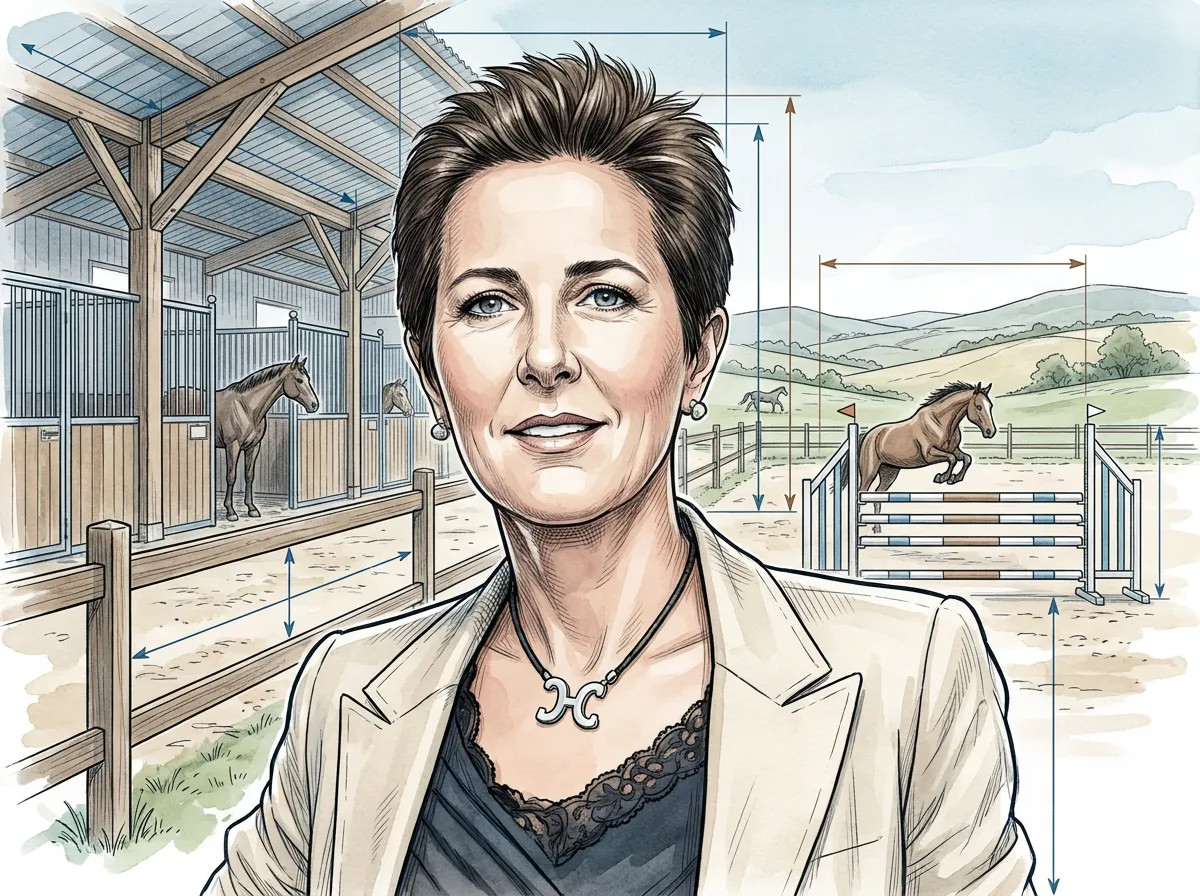
Catherine Roze, a Realtor with RE/MAX Prestige Realty specializing in residential, luxury, land, and equestrian properties in Wellington and Loxahatchee, has spent three decades as both an agent and a property owner in this market. That dual perspective shapes how she approaches transactions that are considerably more complex than standard residential deals.
A Market Feeling the Pressure
Like much of South Florida, Wellington has seen its market cool from the peaks of a few years ago. More inventory, longer days on market, and affordability constraints have combined to slow activity. Home prices have roughly doubled over the past four to five years, and interest rates have done the same – effectively quadrupling monthly payments for financed buyers. “It’s a double whammy,” Roze says.
Broader economic uncertainty is adding to the hesitation. Many prospective buyers are waiting for clearer signals before committing to large purchases, and that holding pattern is visible across the Wellington residential market. Well-priced properties are still moving. The ones sitting longest tend to be those where sellers are testing the market without urgency to close.
The equestrian segment, however, is showing some resilience. Buyers seeking horse properties tend to be more affluent, often purchasing with cash rather than financing. That insulates the upper end of the equestrian market from some of the rate pressures weighing on conventional transactions. “Their priority is finding a property that provides a proper home for their horses, and they are willing to pay a premium to have a property that can accommodate the equestrian,” Roze notes.
What Drives Equestrian Property Value
For buyers coming from outside Wellington, the learning curve around equestrian property valuation can be steep. Location relative to the showgrounds is the most immediate driver of price. Properties within walking distance of the competition venues command the highest premiums because owners avoid the logistical burden of trucking horses to and from events. “That’s where people are willing to pay top dollar,” Roze says.
Beyond location, the land’s usability is critical. Flat, well-drained acreage is not just a preference; it is a functional requirement. Horses and standing water are incompatible, and in Florida, where wetlands are common and flooding is a real risk, drainage is often the first thing Roze evaluates on any parcel. She identifies it as the most common deal breaker in transactions that fall apart.
Florida’s wetland regulations add another layer of complexity. Protected wetland areas cannot be built on and typically remain wet year-round, effectively removing portions of a parcel from usable equestrian land. Buyers who do not account for this during due diligence can find themselves with significantly less functional acreage than they anticipated.
Access is another factor that frequently surprises outside buyers. In Loxahatchee, Roze estimates that close to half of all properties are landlocked, requiring easements through neighboring parcels to reach a main road. For equestrian operations that regularly move large trailers and horse trucks, a landlocked parcel can create serious logistical problems.
For buyers considering turnkey properties rather than raw land, barn infrastructure becomes a central consideration. At the competitive end of the market, riding arena quality matters just as much, buyers in jumping and dressage disciplines expect specific footing materials, irrigation systems, and daily maintenance standards.
The Rental Market and a Shrinking Season
Wellington’s equestrian season has traditionally been a six-month affair, drawing competitors and their horses from late fall through spring. That window is shrinking. Roze says the effective season has contracted to three or four months as participants look to cut expenses. “It has slowly become the norm,” she says.
That contraction has implications for both the rental market and purchase decisions. Seasonal rental demand during peak months remains strong, and many property owners deliberately limit rentals to that window, allowing time for property recovery. Horses create meaningful wear and tear on land and facilities, and the off-season serves as a reset before the next circuit begins.
For international buyers and newcomers, renting before buying remains the more common path. It allows them to evaluate whether Wellington fits their competitive schedule and business model before committing to a purchase. But with a shorter effective season, the financial calculus of ownership is changing. For someone competing only three months a year, ownership may not pencil out the way it once did.
Competition from Ocala and Budget Pressures
One of the more significant structural trends affecting Wellington is the growth of equestrian infrastructure in Ocala, roughly three hours north. The development of competitive show facilities there has drawn a segment of the market, particularly more budget-conscious participants, away from the Palm Beach area.
Roze explains that these buyers don’t mind trading proximity to Palm Beach’s beaches and social scene for a more rural setting at a lower cost. The expense of competing in Wellington, between property costs, stabling, entry fees, and general operating costs in a high-cost metro area, has become a real barrier for participants who are not at the top tier of the sport.
As Ocala and other regional circuits such as Tryon International Equestrian Center in North Carolina continue to develop, Wellington may find itself increasingly positioned as the premium option for the most serious and well-resourced competitors. At the same time, a broader segment of the equestrian community looks elsewhere for more affordable alternatives.
Due Diligence as a Non-Negotiable
For anyone considering entering the Wellington equestrian property market from outside, Roze’s advice centers on preparation and local knowledge. The combination of Florida-specific land regulations, drainage requirements, site grading and topography, wetland designations, easement complexities, and infrastructure standards creates a due diligence process that differs substantially from standard residential transactions.
“There are some traps that buyers need to avoid,” she says. “If they are not knowledgeable in the local market, work with somebody knowledgeable, even if it’s not a real estate agent, at least a trainer, because there are some factors that are very specific to Florida.”
Buyers who successfully navigate the Wellington market tend to be those who understand that equestrian real estate operates under its own set of rules, where drainage, site grading and topography, access, and arena footing are just as important as the listing price, and where a lack of knowledge and assumptions formed in other markets can easily lead to costly mistakes.
About the Expert: Catherine Roze is a Realtor with RE/MAX Prestige Realty specializing in residential, luxury, land, and equestrian properties in Wellington and Loxahatchee, Florida. She has spent three decades in the market as both an agent and a property owner.
This article is based on information provided by the expert source cited above. It is intended for general informational purposes only and does not constitute legal, financial, or real estate advice. Readers should conduct their own research and consult qualified professionals before making any real estate or financial decisions.