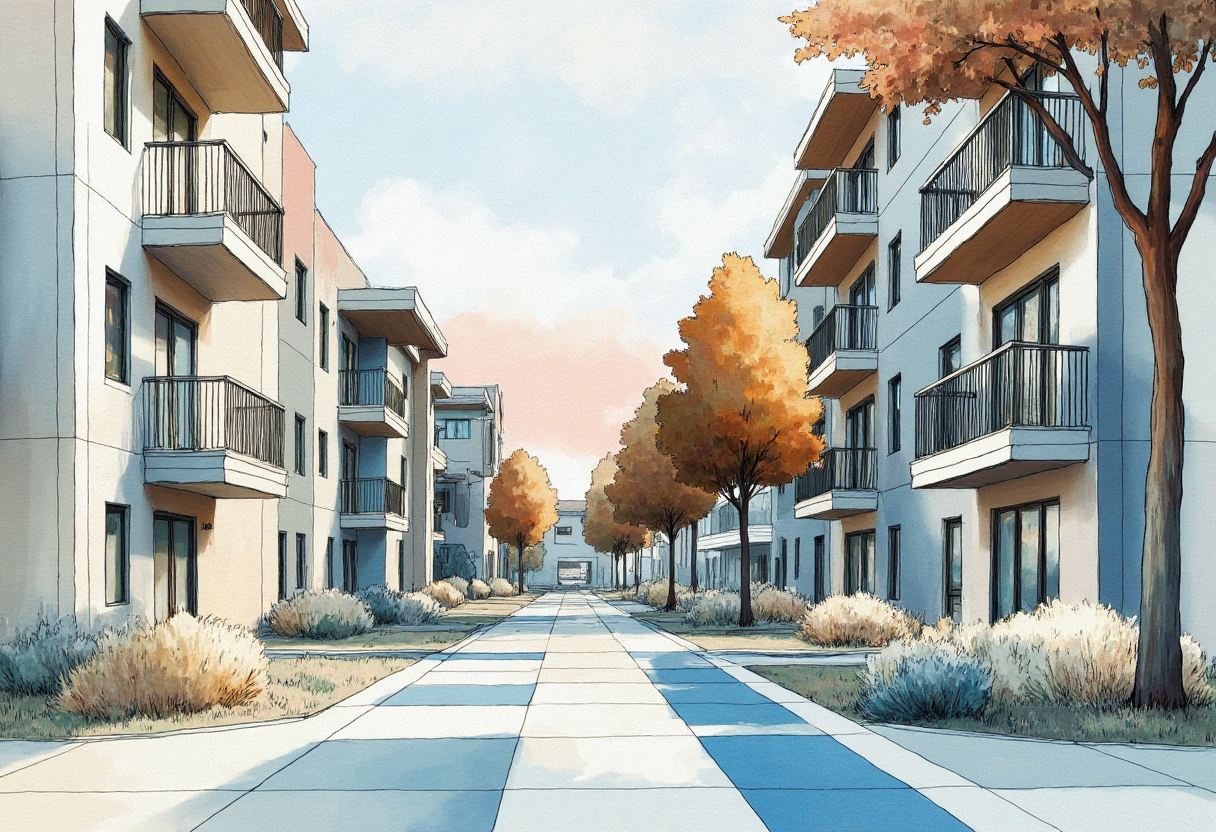
The Midwest multifamily market has undergone a dramatic transformation over three decades, evolving from a fragmented, locally-owned market to one that now attracts sophisticated institutional capital, according to Steve LaMotte, Managing Director at Walker & Dunlop.
Market Sophistication
“30 years ago, when I began in this business, it was very different than it is today, very unsophisticated, not institutional at all. They were primarily Mom and Pop type operators,” LaMotte recalls. “We worked on a lot of really, really unattractive apartment buildings in hard locations back in the day.”
Today, LaMotte’s team focuses on institutional-grade assets, typically handling transactions around $50 million, with some deals exceeding $100 million. His largest single-asset transaction currently under contract is $140 million for a suburban Louisville property.
Competitive Landscape
The level of sophisticated investor interest is evident in current deal activity. “We’re getting between 20 and 35 bids on virtually everything we take to market,” LaMotte says. “We are hitting guidance, that’s a very different experience than what my competition is experiencing.”
This success, LaMotte argues, comes from focusing on premium assets. “We tend to spend our time on assets that we would put into a ‘have’ category, being assets with locational preeminence, physical asset features that are superior to most of what’s on market, or some asset strategy that is very compelling.”
Institutional Evolution
The institutional interest extends beyond domestic borders. LaMotte points to his team’s recent Louisville transaction, which attracted a Canadian buyer making their first investment in the market. “It’s really exciting to see offshore capital, international capital, that is understanding the rationale for having exposure in Midwestern, Central US, secondary markets.”
Looking Forward
The market’s evolution appears to be accelerating. LaMotte reports his team’s pipeline has “almost quadrupled the last 45 days,” suggesting continued institutional appetite for Midwest multifamily assets.
“We think it’s going to be perhaps the three best years of sustained fundamentals when you look at 26, 27 and 28,” LaMotte predicts, citing crashing supply levels and maintained demand as key drivers.