Florida’s real estate development faces a growing risk that is receiving little public attention: the long-term availability of potable water. Bill Eshenbaugh, founder of Eshenbaugh Land Company, warns that water constraints could soon outweigh regulatory and financial challenges as the state’s population and industry expand.
“The biggest risk probably is where we get the availability of that potable water over the next 20 years,” Eshenbaugh says. “There’s a lot of water demand. We’ve done some things here. We’ve done a desalination plant. We’ve built a big reservoir to capture a lot of runoff, and we’ll do some more things in that arena. But I’m not sure we factored that into how we grow as well.”
Unlike zoning or permitting, which can be modified or expedited, water is a finite resource. Eshenbaugh suggests that if the water supply cannot keep pace, it will become the deciding factor in whether new projects move forward, regardless of market appetite or investment capital.
Rising Demand from Data Centers
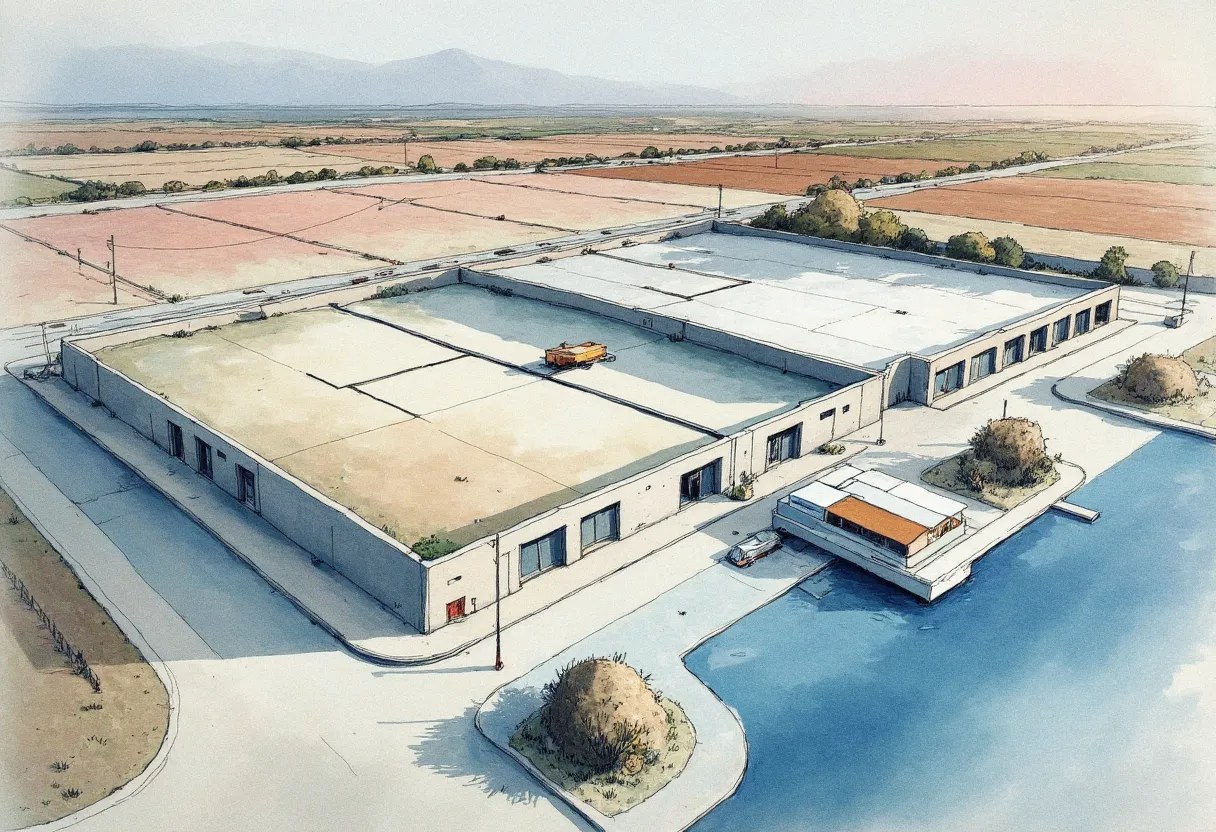
A new source of water demand is complicating the outlook: data centers. Eshenbaugh notes that these facilities consume much more water than traditional developments and are often approved without thorough public discussion of their infrastructure needs. “When we start looking at some of these data centers that are huge consumers of both water and electricity, I’m not sure we factored that into how we grow as well,” he says.
A single large data center can significantly increase local water use, affecting the feasibility of nearby residential and commercial projects. Eshenbaugh believes this new demand has not been adequately accounted for in regional planning, making water “as big an issue as anything.”
Temporary Relief from Citrus Industry Decline
While demand is rising, a collapse in the state’s citrus industry has provided a temporary boost in water availability. Eshenbaugh explains, “A lot of citrus has gone out of business because you cannot make money in citrus any longer for several reasons—diseases of the trees, importation from Mexico, Brazil, and some other places.”
He adds that changing consumer tastes have accelerated this trend: “The young consumer doesn’t want to give their kids that much sugar, so they’re not drinking as much orange juice.”
As a result, the water once used for citrus irrigation is now available for other uses. “It’s just a combination of things that’s releasing some water, because citrus was a big consumer of water, so it’s being released back into this supply system and controlled by our water management district,” Eshenbaugh says.
However, he views this as only a short-term reprieve. “That helps a little bit, but to me, that’s something we’re not talking much about. I think we should be.”
Population Growth Intensifies Pressure
Florida’s population has surged by 6 million since the start of the COVID-19 pandemic, rising from 17 million to 23 million residents. This rapid growth has created a significant increase in demand for water, roads, schools, and other infrastructure.
Eshenbaugh notes that this population boom, combined with ongoing commercial construction and new water-intensive industries such as data centers, is straining the state’s water supply. “We’ve done a desalination plant. We’ve built a big reservoir to capture a lot of runoff, and we’ll do some more things in that arena,” he says. But he questions whether these measures are enough to keep up with accelerating demand.
Water: The Underwriting Oversight
Eshenbaugh argues that institutional investors often overlook water supply issues when evaluating land in Tampa Bay. “You’ve got to have the team in place with the engineers, the architects, the planners, the soil technicians, the eagle watchers, and the gopher tortoise experts and all the critters and creatures and wetlands and everything else you have to deal with out there,” he says, describing the usual due diligence process.
Yet, he notes that water availability receives less attention than it deserves. “If somebody walks in and thinks they can buy a lot of land, they’d better know how much of it’s wet, how much was floodplain. Do I get utilities anytime soon?”
Water infrastructure decisions, such as allocation policies or major new users like data centers, are often made at the regional or state level with minimal transparency. These choices can quickly alter local supply and do not always align with developers’ and investors’ timelines or expectations.
Increasing Regulatory Hurdles
Recent flooding events have prompted stricter water-related regulations. Eshenbaugh notes, “The rules keep changing. Some counties now want to increase the amount of land dedicated to water retention. Every time you ship an acre for that purpose, over and above what we’re currently doing, it’s just an expense.”
These expanded water-retention requirements directly impact a project’s bottom line. “It uses another 40 or 50 or 100,000 worth of land per acre for water retention,” he says.
However, Eshenbaugh emphasizes that these stormwater management rules address flooding and runoff, not the broader question of whether sufficient potable water is available to sustain continued growth.
Advising Clients on Water Risk
In response to these challenges, Eshenbaugh’s firm now includes water availability as a core part of its advisory services for institutional clients. “For an investor, they need somebody like us to help guide them, understand where the pitfalls are, what the political scene is,” he says.
This guidance now includes whether a property has guaranteed water access, whether it will require approvals from water management districts, and how nearby developments—especially data centers—may affect future supply.
Eshenbaugh describes his role as helping clients navigate the region’s political and regulatory landscape. “I can’t tell you how many checks I write every year in the political process. I don’t buy any influence. I buy access to be able to talk to somebody.”
A Hard Limit on Growth
Eshenbaugh’s observations point to a looming constraint on Tampa Bay’s development. While demand remains high and the population continues to grow, the physical availability of potable water may ultimately set the boundaries for future projects—determining which land can be developed and at what density, regardless of market demand or financial incentives.
His warning is clear: unless water supply is prioritized and planned for at every stage, Florida’s development boom could hit a wall not because of lack of interest or capital, but because the most basic requirement—water—cannot be guaranteed.