Sterling Heights’ city planning chief says data shows massive parking overbuilding, opening door for retail and residential conversion
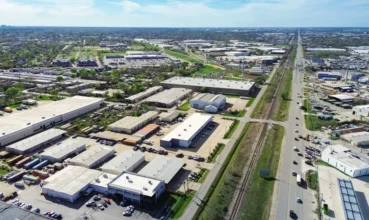
Jake Parcell, City Planner and Development Manager for Sterling Heights, Michigan, has uncovered a striking inefficiency in commercial real estate: many parking lots have up to 600 more spaces than they actually need, representing a major opportunity for redevelopment.
The Hidden Value in Asphalt
“Our parking study shows these lots are oftentimes 400 spaces over what our ordinance requires… maybe 600 spaces over what people actually use,” Parcell says, describing findings from a comprehensive analysis using GIS mapping and on-site car counting.
This revelation comes as the city implements new policies allowing property owners to convert underutilized parking into revenue-generating developments. According to Parcell, the data provides clear evidence for reducing parking requirements: “We can look at that very comfortably and say you have 1,000 spaces, you only need 600, we’re very comfortable removing 200 parking spaces because of this overage.”
From Parking to Profit
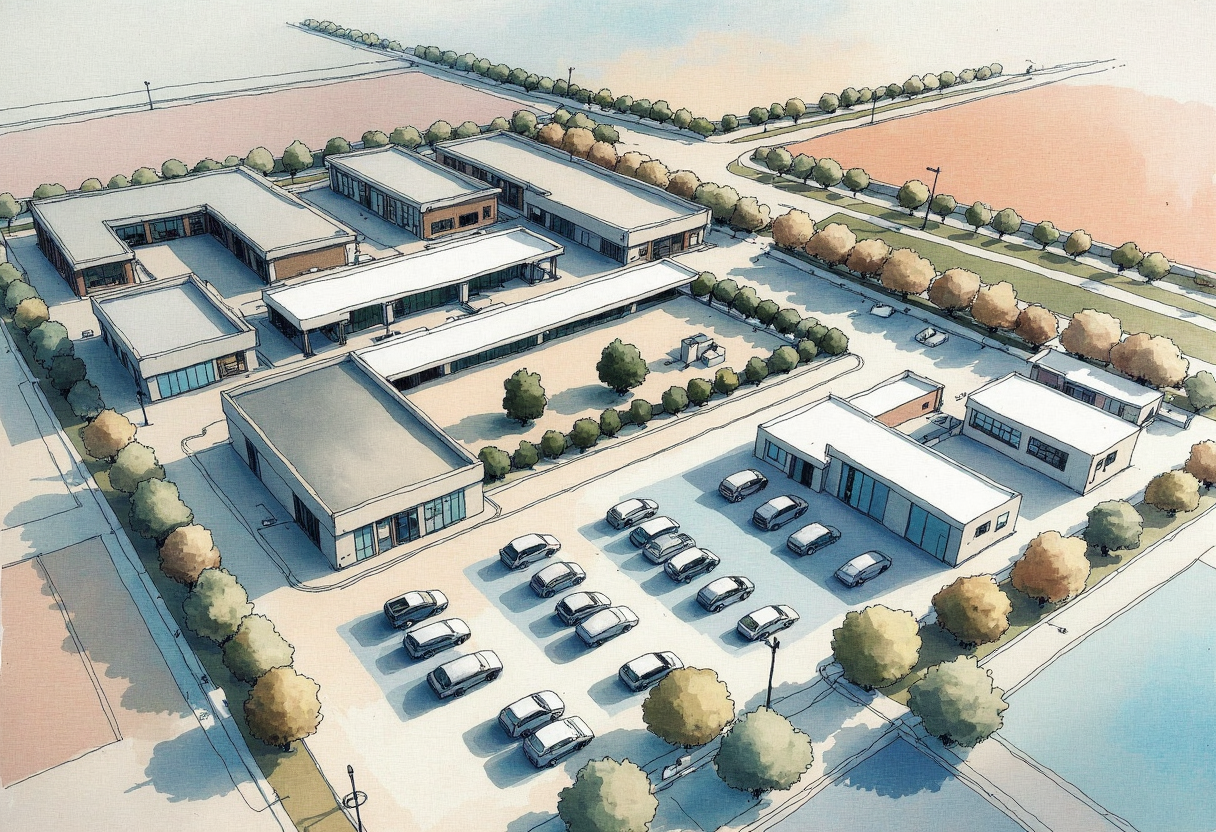
The city is beginning to witness how underutilized parking lots can be transformed into thriving assets. A multifamily development has already risen on land once reserved for parking near Lakeside Mall, turning an expanse of asphalt into much-needed housing. Similarly, an expanding retail plaza has capitalized on unused parking areas by adding new suites that generate revenue and attract foot traffic. In other cases, property owners are reimagining these spaces altogether, converting them into pedestrian plazas and green zones that enhance community life and boost neighborhood appeal.
“We encourage people to bump up to the road and build a second row of retail and fill in there,” Parcell explains, “and kind of take away the space that’s just paved and sitting there and not benefiting anyone.”
Data-Driven Decision Making
Sterling Heights is embracing evidence-based planning with the rollout of a new GIS tool that equips city planners with deeper insights into parking dynamics. The system enables officials to evaluate current parking capacity, compare it with ordinance requirements, and benchmark against industry best practices. Perhaps most importantly, it allows them to track actual usage patterns over time, ensuring that future development decisions are grounded in real-world data rather than outdated assumptions.
This data enables quick calculations for proposed developments: “We can do a quick formula and say we’re very comfortable removing 200 parking spaces, why don’t we remove more and add in a plaza, add in a walkway from the sidewalk?”
The Solution: Administrative Flexibility
To facilitate these transformations, Sterling Heights has implemented administrative parking reductions that don’t require lengthy variance processes. “The biggest ace in the hole is the administrative parking reduction,” Parcell notes. “They can’t be expected to invest much into a parking lot expansion, but they have an incredible user tenant ready to come in, then we can work with them to help redesign the site in a way that meets their needs.”
The city’s approach could serve as a model for other municipalities looking to unlock value in overbuilt parking areas. As Parcell observes, “We’re hoping it saves a lot of retailers money by not having to keep it up and instead having landscaping things.”