

With office vacancy rates nearing 20% and many older buildings failing to draw tenants, Washington, D.C. is confronting a major commercial real estate challenge. At the same time, city offic...

Ultra-Luxury Homes in Palm Beach Are Selling, but the Middle Market Is Stalled

Written by:
Date:
13 Mar 2026
Share via Facebook

Share via Linkedin

Share via X

Copy to clipboard

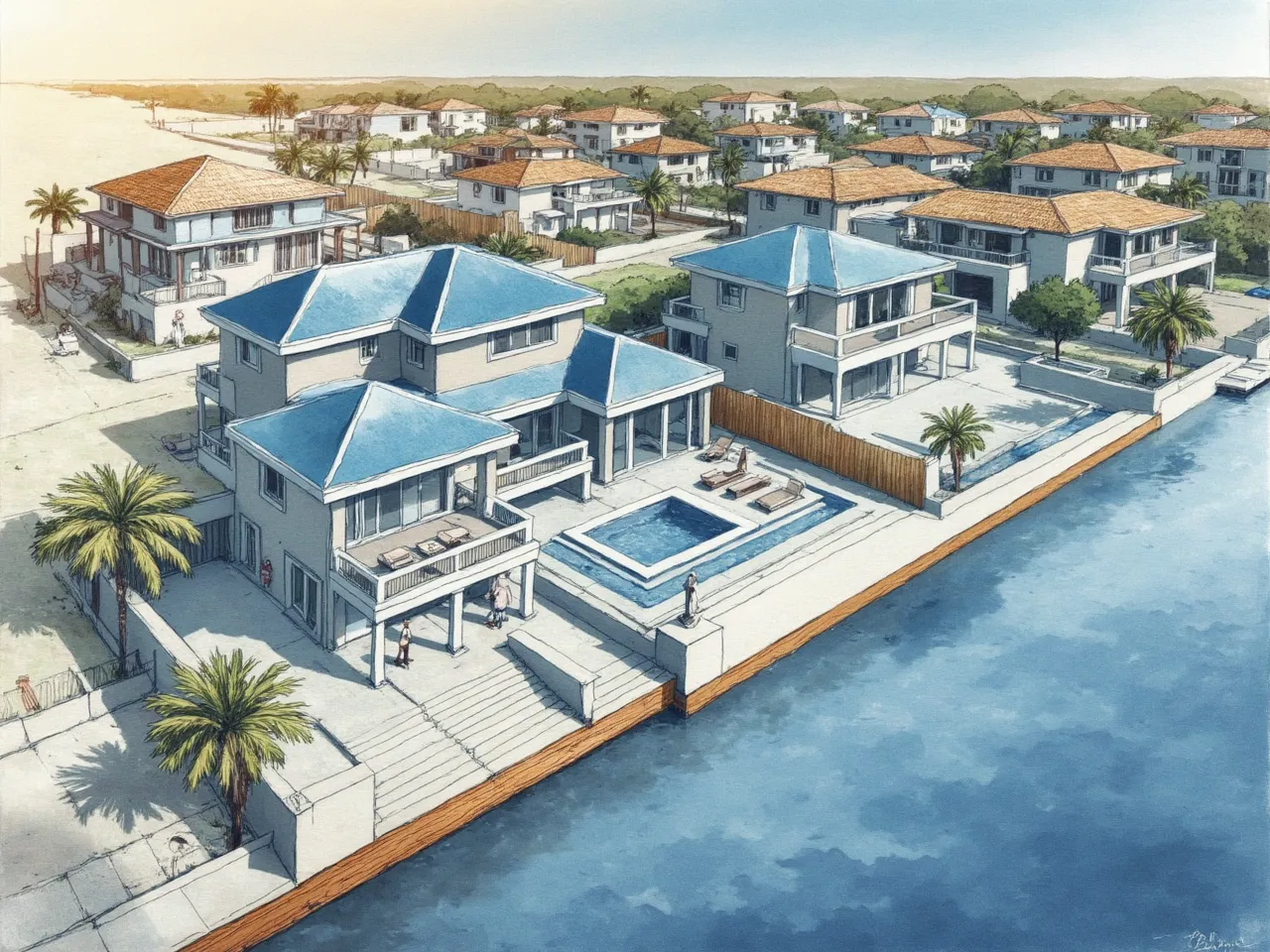
High-profile sales in South Florida are drawing national attention: a Google founder paid $173 million for a Miami mansion, and a Microsoft exec spent a similar amount on lots in Palm Beach.
But beneath these record-setting deals, the reality for most buyers and sellers in Palm Beach County is more complicated. While ultra-luxury properties are changing hands at historic prices, homes in the $2.5 million to $5 million range are sitting on the market. This divide is redefining who benefits in Palm Beach real estate — and why.
“The ultra-high end is moving,” says Brian Fairweather, a real estate advisor with ONE Sotheby’s International Realty in Jupiter. “But that middle luxury market is probably struggling the most.”
The contrast is not the result of a market collapse. By historical standards, northern Palm Beach County remains strong. The difference stems from the post-pandemic surge, which created two distinct buyer pools — only one of which is still active.
Why Ultra-Luxury Remains Active
Buyers at the very top of the market are largely unaffected by mortgage rates or financing costs. They pay cash or borrow against existing assets, so changes in interest rates have little impact on their decisions. Instead, their choices are driven by tax policy, lifestyle preferences, and personal timing.
Recent tax changes in California, including a new mansion tax, have prompted some billionaires to relocate to Florida. The Google founder’s $173 million Miami purchase and hedge fund manager Ken Griffin’s $256 million Palm Beach land deal are motivated in part by Florida’s lack of state income tax and its business-friendly climate. High-level executives from tech and finance are also acquiring trophy properties — such as a recent $39 million condo purchase in West Palm Beach.
“These billionaires and ultra-high-net-worth people buy based on their own situation,” Fairweather says. “They move when they want to move.”
For these buyers, oceanfront estates, penthouse condos, and expansive compounds are not just homes — they are vehicles for storing wealth and enjoying Florida’s lifestyle. Resale value and monthly payments are not primary concerns.
Why the Middle Market Is Stuck
The situation is very different for buyers in the $2.5 million to $5 million range. These individuals are certainly affluent, but most are not immune to rising interest rates. Many bought their current homes during the pandemic, locking in mortgage rates around 3%. Now, as they consider upgrading — often for more space or waterfront access — they face sharply higher prices and mortgage rates closer to 6%.
This creates a financial hurdle. A buyer who could afford a $3 million home at a low rate now faces much higher monthly payments for a $5 million property at today’s rates. Even households with seven-figure incomes are hesitating.
Sellers, meanwhile, are too often mired in the rapid appreciation and bidding wars of 2020 to 2023. Many continue to price their homes according to peak pandemic sales, rather than current demand. The result is a standoff. “The seller believes their property is worth $5 million, the buyer believes it’s worth $3.5 million,” Fairweather says. “We’re stuck in this purgatory.”
Homes in this range are lingering on the market. Buyers are submitting offers well below asking price or walking away, while sellers who refuse to negotiate are seeing their listings go stale.
What Is Actually Selling
All that said, homes that are priced realistically for today’s market are still attracting buyers. Fairweather reports that listings slightly below recent comparable sales can generate multiple offers and even close above asking price. The key is to set prices based on current data, not recent highs.
Modern updates make a significant difference. Buyers in this range expect features like quartz countertops and new appliances. Dated interiors, even in desirable neighborhoods, are a turnoff. Location matters too — homes on busy streets are struggling, even when discounted.
In Jupiter, waterfront properties and homes in golf course communities remain popular, but only when priced in line with recent comparable sales and updated with the modern finishes buyers now expect. Sellers who also offer credits for repairs or closing costs are finalizing deals faster than those holding firm on price.
Advice for Today’s Buyers and Sellers
Buyers in the middle market should take their time, view multiple properties, and negotiate based on recent sales rather than asking prices. If a listing has been on the market for more than 30 days, the seller may be open to concessions such as rate buydowns or repair credits.
Sellers need to price realistically from the outset. Overpricing leads to longer time on market and can stigmatize a property, making buyers suspicious. Homes that are not move-in ready should be offered with credits for updates. Professional staging and photography are now standard expectations for attracting attention.
What Comes Next
The near-term outlook hinges on two variables: interest rates and seller psychology. If rates ease later this year, some of the middle-market buyers currently sitting on the sidelines are likely to re-enter — particularly those who have been waiting to trade up from pandemic-era purchases. But a rate drop may not be enough to break the gridlock if sellers continue pricing to 2022 rather than 2025.
Fairweather expects the ultra-luxury segment to stay active regardless. As long as Florida’s tax advantages hold and coastal inventory remains limited, demand from high-net-worth individuals relocating from high-tax states is unlikely to slow.
The bigger question for the middle market is whether time — not rates — forces a reset. Listings that have sat unsold for six months or more may eventually prompt the price corrections buyers are waiting for. “The market is still healthy,” Fairweather says. “It’s just not moving at the rate it did from 2020 to 2023.” Whether it picks up speed depends less on the economy than on whether sellers are finally willing to meet buyers where they are.
About the Expert: Brian Fairweather is a Global Real Estate Advisor with ONE Sotheby’s International Realty, specializing in residential properties in northern Palm Beach County, particularly Jupiter. He focuses on golf course communities and waterfront homes.
This article is based on information provided by the expert source cited above. It is intended for general informational purposes only and does not constitute legal, financial, or real estate advice. Readers should conduct their own research and consult qualified professionals before making any real estate or financial decisions.
Similar Articles
Explore similar articles from Our Team of Experts.



Industry Profiles, Property Technology, Market Analysis & Policy, Commercial Real Estate, Top Articles
The surge in artificial intelligence infrastructure has created record demand for data centers, but traditional construction methods cannot keep up. Conventional data center builds often tak...

