This summer marked the 10-year anniversary of one of Patten Properties’ fastest-selling acreage communities in Texas, Texas Grand Ranch. When Gary Sumner, managing partner for Patten Prope...

Three Decades of Mechanical Parking Innovation: KLAUS Multiparking America's Growth Story

Written by:
Date:
22 Oct 2025
Share via Facebook

Share via Linkedin

Share via X

Copy to clipboard

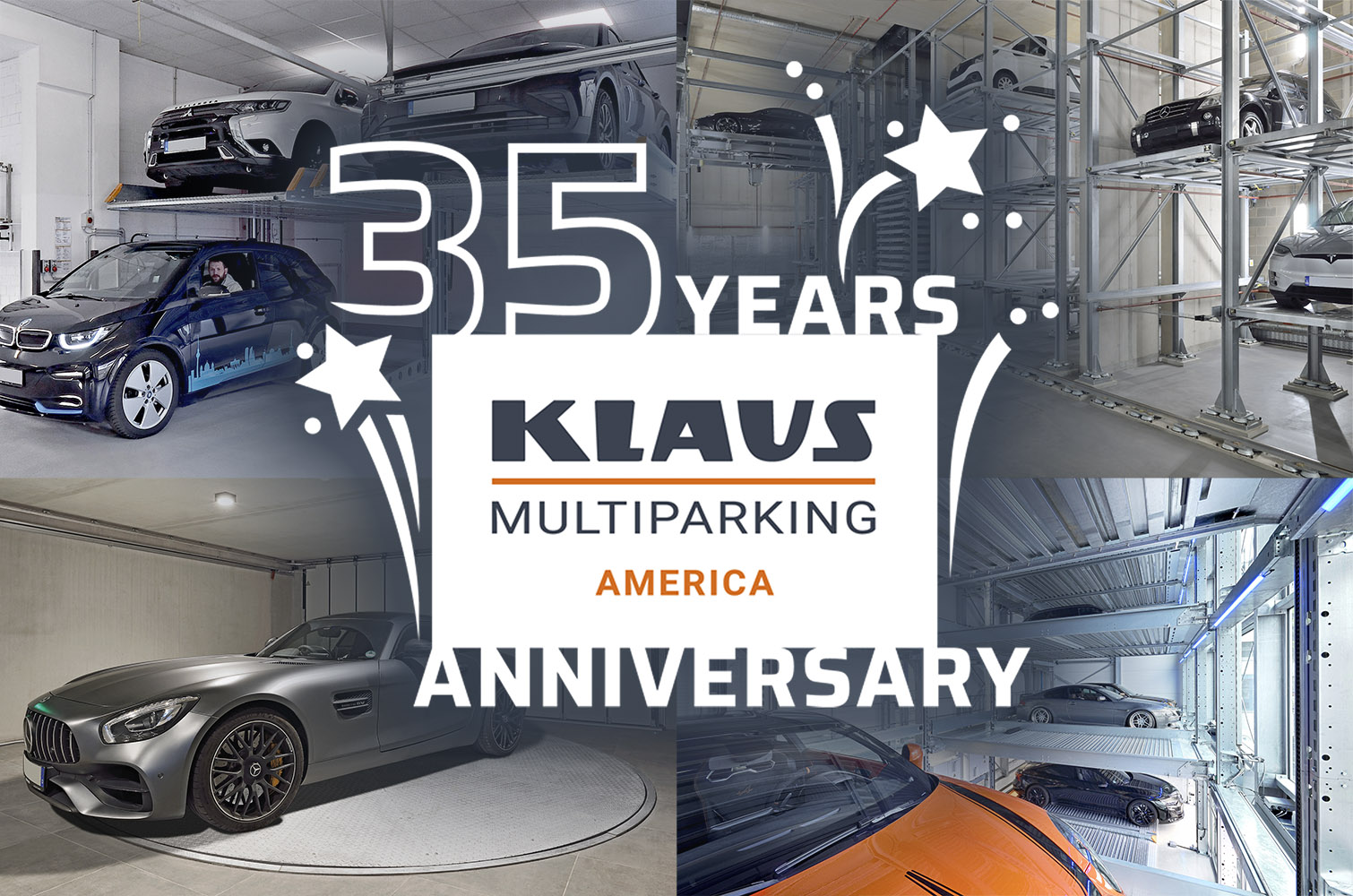
KLAUS Multiparking America marks 35 years of delivering mechanical and automated parking systems across the United States, a milestone that reflects both the company’s German engineering heritage and its adaptation to American real estate markets. Since establishing its first U.S. projects in 1990, the company has installed thousands of parking spaces across multifamily, mixed-use, hospitality, senior living, student housing, and commercial developments nationwide.
The anniversary represents more than longevity – it demonstrates the gradual acceptance of mechanical parking solutions in American markets that have historically favored traditional parking structures. As urban density increases and land costs rise, developers are reconsidering the economics of parking infrastructure.
German Precision Meets American Markets
KLAUS Multiparking America operates as the exclusive U.S. subsidiary of KLAUS Multiparking GmbH, a German manufacturer pioneering parking solutions since 1964. The parent company’s six decades of experience in mechanical parking systems provides the technical foundation, while the American operation focuses on navigating U.S. construction standards, municipal requirements, and real estate development practices.
“This milestone is a reflection of the trust our partners place in us and the passion of our team,” says Christopher Tiessen, President and CEO of KLAUS Multiparking America. “We are proud of what we’ve achieved together and excited about the next chapter of innovation in the U.S. market.”
The company’s approach combines established European parking technology with an understanding of American development patterns, building codes, and market preferences. This localization proved essential for establishing credibility in markets where mechanical parking remained relatively uncommon compared to European or Asian markets.
Regional Network Strategy
From 1990 through 2020, KLAUS brought mechanical parking systems to the U.S. market through independent regional dealers who operated under their own company names across the United States. This distributed approach allowed the company to establish market presence gradually while maintaining German engineering standards, though it created brand recognition challenges as individual dealers developed their own market identities rather than promoting the KLAUS name directly.
In 2020, KLAUS Multiparking America was established as the official U.S. KLAUS Multiparking GmbH subsidiary to provide more centralized coordination and unified branding while continuing to work with regional sales partners. This strategic shift reflected both the company’s organizational maturation and recognition that mechanical parking had evolved from a niche solution to a viable mainstream option requiring stronger brand visibility in American markets.
The company now serves major markets across the U.S, including New York, New Jersey, Massachusetts, Pennsylvania, Virginia, Washington D.C., Ohio, Utah, California, Florida, and Georgia. This geographic distribution reflects where land constraints, development density, and parking economics make mechanical systems competitive with traditional structures.
Technology Evolution and Market Acceptance
KLAUS’s product evolution mirrors changing American real estate development patterns and regulatory requirements. The company’s portfolio spans mechanical stackers, automated puzzle systems, and fully automatic tower configurations, each addressing different site constraints and development objectives.
Recent product launches include the kVario 8000 semi-automatic puzzle system, designed to balance automation benefits with cost considerations that influence American development decisions. The system reflects market feedback, indicating that full automation, while technically sophisticated, doesn’t always align with project economics or operational preferences.
Integration of EV charging infrastructure represents another adaptation to market evolution. As electric vehicle adoption accelerates and municipalities implement EV-ready parking requirements, mechanical parking systems face new technical challenges around power distribution, ventilation, and fire safety considerations.
The company’s approach to EV integration focuses on future-proofing installations rather than maximizing current EV capacity, recognizing uncertainty around vehicle technology evolution and charging infrastructure standards.
Development Type Specialization
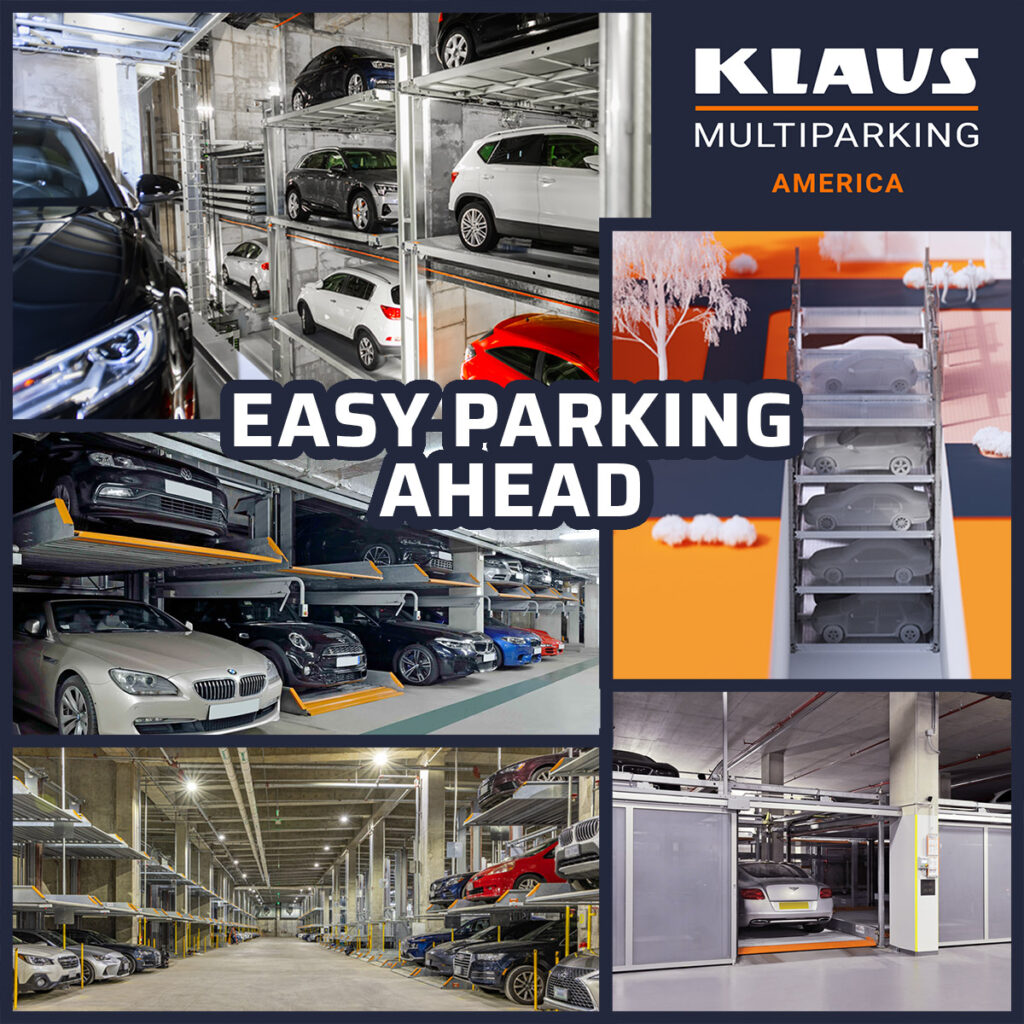
KLAUS’s client portfolio reflects parking challenges across multiple real estate sectors. Multifamily developments represent significant business volume, particularly in urban markets where parking requirements may conflict with unit density objectives and land economics.
Student housing projects present similar density challenges with additional considerations around user experience and operational simplicity. Senior living developments require different approaches, balancing space efficiency with accessibility and ease of use for elderly residents.
Mixed-use developments introduce complexity from combining residential, commercial, and potentially hospitality parking within single systems, requiring sophisticated access control and operational management capabilities.
Each development type presents distinct technical requirements, cost sensitivities, and operational considerations that influence system design and configuration decisions.
Market Position and Competition
Mechanical parking faces ongoing competition from traditional parking structures, surface parking where land permits, and increasingly from reduced parking supply strategies that rely on alternative transportation and parking management approaches.
KLAUS’s competitive positioning emphasizes engineering reliability, turnkey service delivery, and long-term operational support – factors that address developer concerns about mechanical system complexity and maintenance requirements that have historically limited market acceptance.
The company’s German engineering heritage provides credibility around technical reliability and longevity, addressing perceptions that mechanical systems represent higher operational risk compared to conventional parking structures.
However, market penetration can be limited compared to traditional parking solutions. Mechanical parking’s cost effectiveness depends on specific site conditions, land values, and regulatory contexts that don’t apply universally across American real estate markets.
Future Outlook and Market Trends
Looking forward, KLAUS identifies several trends influencing mechanical parking demand. Urban and suburban density increases and land cost pressures continue driving interest in space-efficient parking solutions, particularly in markets with geographic or regulatory constraints on horizontal expansion.
Sustainability considerations increasingly factor into parking infrastructure decisions, with mechanical systems offering potential advantages in materials usage and site impact compared to traditional structures, though lifecycle analysis requires consideration of energy consumption and maintenance factors.
Autonomous vehicle technologies present both opportunities and challenges. Self-parking capabilities could enable more efficient mechanical system utilization, but widespread autonomous vehicle adoption might fundamentally alter parking demand patterns in ways that affect all parking infrastructure approaches.
Building for the Next 35 Years
KLAUS Multiparking America’s 35-year milestone reflects patient market development in an industry where innovation adoption proceeds gradually. The company’s growth from regional partnerships to consolidated national presence demonstrates both organizational development and mechanical parking’s transition from a specialty solution to an established alternative.
The next phase will likely determine whether mechanical parking achieves broader mainstream acceptance in American markets or remains a specialized solution for specific site conditions and development types. Success will depend on continued cost competitiveness, operational reliability, and adaptation to evolving vehicle technologies and urban transportation patterns.
For more information about KLAUS Multiparking America and their innovative parking solutions, visit us.multiparking.com.
Similar Articles
Explore similar articles from Our Team of Experts.