


A significant obstacle to development in many cities is not zoning or neighborhood opposition, but the lack of clarity in the approval process itself. In Farmington Hills, Michigan, a new sy...

California’s Supportive Housing Sector Faces Structural Funding Challenges

Written by:
Date:
21 Jan 2026
Share via Facebook

Share via Linkedin

Share via X

Copy to clipboard


The 2022 collapse of Skid Row Housing Trust was widely seen as a turning point for California’s supportive housing sector. Policy experts say the episode revealed long-standing structural and funding challenges rather than failures of permanent supportive housing itself. As California continues to face high housing costs and persistent homelessness, providers of supportive housing are operating under increasing financial constraints that limit their ability to maintain and expand housing for residents who rely on long-term stability and services.
A Personal Mission Rooted in Experience
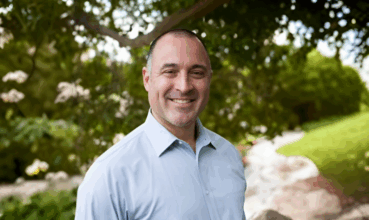
Brad West, a policy specialist at the Supportive Housing Alliance, is committed to housing advocacy grounded in personal experience. Raised in Section 8 housing in Orange County and dependent on food stamps and school lunch programs, West saw poverty’s effects firsthand. “I don’t have any lived experience with homelessness, but I do know what it means to grow up poor,” West says. “A lot of my immediate family members experienced homelessness, so this is something I was unfortunately very connected to very early in my lifetime.”
After earning a degree in political science from Chapman University and working on Democratic campaigns across Orange County and the Inland Empire, West focused on housing policy. He began in the office of Assemblymember Sabrina Cervantes, covering housing and homelessness issues in Western Riverside County.
Now, as policy specialist for the Supportive Housing Alliance, West represents twelve Los Angeles-based developers dedicated to permanent supportive housing (PSH). The Alliance’s membership criteria are strict: organizations must commit a significant share of their pipeline and existing portfolio to PSH. “Ninety percent of our twelve members’ projects are 100% PSH. We’re really committed to the mission,” West says.
The Insurance Crisis Nobody Talks About
California’s insurance crisis has dominated headlines about homeowners facing wildfire risks, but it has largely overlooked supportive housing, even as the crisis imposes severe consequences on the sector. “Even though we’re building in highly dense urban environments, we’re not building anywhere near fires, but we’re still getting saddled with the increased costs,” West explains.
Insurance expenses have soared. Some buildings saw annual insurance costs rise by 550 percent, with portfolio insurance jumping from $250,000 to $1.2 million almost overnight. For organizations operating on slim margins and relying on government subsidies, these increases caused immediate financial crises.
“We’re not sitting around with giant reserves, so we didn’t have the resources to absorb this shock,” West says. “This sent a lot of projects into an operating deficit that weren’t in an operating deficit before.”
These spikes coincided with broader inflation in 2021 and 2022. While some local governments created programs to help housing providers manage economic shocks, skyrocketing insurance costs remain a significant concern, frequently surfacing in financial audits of Alliance member projects.
The Skid Row Housing Trust Collapse: A Cautionary Tale
The failure of Skid Row Housing Trust, a founding Alliance member and pioneer in supportive housing since the late 1980s, highlights the risks facing older PSH developments. West contributed to research on the collapse, identifying fundamental flaws in how these buildings were funded and maintained.
“A lot of those older PSH buildings were relying on older programs – what used to be called the Shelter Plus Care program, now called the Continuum of Care program,” West explains. The program’s structure allowed only 3 percent annual increases in funding, which were not automatic and required annual approval from housing authorities.
This led to chronic underfunding. “Some of those buildings had rental income as low as $650 a month,” West says. “You can’t run any kind of housing unit in Los Angeles on $650 a month per unit, whether you’re doing supportive housing, affordable, or just regular housing.”
Operating costs far outpaced funding, creating deficits that older PSH projects could not overcome. “Had the government done its job and given them the resources they needed to succeed, I fully think there would be no Skid Row Housing Trust collapse,” West argues.
A Sector Under Strain
The Trust’s collapse is not an isolated case but part of a broader pattern affecting the supportive housing sector. West reports that aging PSH properties across Los Angeles face similar financial pressures, with some providers spending tens of millions annually to keep buildings operational.
This problem threatens not just individual buildings but entire nonprofit organizations. “That jeopardizes the financial position of the parent nonprofit, and eventually we’re not going to be able to keep doing this,” West warns.
Political priorities exacerbate the strain, as funding for new construction often takes precedence over maintaining existing assets. “There tends to be a prioritization of new projects rather than existing projects,” West says. “Lawmakers and decision makers love going to ribbon cuttings. Everyone wants to focus on the new project that’s opening up because it’s exciting, but there’s a lot less focus on investing in assets that have been around for 20, 25, 30-plus years.”
The Wrong Lessons
West says many people misinterpret the Skid Row Housing Trust’s collapse as proof that permanent supportive housing is inherently unsustainable. “A lot of people’s conclusion is that PSH is just this model that doesn’t make financial sense, and there are inherent contradictions in it,” he says. “That’s totally the wrong conclusion.”
He points to financial audits of recently built, adequately funded PSH projects – with rental income around $2,100 per unit per month – that operate successfully. “These folks are running these buildings fantastically. It’s really high-quality housing. Folks are getting the services they need, and the housing is in tip-top shape, because they have the resources to do their jobs.”
The Three-Legged Stool
Permanent supportive housing depends on three funding streams: construction capital, services funding, and operating subsidies. West says the most significant challenge now is the shortage of operating subsidies. “The Los Angeles region has essentially hit its cap on how many vouchers they can allocate as project-based vouchers,” he explains.
With Section 8 project-based vouchers maxed out, developers must look for creative alternatives, slowing the pace of new PSH construction. “We will inevitably see a slowdown in the supportive housing this region is constructing because we’re not investing in that critical third piece,” West predicts.
A Concrete Solution
Despite these challenges, West believes the solution is clear and achievable. Research from the Corporation for Supportive Housing indicates that California could end homelessness in twelve years with an annual investment of $8 billion – less than 3 percent of the state’s $300 billion budget.
“It’s more about the political priority of where you put the money,” West says, referencing Nevada’s recent constitutional amendment dedicating a percentage of its budget to housing and homelessness. “If Nevada can do it, California’s got to start catching up.”
Evidence-Based Advocacy
West emphasizes that permanent supportive housing is not experimental but proven policy. “Supportive housing is an evidence-based practice. There’s a reason we’re doing it – it’s the cheapest, most effective way to actually solve chronic homelessness, especially for folks with mental illnesses, severe mental illnesses, substance abuse issues, and disabilities.”
With more than 180,000 people experiencing homelessness in California, the lessons from both success and failure in PSH are urgent. The sector’s problems stem not from flaws in the model, but from inadequate and inconsistent funding, issues that sustained political will and proper resource allocation can address.
For West and his colleagues at the Supportive Housing Alliance, the urgency is personal and professional. “This is the best job I’ve ever had,” West reflects. “I’m very thankful to be doing it.”
Similar Articles
Explore similar articles from Our Team of Experts.



Perspectives, Residential Real Estate, Market Analysis & Policy, Real Estate Services, Industry News
The Tampa Bay rental market is facing an affordability challenge, with nearly 10% of tenants unable to pay rent on time, according to local property management expert Lei Cheng. In a recent ...

