For years, Tampa homebuyers sat on the sidelines waiting for interest rates to fall back to pandemic-era lows. That wait is over — not because rates dropped dramatically, but because buyers have fundamentally changed how they think about debt. Across Tampa Bay, a quiet but significant shift is underway: renters are reconsidering, buyers are re-engaging, and investors are repositioning for the next decade of growth.
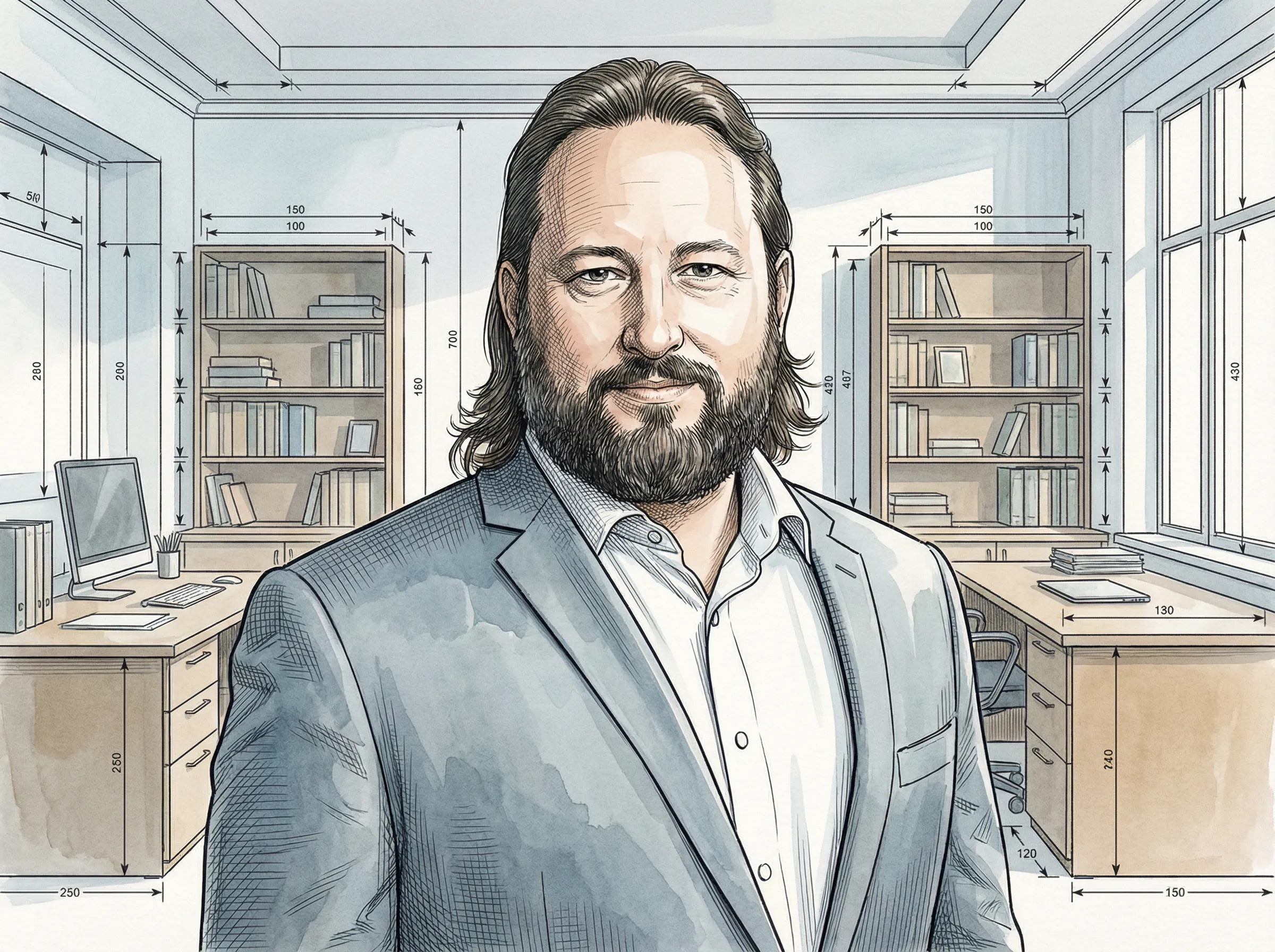
Tampa’s market has always rewarded those who look past short-term friction toward long-term fundamentals. In 2026, those fundamentals — steady migration, institutional capital, and a city still mid-transformation — remain as strong as ever. Few people are better positioned to read those signals than Daven Henry, a licensed real estate specialist with LPT Realty who has worked the Tampa Bay market since 2008, when he got his license during the financial crisis and immediately started closing deals in distressed properties and wholesale transactions. He has navigated every phase of the cycle since, and what he sees now is a market stabilizing on new terms, with real opportunity for buyers who understand how to use them.
Tampa Buyers Shift Market Mindset
The turning point in Tampa’s 2026 market isn’t a rate cut or a policy change. It’s a mindset shift.
Buyers who spent years waiting for a return to 2–3% mortgage rates have quietly let go of that expectation. Rates in the 5–7% range, once treated as a dealbreaker, are now being weighed against a more honest set of comparisons: credit cards running above 25%, historical mortgage rates that reached 12–15% in previous decades, and years of rent payments that built no equity and produced no asset.
That last point is driving the most meaningful behavioral change in the market. Longtime renters across Tampa Bay are confronting a difficult reality — years of monthly payments have left them with nothing to show for it. No equity. No ownership. No control over rising costs. For a growing segment of buyers, that recognition is the final push toward purchasing.
“People are starting to realize they’ve thrown away money at apartment complexes and have nothing to show for it,” Henry says. “They want assets and control over something. If you pay rent your whole life, you have nothing.”
The result is a market moving again — not at the frenzied pace of 2021, but with steadier energy that suggests durability over speculation.
Where Tampa Growth Is Emerging
Tampa rewards buyers who can read a map not as it looks today, but as it will look in five to ten years. The neighborhoods generating the strongest long-term interest aren’t the ones already on every buyer’s radar — they’re the ones sitting just outside major development that hasn’t yet finished reshaping the surrounding blocks.
Henry calls these the “fringes,” and his own investment portfolio is built around them. The pattern is visible in Tampa Heights: when Armature Works opened and transformed that corridor, surrounding streets followed. Values climbed. Buyers who had positioned themselves before the development peaked captured the appreciation.
That cycle is repeating. The Gas Works project is gaining momentum, and the surrounding streets haven’t yet been fully repaved. The Ybor City fringes sit within the gravitational pull of billions already committed to the waterworks corridor and downtown — but fringe pricing hasn’t caught up. Near Tropicana Field in St. Petersburg, redevelopment plans carry long-term implications for adjacent blocks that still reflect pre-announcement values.
“I like fringes of where big projects are happening but haven’t finished yet,” Henry says. “Gas Works isn’t done yet. The new stadium — those are plays. You’ve got to go five to ten years ahead.”
The established corridors — South Tampa, Carrollwood, core Ybor — are already priced for what they are. The opportunity is in the gaps between them.
Tampa Market Split: Condos vs Homes
Tampa’s 2026 market is not uniform, and the most important dividing line runs between the condo sector and everything else.
The condo market is still working through the fallout from Florida’s post-Surfside inspection legislation. Deals are still falling apart due to lender concerns, insurance complications, and buyer hesitation about building safety. Special assessments are compounding the problem — owners of modest units are facing bills in the $60,000–$80,000 range as buildings work to meet updated codes. Henry experienced this firsthand: a single condo deal fell apart four times in a row, each time for a different reason. “You’d better price it right and not try to play games,” he says. “There are a lot of condos out there, and they’ve been trending down.”
The longer-term picture for condos isn’t necessarily bleak — once assessments are resolved and buildings are certified, improved structural integrity and new amenities should restore confidence. But near-term buyers should scrutinize assessment status, reserve fund health, and insurance coverage before committing.
Single-family and income-producing properties tell a different story. Henry’s recent duplex closing in Plant City — affordable, close to Tampa, with solid rental income — reflects what’s still working: dependable fundamentals in Tampa’s outer ring, without the headline risk of the condo sector.
And then there’s the other end of the market. Tampa’s luxury segment is expanding at a pace unrecognizable from a decade ago. When Henry arrived in 2008, there was one luxury condo tower downtown. Now there are three either completed or under construction — not counting Bayshore, the beaches, or downtown St. Pete. A penthouse at the Pendry was recently listed at $44–$45 million, the most expensive condo ever offered in Tampa. “I live in a two-bedroom, two-bath, a few blocks away for under $500,000, and now there’s one across the street listed at $40 million,” Henry says. “It’s crazy — but that’s where the market has gone.”
Key Forces Driving Tampa Growth
The forces behind Tampa’s market extend well beyond local demand — and understanding them helps explain why the region continues to attract capital even as other markets cool.
The most consequential development of recent years is the arrival of major out-of-state developers. Groups from Miami and New York are now actively building in Tampa, bringing capital and project scale that accelerates transformation. When developers who built their reputations in the country’s most competitive markets choose to deploy here, it reflects a clear read on where long-term value is headed.
That institutional confidence is grounded in migration patterns that show no signs of reversing. Tampa continues to draw residents from higher-cost markets — South Florida, the Northeast, the Midwest — who find lower housing costs, no state income tax, and a genuinely livable environment. Crucially, the region absorbs that demand across a diverse range of communities, each with its own character and price point. Dunedin. Gulfport. Plant City. St. Petersburg. These aren’t suburbs of Tampa so much as distinct destinations that happen to share a regional market.
“Tampa is more than just Tampa,” Henry says. “There are so many cool little towns nearby that are their own cities but get lumped in. If you want to be close to the city, the airport, or the beaches, there are so many options. It makes Tampa a great home base.”
Florida Property Tax Debate Impact
One variable that could meaningfully shift Tampa’s housing economics without a single property changing hands is currently moving through Florida’s policy debate: property tax reform.
Lawmakers are discussing proposals to eliminate property taxes on primary residences or extend relief to homeowners over 55. If passed, either measure would reduce the cost of ownership in Florida, which is meaningful for first-time buyers evaluating affordability and significant for long-term owners still writing annual checks to the government on paid-off homes.
Henry is watching, but not banking on it. “I don’t waste too much energy on it until it’s signed and done,” he says. “It’s not a done deal until the money’s in the bank.” The prudent approach: run purchase calculations using current tax rates and treat any future relief as upside rather than an assumption. But the outcome of this debate will have real consequences for Tampa’s market — and it’s worth following closely.
About the Expert: Daven Henry is a licensed real estate specialist with LPT Realty in the Tampa Bay area, with more than 15 years of experience across distressed properties, investment acquisitions, and residential sales throughout the Tampa metro.
This article is based on information provided by the expert source cited above. It is intended for general informational purposes only and does not constitute legal, financial, or real estate advice. Readers should conduct their own research and consult qualified professionals before making any real estate or financial decisions.