
Madison, Wisconsin’s real estate market remains strong while many U.S. cities face cooling demand and rising inventory. Steady population growth and a diverse economic base have created pe...

Tampa Bay Real Estate Prepares for Policy-Driven Surge, Says Industry Leader

Written by:
Date:
07 Jan 2026
Share via Facebook

Share via Linkedin

Share via X

Copy to clipboard


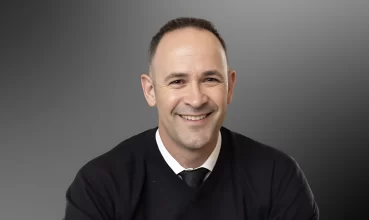
The Tampa Bay real estate market is poised for rapid growth, driven by anticipated policy changes and ongoing demographic shifts that could reshape investment opportunities as early as 2026. Jeff Beggins, Chief Evolution Officer at CENTURY 21 Beggins Enterprises, draws on decades of family experience in Florida real estate and his firm’s statewide reach to assess what lies ahead.
A Family Legacy in Florida Real Estate
Beggins is the second generation of a family that played a key role in Florida’s real estate industry. His father, Jim Beggins, was one of the founders of Century 21 in the state, acquiring the master franchise in the early 1970s, when franchising in real estate was rare.
“He and a couple of friends scraped up the money to buy the master franchise for Century 21 in Florida,” Beggins says. “At that time, it didn’t have any brand name recognition, so they went door to door to all the independent real estate offices and converted them.”
Jim Beggins grew the business to 320 offices and 4,500 agents before selling and moving the family to Tampa Bay. In 1992, the family returned to Century 21, building a new franchise from scratch to about 700 salespeople, covering territory from the Panhandle to the Keys.
Today, Jeff Beggins operates from Madeira Beach in Pinellas County and is expanding the company’s footprint across Florida, with plans to grow nationally through regional partnerships.
Micro-Markets Define Local Real Estate
Beggins rejects broad market generalizations and insists that local micro-markets determine real estate outcomes. When presented with data showing Tampa’s market is slightly down and Pinellas County is declining 12% year over year, he argues that these figures are too broad to be useful.
“I don’t think you can say there’s a market,” Beggins says. “That’s one of the things I teach a lot – there are a bunch of micro markets, and that’s the only relevant thing. If you live in a three-bedroom, two-bath pool house, the only market that’s relevant to you is other three-bedroom, two-bath pool houses.”
He explains that negotiation power depends entirely on supply and demand for specific property types in particular neighborhoods. “If there’s one house for sale, the leverage is with the seller. If there are five, the leverage is with the buyer,” he says.
Hurricane Recovery Drives Redevelopment
Following Hurricanes Helene and Milton, the region’s recovery is progressing on a predictable 18- to 24-month timeline, according to Beggins. “Typically, it’s 18 to 24 months after hurricane impact when you get back to where you were pre-storm, and we’re on track for that,” he notes.
However, the recovery varies by property type. Older, ground-level wooden homes have lost appeal, while elevated concrete block houses remain in demand. This has led to increased redevelopment, with buyers purchasing land, demolishing older homes, and building new properties valued at $3 million to $5 million in place of homes previously worth about $1 million.
“You are seeing teardowns where people are purchasing property for land value, scraping the properties, and putting up $3 million, $4 million, $5 million homes where there used to be million-dollar homes,” Beggins says. “So you’re seeing a total renaissance of new products on the market.”
He describes a “positive spiral effect” in which new construction attracts higher-income buyers, who in turn increase demand for upgraded amenities, restaurants, and entertainment options, further boosting the area’s desirability.
Policy Changes Set to Accelerate Market Growth
Beggins expects significant market acceleration as a result of several anticipated policy changes. He cites potential federal measures, including lower interest rates, more extended mortgage amortization periods (including 50-year mortgages), bonus depreciation for investors, and mortgage portability. On the state level, Florida Governor Ron DeSantis has proposed eliminating homestead property taxes.
“Any one of these things would be a market boomer, but the combination of all these things coming together at the same time is going to make the overall market skyrocket,” Beggins predicts.
He also points to the political climate, noting that the current administration may pursue aggressive economic stimulus ahead of the midterm elections. He estimates that each home sale generates about $75,000 in local economic activity, making housing a key driver for the broader economy.
Development Focus and the Power of Tourism
Beggins’ company currently has about $500 million in development projects underway, primarily in hospitality and short-term rental sectors. This focus reflects the strength of tourism in Pinellas County and the surrounding Tampa Bay beaches.
“Our local region, if I just talk about the Tampa Bay region with the beaches, specifically the Pinellas County region, is probably the best in the state by far,” he says. “Because of tourism being such a boom, little areas like John’s Pass Village in Madeira Beach get millions of visitors a year, and there are not enough nice accommodations.”
Projects in development include Marriott hotels, boutique properties, and vacation rentals to meet surging tourist demand.
Investment Recommendations: Act Quickly in Micro-Markets
Beggins urges investors to act quickly, citing what he sees as a narrow window for finding strong deals. “I believe we have a tiny window of this first quarter—probably the first month of this first quarter—for the last of the outstanding deals in certain micro markets,” he warns.
He recommends focusing on cash-flowing properties, especially those qualifying for debt service coverage ratio (DSCR) loans, which are based on property income rather than personal financials. “As long as the projected cash flows come in and cover the mortgage, they’re very easy to finance with a decent credit score and 20-25% down payment,” Beggins explains.
Beggins prefers short-term rental investments over traditional long-term rentals, predicting that lower interest rates will allow more renters to become homeowners, potentially leading to an oversupply in the apartment market.
Building Wealth Through Partnership
Rather than stretching individual finances, Beggins advocates for collaborative investing. “Get a couple of friends together, form an LLC, buy an income-producing property, get the write-offs,” he suggests. “The big goal of creating wealth is not paying taxes legally.”
By pooling resources, investors can access larger, income-producing properties and share both profits and tax benefits. Combined with DSCR loans, this strategy allows groups to acquire income-generating properties and build equity while managing risk.
Looking Ahead: Why Now Matters
Tampa Bay continues to attract new residents from high-tax states, while tourism remains a reliable economic engine. Beggins expects demand to remain strong across various property types, but he stresses the importance of expert local guidance due to the complexity and variability of micro-markets.
“You really need a professional who understands that area,” he advises. “Does that street have a drainage problem? Is that school okay? How close are you to the airport? All those different things are important aspects.”
For Beggins, timing is critical. “The best time to buy something was five years ago,” he says. “The second best time is right now.”
With significant policy changes likely and demographic trends continuing to favor Florida, Tampa Bay’s real estate market is positioned for a period of rapid expansion and redevelopment – a cycle Beggins and his family have seen repeat across decades in the business.
Similar Articles
Explore similar articles from Our Team of Experts.