
A former international fashion designer argues that luxury real estate marketing often misses what affluent buyers are truly seeking. Laura Pearson, a real estate advisor with Premier Sotheb...

Southwest Florida’s Market Recalibration as Buyer Patterns Shift and New Dynamics Emerge

Written by:
Date:
17 Nov 2025
Share via Facebook

Share via Linkedin

Share via X

Copy to clipboard


Southwest Florida’s real estate market is undergoing a significant transition, moving beyond the volatility of pandemic-driven surges and the aftermath of Hurricane Ian toward a more balanced environment. Years of sharp price swings and rapid market changes are giving way to stabilization, with clear distinctions emerging among various price segments and types of buyers.
Unlike many traditional housing markets, Southwest Florida operates under unique conditions. The region’s economy is anchored in hospitality, healthcare, aging care, and real estate, resulting in a market that is largely discretionary and focused on second homes and retirement properties.
“We don’t have the typical market where people are having children and buying bigger houses or getting promotions,” says Mike Newes, a sales associate with John R. Wood Christie’s International Real Estate, who has worked in the local market for 25 years. “We are a very discretionary market. When things are good, people are buying second homes, and when the market gets tight, they’re thinking ‘we can wait this year and buy next.’”
This discretionary nature creates distinct challenges and opportunities. Unlike primary residence markets, where life events often drive buying and selling, participants in Southwest Florida can afford to be patient, leading to different behaviors during market shifts.
The market underwent major upheaval after Hurricane Ian struck in September 2022. The storm’s destruction—especially on barrier islands—created a sudden demand for housing as displaced residents sought replacement properties. Coupled with ongoing migration trends from the pandemic, the region experienced a 62% increase in property values over two years, growth that many now recognize was unsustainable.
“Sellers are realizing now that they have to give some of that back if they want to get their property sold,” Newes notes. “When I’m doing listings, I tell my clients we have to be careful. We can’t price to the last comparable. We need to price against the competition.”
This approach reflects a broader recalibration in the market. Agents are focusing on positioning properties against current competition rather than relying on past sales, emphasizing the importance of value through a combination of price, location, and condition.
Current buyer behaviors reveal interesting contradictions. While buyers know they are in a market with increased leverage, they are finding that sellers are not always eager to negotiate.
“Buyers think that it’s a buyer’s market, which it is, but they think that means everybody’s desperate to sell,” Newes points out. “We have a market where if I sell, fine, if I don’t, we’ll just keep it another year.”
This environment is leading to longer decision-making processes, with buyers touring more properties and taking their time before making offers. Increased inventory allows buyers to be selective, searching for homes that precisely meet their needs rather than compromising.
A notable factor shaping the current real estate climate is the strength of the stock market. As equity markets continue to rise, prospective real estate buyers face decisions about where to allocate their funds.
“Right now the stock market continues to go up, and people are well invested in the stock market, and they make the decision: should I pull some money out of the stock market to invest in real estate?” Newes says. “I know real estate is going to be a better long-term investment, but when you can make 7% per month on the stock market, it’s hard to look at 8% per year in real estate.”
This dilemma is especially relevant for middle-market buyers with discretionary funds who are weighing the timing of their investments. Many are choosing to wait for what they believe will be a stock market peak before moving money into real estate.
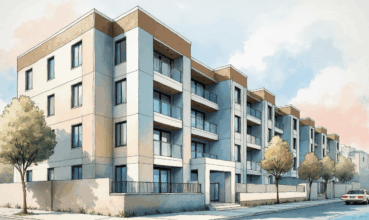
Market performance varies notably across price ranges. Luxury properties—those priced over $1 million—are moving more readily than mid-range condominiums, particularly those in the $250,000 to $500,000 range, where oversupply has made conditions more difficult for sellers.
“At the high end, people have the money and they want to buy it,” Newes says. “In the condo market, there’s so many available that people are just looking and looking.”
This segmentation highlights different motivations and financial capabilities. Luxury buyers typically have immediate purchasing power and clear lifestyle objectives, while middle-market buyers tend to be more price-sensitive and willing to extend their search.
The resale market continues to face competition from new construction, with builders offering incentives such as rate buydowns. However, resale properties retain key advantages, including established neighborhoods, mature landscaping, and settled foundations that appeal to buyers seeking immediate move-in readiness.
“You get an established neighborhood, you get the beauty of what’s on the ground,” Newes says. “You get a house that’s settled in, you get a neighborhood where you can drive around and see the people you’ll be living with.”
For resale properties, success depends on presenting updated, fresh interiors and exteriors to compete with the modern appeal of new builds, while emphasizing the benefits of established communities.
Recent months have brought positive signs of recovery. Open house traffic has increased, more properties are going under contract, and the rate of contract failures has declined. “I really believe that people are starting to come back into the market again,” Newes observes. “I think we’re going to have a great winter season.”
Winter is traditionally the region’s busiest selling period, as northern residents visit to escape cold weather and often consider permanent or seasonal relocation.
Southwest Florida’s market appears to be stabilizing after a period of dramatic fluctuations. The combination of increased buyer activity, more realistic seller expectations, and improved fundamentals points to a return to more typical market conditions.
However, the region’s unique characteristics—a discretionary buyer base, weather-related risks, and sensitivity to broader economic shifts—require market participants to remain adaptable. Success depends on understanding both local dynamics and the economic factors that influence buyer decision-making.
As the market continues its adjustment, the focus is on creating compelling value propositions that reflect current realities and position properties competitively in an environment where buyers have choices and patience.
In summary, Southwest Florida’s real estate landscape now reflects a balance between the lessons of recent years and the enduring strengths of the region. While no longer defined by rapid surges or post-disaster urgency, the market is characterized by informed buyers, strategic sellers, and a renewed emphasis on value, positioning the region for a more stable and sustainable future.
Similar Articles
Explore similar articles from Our Team of Experts.