The economics of building new homes in Southern California have shifted in ways that aren’t visible from a listing page. Development costs for turning raw land into finished lots have more than doubled over the past two decades in parts of the Inland Empire – from roughly $55,000–$60,000 per lot to $110,000–$115,000 – while home sale prices have not risen enough to absorb the difference. Add in the cost of subsidizing homeowners insurance and buying down mortgage rates, and builders are operating in a margin environment that has changed how land gets acquired, entitled, and developed across the region.
Craig Potter, a land transaction specialist with One Realty Group who has spent 25 years working with both public and private homebuilders in North Orange County and the Inland Empire, describes the result directly: “We’re in this kind of stalemate where there are many parcels that could be developed, but the economics of the business just aren’t working.”
Builders Are Paying to Sell Their Own Homes
The affordability problem in Southern California extends well beyond home prices. In Orange County, property tax rates on new developments can run around 1.6% once Mello-Roos assessments – special taxes levied on properties in designated districts to fund local infrastructure – are factored in. HOA fees add more. And homeowners insurance in parts of the region has become expensive enough that major public builders have created their own insurance companies to subsidize premiums for buyers.
Interest rate buy-downs represent the most significant margin erosion. Potter describes a D.R. Horton project with homes priced in the $556,000–$600,000 range where the builder was returning $50,000 per home – out of its own profit – to buy mortgage rates down from around 7% to roughly 4.9%. “If we could get to a place where the interest rates could just get back to 5%, the home builders could then withdraw that additional funding,” he says, adding that recovered margin could go toward either more competitive land pricing or lower home prices.
The squeeze operates from both directions: affordability caps what builders can charge, while subsidies, fees, and construction costs eat into what they keep. “They’re being kind of squeezed from both ends because affordability won’t allow the sales price to push,” Potter says.
How Builders Acquire Land Now
One of the most consequential changes since the mid-2000s housing cycle is how builders acquire land. In the previous cycle, according to Potter, public builders typically carried five years of lot supply on their books, employing forward planning divisions to process entitlements across multiple cities and counties. When the market crashed and banks foreclosed on projects, that model proved catastrophic.
Today, builders like D.R. Horton use third-party capital providers – firms such as Angelo Gordon, Kennedy Lewis, and Walton – to hold land off their balance sheets until they’re ready to build. The builder puts a property in escrow, brings in the capital provider to fund the acquisition, and retains an option or first right of refusal. When demand materializes, the builder executes “takedowns,” purchasing finished lots in quarterly increments.
The model reduces balance-sheet risk but adds cost. “No one’s going to provide capital to you and carry an asset for you without some kind of a return,” Potter notes. When absorption slows, builders go back to these intermediaries requesting modified terms – longer closing timelines, lower rates – which compresses the capital provider’s returns. Potter says some of these companies are now negotiating workout agreements on previous transactions where sales haven’t met projections.
Where Entitlements Make or Break a Deal
Municipal attitudes toward development vary dramatically, even between neighboring cities. Potter contrasts Adelanto – where he describes an open-door policy, reasonable fees, and cooperative staff – with neighboring Hesperia, where political dynamics and architectural review requirements make building significantly harder. Some cities mandate design standards for the sides and rear of homes, adding cost to every unit for features most homeowners never see.
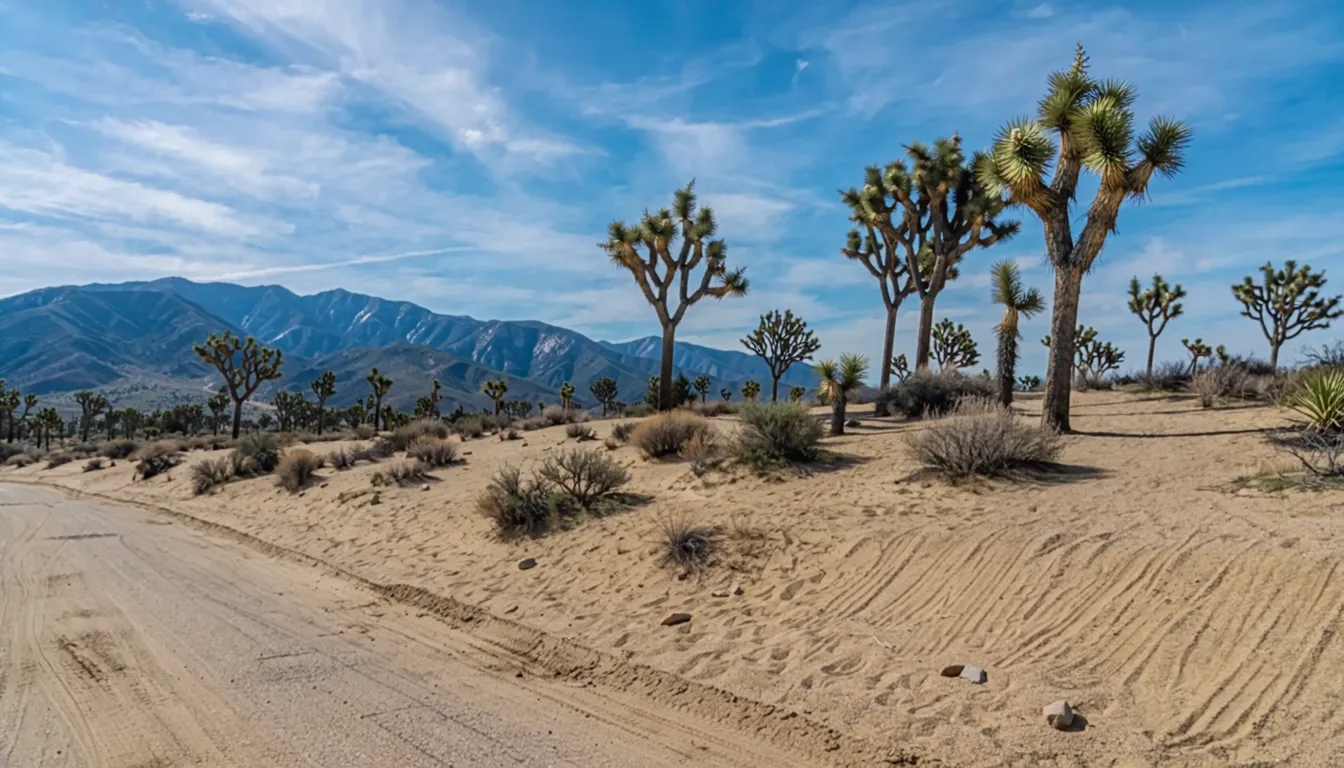
Environmental regulation adds another layer. Joshua trees in the high desert were placed on an endangered list roughly five or six years ago, and for several years there was no clear permitting framework for removal. Early estimates ran as high as $1.5 million for a single project’s worth of trees. Potter says the cost has come down substantially – a recent project with around 50 trees was permitted for approximately $150,000, though it took about three years to complete. “Land out in the high desert is not very valuable compared to Orange County,” he says. “When you start to burden it with a cost like that, it just makes it cost prohibitive for a builder.”
Infrastructure Bets in the High Desert
While the near-term builder market is constrained, longer-term infrastructure investments are reshaping land values in parts of the Inland Empire. BNSF Railway is building a 6,000-acre rail yard in Barstow, a project Potter expects to break ground before the end of this year. Separately, a high-speed rail line planned from Rancho Cucamonga to Las Vegas includes a station in Apple Valley, just south of the rail yard, and construction has already begun on the Las Vegas terminus.
The BNSF project is already moving land prices. Potter sold a parcel to BNSF for its solar farm component at $43,000 per acre – land the previous owner had purchased for about $10,000 per acre. “If BNSF wasn’t there, the market would not be $43,000 per acre,” he says.
Potter says seasoned investors are studying topography, access, and utility availability around these projects, but cautions that timing remains speculative. “Investors have to always be comfortable with maybe not guessing the timing perfectly,” he says. For landowners weighing whether to hold or sell in these areas, the calculus depends on how long they can carry a property while waiting for infrastructure-driven demand to arrive – and whether the specific parcel’s location, access, and zoning position it to benefit when it does.
About the Expert: Craig Potter is a real estate professional with One Realty Group based in North Orange County, California, specializing in land transactions and homebuilder deals across Orange County and the Inland Empire.
This article is based on information provided by the expert source cited above. It is intended for general informational purposes only and does not constitute legal, financial, or real estate advice. Readers should conduct their own research and consult qualified professionals before making any real estate or financial decisions.