

In a recent conversation with Craig Foley, a veteran real estate professional with over two decades of experience, we delved into the evolving landscape of sustainability in real estate. Fol...

South Florida Market Update Shows Why Broward County Stands Apart

Written by:
Date:
06 Nov 2025
Share via Facebook

Share via Linkedin

Share via X

Copy to clipboard

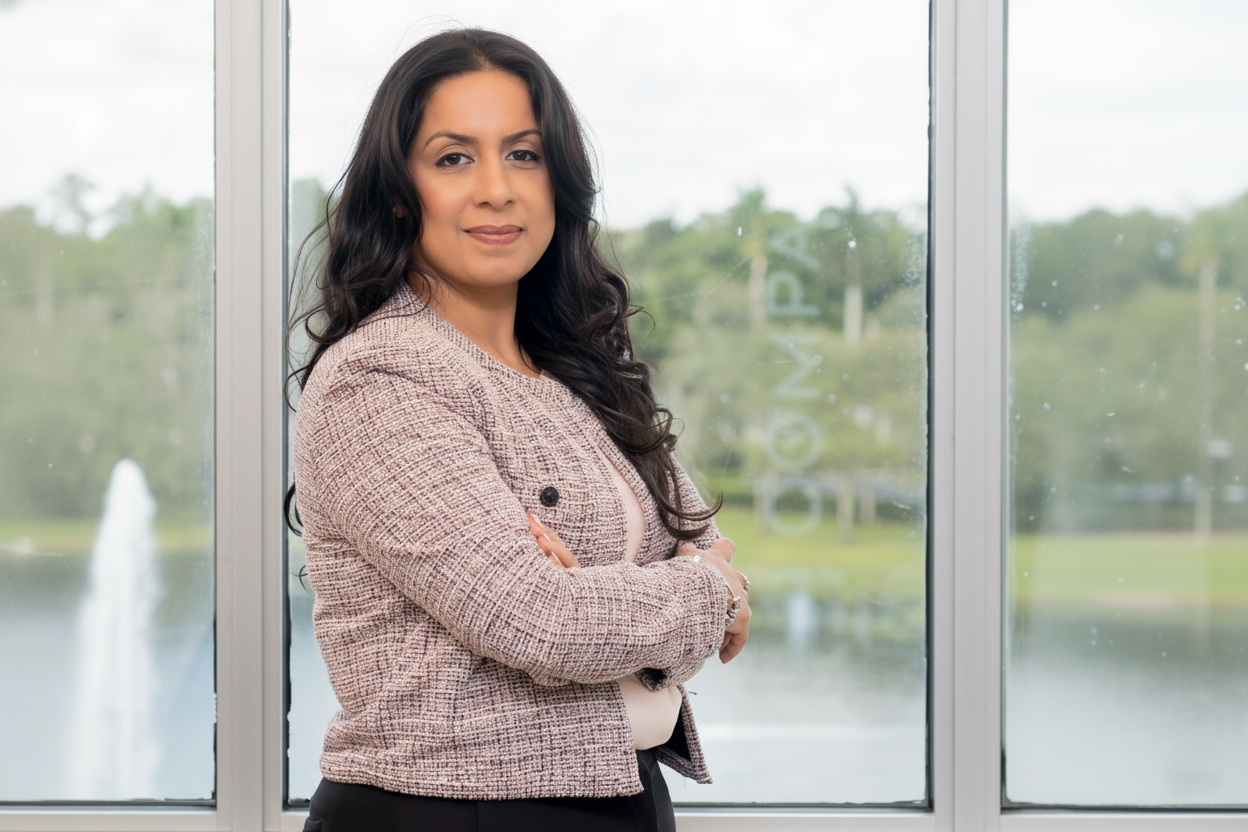
The South Florida residential market presents a complex picture that counters the bleak narratives often portrayed by national media. While headlines highlight Florida’s broader challenges, local market dynamics tell a more nuanced story, particularly in Broward County, where land scarcity and strategic positioning create unique opportunities.
Zubeda Mukati, a real estate advisor with Compass who has worked in South Florida’s market for over a decade, offers insights that challenge conventional views about the region’s direction. Her experience with a diverse client base reveals market conditions that do not match national generalizations.
A Background Shaped by Experience
Mukati began her real estate career during the 2008 financial crisis, transitioning from banking, where she specialized in mutual funds and annuities. Her financial background provided valuable skills for navigating complex market situations.
“I really didn’t know that I had to put in that many hours and that much work to be a realtor. Nobody told me that when I was getting my license,” Zubeda reflects. “I thought there was more flexibility, but it worked out wonderfully.”
Her banking expertise helps her understand client finances and offer guidance beyond property transactions. This comprehensive approach has become central to her work, especially with first-time buyers and families facing major life changes.
Land Scarcity Sets Broward Apart
Unlike markets experiencing inventory surges, Broward County faces a fundamental constraint that shapes its resilience. “We really do not have any room to build, as far as single family homes is concerned,” Zubeda explains. This geographic limitation creates a supply dynamic different from markets with abundant developable land.
The scarcity factor especially impacts single-family homes, where new construction is limited. While condominium development continues, the residential market Mukati works in operates under distinct constraints compared to other Florida areas.
Current Market Conditions
South Florida is undergoing what Mukati describes as a necessary adjustment, but not the dramatic correction seen elsewhere. Properties priced appropriately and marketed well continue to sell within 30 days, indicating that market fundamentals remain sound for realistic sellers.
“Properties that are priced right, marketed well and presented properly by their agents, they’re selling in 30 days,” she notes. “If you’re going to overprice it, the market will not accept it.”
The challenge is managing seller expectations, especially for those who bought during the peak of the pandemic’s price increases. Still, Zubeda emphasizes that motivation is the key factor behind successful transactions.
Interest Rate Lock-In
A major dynamic involves homeowners who are locked into historically low interest rates and are reluctant to move. Zubeda cites a client with a 4.25% mortgage who wants to upsize but faces the reality of higher monthly payments, even with a smaller property.
“Those kind of sellers are hard to get because they’re like, ‘Okay, I don’t know. Maybe I can hang on for a little bit longer,’” she explains. This creates a scenario where both buyers and sellers wait for better conditions.
Behavioral shifts in the market have become more pronounced, with changes in sentiment occurring more quickly. “Every six months it kind of changes. And now it’s changing even faster. You’ll see three weeks, four weeks, buyers and sellers start changing a little bit,” Zubeda observes.
Geographic Differences Within South Florida
Real estate is a very local market — we can’t make a blanket statement for the entire South Florida area. Each city and even each neighborhood has its own unique rhythm, and that’s become even more noticeable lately. For example, Pembroke Pines and Miramar are moving at a stronger pace compared to northern cities like Coral Springs and Tamarac, largely due to their proximity to Miami. That said, all of these areas offer tremendous value and lifestyle appeal.
The distinction lies not just in inventory levels, but also in property condition and presentation. Many available homes may need some updates, which creates exciting opportunities for buyers who are open to adding their own touch and building equity.
Buyers Hesitant but Opportunities Remain
Compass data indicates that about 75% of potential buyers remain on the sidelines, waiting for lower interest rates or price drops. This creates what Zubeda sees as a strategic opportunity for motivated buyers.
“This is the time to buy, because there’s inventory available,” she advises. “Interest rates are pretty stable, and if those interest rates go way below, just refinance. Right now, the sellers are willing to negotiate because they don’t see that much demand.”
She points out the risk of waiting: when rates do drop, sidelined buyers may all return at once, creating a shortage of available properties.
Insurance and Infrastructure
Property insurance is a significant consideration, especially for homes with older roofs from the 1990s. Zubeda’s approach includes negotiating roof replacement credits, allowing buyers to update properties soon after closing and then rewrite insurance policies.
“If you’re going to go into something with an older roof, there is room for negotiation. Maybe negotiate the money to put up a new roof,” she suggests.
Climate concerns that often make headlines have not significantly influenced local buyer behavior. “I haven’t heard anybody that worried. That was always the case. Anybody that’s moving from out of Florida always said, ‘What about the hurricanes?’ That has always been part of the transaction,” Zubeda notes.
Investment Opportunities Beyond the Headlines
Recent luxury market analysis reveals opportunities that contradict assumptions about South Florida real estate. Comparing Miami, Fort Lauderdale, and Palm Beach waterfront properties, Fort Lauderdale presents better value for investors.
“If somebody were to invest in Miami, go ahead and invest in Broward, because in Fort Lauderdale by the beach, you’re going to do better. Prices are going to be lower, and chances of that going up is much better,” Zubeda explains, referencing discussions among luxury investors.
This marks a shift from the traditional view that positioned Miami as the top market, suggesting opportunities for strategic investors who look beyond headline cities.
A Long-Term Investment Perspective
Zubeda’s personal investment experience underlines her belief in real estate as a long-term strategy. She recalls a property her husband bought in 2007-2008 for about $110,000, which faced initial challenges but is now worth four times the purchase price.
“We decided to hold on to the property. We never sold it, because if we would have sold it at that time, we would have lost money big time,” she recalls. “Today it’s worth four times more than what we paid for it.”
Her advice to clients is simple: “Real estate is a long-term investment. Treat it that way. It’s not a commodity, it’s a long-term investment. Make a good decision, and you can never go wrong in buying real estate.”
Market Outlook
Looking ahead, Zubeda notes that while no one can predict the market with certainty, there are several key factors shaping South Florida real estate today. Many longtime homeowners have refinanced at historically low rates, around 4%, which allows them to comfortably hold onto their properties rather than sell. At the same time, affordability challenges continue to influence the market — rising insurance costs, home prices, and interest rates have made it tougher for first-time buyers to enter.
“I’ve also seen a shift in demographics,” Zubeda observes. “When I first got my license, many of my clients were first-time buyers purchasing in Broward County. Today, that segment has slowed down, and we’re seeing more move-up buyers — homeowners who are selling properties with equity and using those funds to purchase larger homes. We’re also still welcoming some out-of-state buyers.”
Her confidence in South Florida’s resilience comes from supply constraints and the area’s ongoing appeal. “I strongly believe that we should do well, much better than all the other markets in the United States,” she states.
Navigating the Path Ahead
For professionals and investors, Zubeda’s insights highlight the need for a nuanced understanding of the market rather than broad generalizations. Success depends on recognizing local differences, understanding client motivations, and maintaining realistic expectations about pricing and timing.
South Florida’s market complexity resists simple narratives, whether optimistic or pessimistic. Instead, it offers opportunities for those willing to understand its dynamics and work within current realities rather than waiting for ideal conditions that may not come.
As market cycles progress, the fundamentals of location, scarcity, and long-term value remain important for buyers and sellers navigating South Florida’s evolving landscape.
Similar Articles
Explore similar articles from Our Team of Experts.


Real Estate Services, Residential Real Estate, Market Analysis & Policy, Industry Profiles, Top Articles
Wilmington, North Carolina’s rental market is experiencing steady growth, driven primarily by small-scale property investors rather than large institutional buyers. Even as coastal insuran...