The industrial real estate sector has long focused on massive distribution centers and big-box warehouses. A growing number of businesses, however, now need smaller, more flexible spaces. RISE Commercial District has built its business around this underserved segment, specializing in small bay warehousing, defined as spaces of 5,000 square feet and under, to meet the needs of both large corporations and independent entrepreneurs.
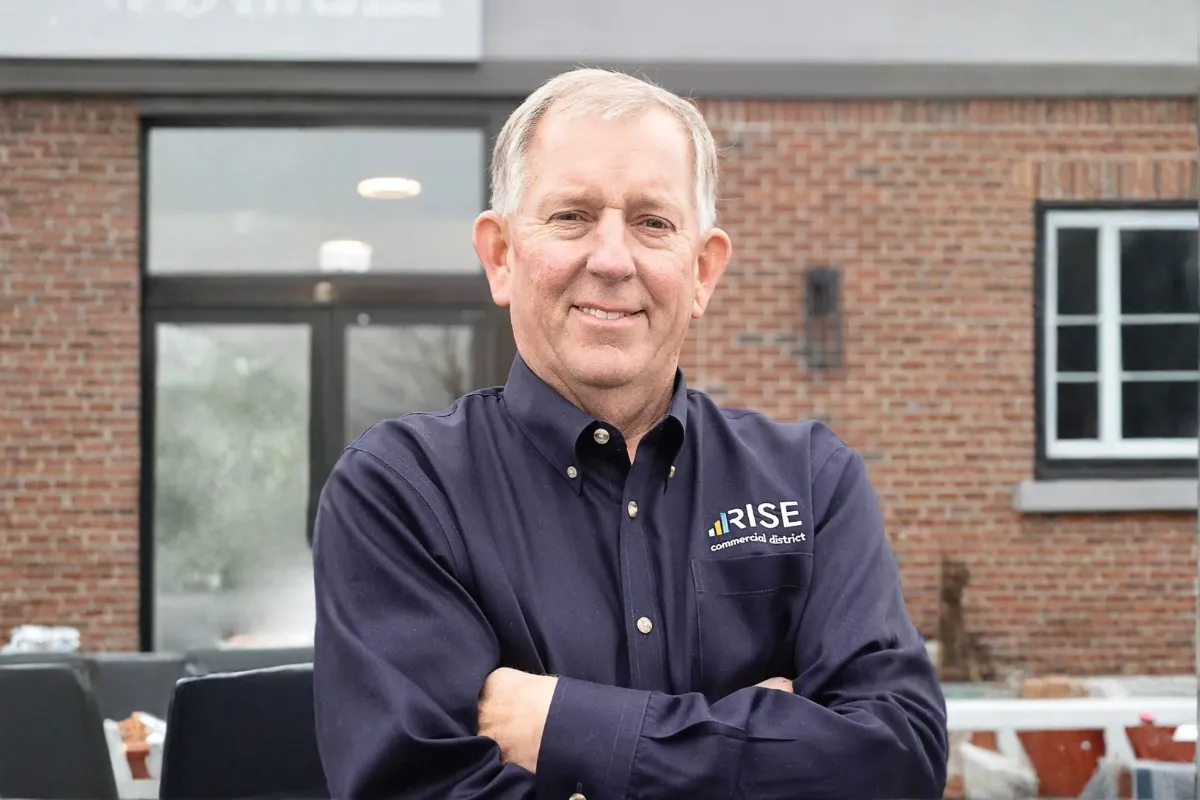
RISE’s origin story illustrates the persistent gap in the market. Two decades ago, founder Jim Sapp ran a garage door business and could not find an appropriately sized warehouse. “Everybody wanted five-year leases and 10 or 20,000 square feet, and I didn’t need that,” he recalls. When Sapp discovered a closed lumberyard in northeast Indianapolis, he saw an opportunity. He bought the property, converted the lumber bays into garages, and leased the space to other small businesses.
That first facility has maintained full occupancy for over a decade, driven not by aggressive marketing but by unmet demand. “My first three tenants found me on their own. For eight years, I did no marketing. It was word of mouth, and then the sites started growing,” Sapp says.
Today, RISE operates 17 locations in six states, serving a tenant base ranging from Fortune 500 companies such as McDonald’s, LG, and Cummins Inc. to small e-commerce sellers on platforms like Etsy and Facebook Marketplace. This tenant mix reflects a broader shift in how companies of all sizes approach warehousing and distribution.
Businesses Downsize Warehouse Space
A shift toward right-sizing is driving demand for smaller, more efficient warehouse space. Companies are reassessing their space needs as supply chains accelerate and inventory is replenished more quickly. Sapp explains that most businesses now expect to order products and receive them within a week or two, reducing the need for large storage facilities. “They don’t need huge warehouses for their last-mile distribution anymore,” he says.
“We’re seeing more companies downsize. They don’t need 20,000 or 30,000 square feet. They can get by with 2,000 or 3,000,” Sapp notes. RISE’s performance data supports this trend. The company reports an average tenant stay of 4.5 years, a 78% renewal rate, and waitlists at most locations, indicating that demand consistently outpaces supply.
One-Year Leases Attract Tenants
One of RISE’s key differentiators is its use of one-year renewable leases, in contrast to the long-term commitments typical in industrial real estate. This flexibility has become especially valuable as construction and financing costs have risen. “Construction costs have gone up over the last three years, including wood, metals, and electronics. Costs are probably up 25% from pre-COVID,” Sapp says. “Interest expense has also increased significantly, so we’ve had to raise rates over the last four years.”
Despite these increases, occupancy has remained high. Sapp attributes this to transparent communication. “We tell tenants why we’re raising rates. All of our leases are only a year, so tenants realize they like the short-term lease, but they understand that things can go up after a year,” he explains. For many tenants, the ability to adjust space needs annually without a long-term commitment outweighs the risk of rate increases.
Security and Layout Built In
RISE designs its facilities with the operational needs of small-format users in mind. Security features include key fob access, video license plate readers, and on-site management. Buildings are spaced 75 feet apart to allow trucks to enter, unload pallets, and exit efficiently.
Sapp is clear that RISE is not a self-storage operation. “We’re not just a self-storage facility that trucks and vans cannot enter,” he says. This distinction matters to businesses that need functional space for shipping, receiving, and light manufacturing, not simple storage.
Few Competitors in Small Bay
Small bay warehousing remains a niche within the larger industrial market. Sapp notes that while similar operations exist in Texas and California, they do not compete directly with RISE, leaving the company with a strong presence in its chosen markets.
By focusing on spaces of 10,000 square feet or less, RISE avoids the volatility of large-scale industrial real estate. “We’re pretty disconnected from the big boxes. Our bread and butter is 10,000 square feet and less, so it doesn’t compete with 500,000 square feet,” Sapp says. The company also develops its own facilities and handles leasing through internal staff rather than outside brokers, streamlining operations and ensuring consistent tenant relationships.
Demand Expected to Keep Growing
As economic conditions remain unpredictable, RISE’s model is well-suited to current market needs. When uncertainty rises, businesses seek smaller spaces and shorter leases, precisely what RISE offers. Steady occupancy, high renewal rates, and waitlists point to durable demand even as broader industrial construction slows.
For developers and investors, the opportunity is clear. By serving businesses that need more than self-storage but less than a big-box warehouse, RISE has carved out a profitable niche. As e-commerce, last-mile delivery, and service industries continue to prioritize speed and cost control, demand for small bay warehousing is likely to grow. Companies that respond to tenants’ practical needs with flexible, functional solutions are positioned to shape the future of industrial real estate.
About the Expert: Jim Sapp is the founder of RISE Commercial District, a small bay warehousing company operating 17 locations across six states. Drawing from his own experience as a small business owner unable to find the right-sized warehouse space, he has spent two decades building a specialized real estate model that serves tenants ranging from Fortune 500 companies to independent entrepreneurs.
This article is based on information provided by the expert source cited above. It is intended for general informational purposes only and does not constitute legal, financial, or real estate advice. Readers should conduct their own research and consult qualified professionals before making any real estate or financial decisions.