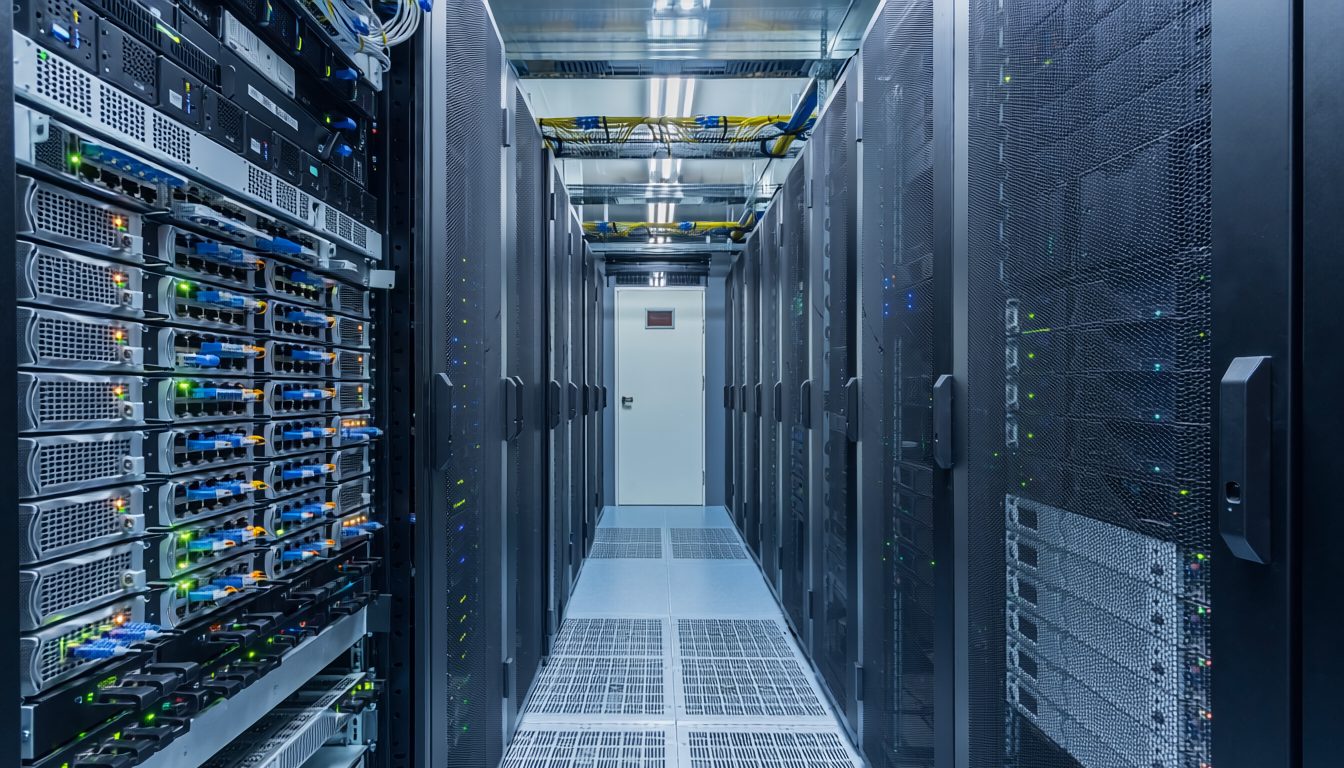
Data center development moves most smoothly when a project can stand on its own resources. One developer’s El Paso site does exactly that-generating its own power and drawing from a private aquifer-so the project adds to shared water and power capacity rather than depending on it.
When Site Selection Leads the Way
Daniel Kaufman, Founder/CEO of Kaufman & Company, says the smartest approach to data center development begins with site selection. By choosing locations where a project can operate entirely outside the public grid, his company builds in community goodwill from the very start. Every resource the project supplies on its own becomes an asset rather than a demand on shared infrastructure.
Kaufman says the El Paso development generates its own power-enough, he notes, that two local users will draw energy from the site. The same logic applies to water. The site sits above an aquifer large enough that the development has no measurable impact on the city’s supply. “That site has an aquifer that could support this development realistically for 1,000 years,” he says. Rather than drawing on grid capacity and municipal water, the project is designed to supply surplus resources back to the surrounding community-an outcome neighbors welcome.
The Value of Already Having Everything
Sites with pre-existing natural resources also streamline development timelines. Grid interconnection for large-scale data centers and water supply agreements typically take time to arrange, so a site that already has both moves faster.
“The savings financially and time savings you can’t even measure because everything is there,” Kaufman says. The El Paso site stood out among multiple candidates precisely because of its complete self-sufficiency.
That calculus informed the company’s earlier work in the Rust Belt as well. Kaufman says the original thesis was to revitalize formerly industrial cities-Buffalo, Rochester, and parts of Maine-where existing grid infrastructure could support data center operations with minimal community impact. In Maine, the company planned to build its own power plant and use its own water supply, drawing on infrastructure that had once served industry.
“We could have used non-utilized infrastructure that was formerly used for industrial, which is no longer there,” Kaufman says. “We would have had zero impact.” These early efforts sharpened the team’s appreciation for markets that actively welcome new infrastructure.
Bringing Projects-and Jobs-Where They Are Welcomed
The pattern Kaufman describes is a positive one: capacity naturally flows to states that want it. The company has focused its momentum on Texas, Utah, Michigan, and the Dakotas-places enthusiastic about the investment and the jobs it brings.
Kaufman connects this to the broader story of American manufacturing, emphasizing how valuable it is to keep supply chains, knowledge, and jobs local. “Once the supply chain is gone, once the knowledge base is gone, those jobs are almost impossible to bring back,” Kaufman says. That conviction underpins the company’s commitment to keeping AI infrastructure development-and the jobs that come with it-in the United States.
Design That Complements the Landscape
Self-sufficiency addresses infrastructure considerations, and thoughtful design speaks to aesthetics. In Utah, the company’s dome-shaped facility was selected partly because it complements the surrounding mountain landscape. Kaufman says the town responded positively to the form, especially compared with alternative uses for the site, such as large-scale logistics facilities.
Kaufman says the stronger driver in Utah was economic opportunity. The project is expected to produce 5,000 to 8,000 construction jobs over multiple years, and the company committed to hiring from the local community first. Even the facility’s permanent workforce-perhaps a few hundred positions-brings meaningful new job creation, and those roles pay well above current local wages.
“The dome design fits right in with the environment because it’s surrounded by the mountains,” Kaufman says. “The town actually really likes the aesthetic.”
Flexible, Independent Funding
The El Paso and Utah projects are being developed under the Server Domes Global platform, which Kaufman describes as a behind-the-grid infrastructure model. The platform is backed by family office capital, which Kaufman says allows greater flexibility in site selection and project design.
“We don’t raise any money. We don’t ask anyone for money,” Kaufman says. “Family offices operate very differently, and in many cases, we operate in a very confidential, behind-the-scenes way.”
Kaufman is personally transitioning away from day-to-day data center operations after the current projects are funded, handing the pipeline to Ryan Lawless and the Server Domes Global team. He describes Lawless as someone whose energy-sector background is integral to the platform’s behind-the-grid model, and whose bias toward action matches the company’s operating culture. Kaufman plans to refocus on housing development-workforce and affordable housing projects where he says his background as a real estate developer is a close fit.
Technical documentation supporting the platform’s water reduction and behind-the-meter power claims is published on the Server Domes Global website. LEED Platinum certification is a stated goal, with the process ongoing.
About Daniel Kaufman: Daniel Kaufman is the founder of Kaufman & Company, a Los Angeles-based private investment and holding firm with portfolio companies spanning real estate development, workforce housing, venture investment, and infrastructure. His workforce housing platform, Olduvai, focuses on delivering attainable housing in undersupplied markets across the United States.
This article is based on information provided by the expert source cited above. It is intended for general informational purposes only and does not constitute legal, financial, or real estate advice. Readers should conduct their own research and consult qualified professionals before making any real estate or financial decisions.