Most buyers searching for real estate in northern Arizona’s Verde Valley start in Sedona. Increasingly, they end up 25 minutes down the road in Cottonwood – not because they’ve lowered their expectations, but because the math no longer works in the town that first caught their attention. Buyers arriving with budgets near or just under a million dollars are finding that Sedona’s inventory at that price consists largely of condos, townhomes, or older manufactured homes. The single-family homes they imagined buying require either a higher budget or a different zip code.
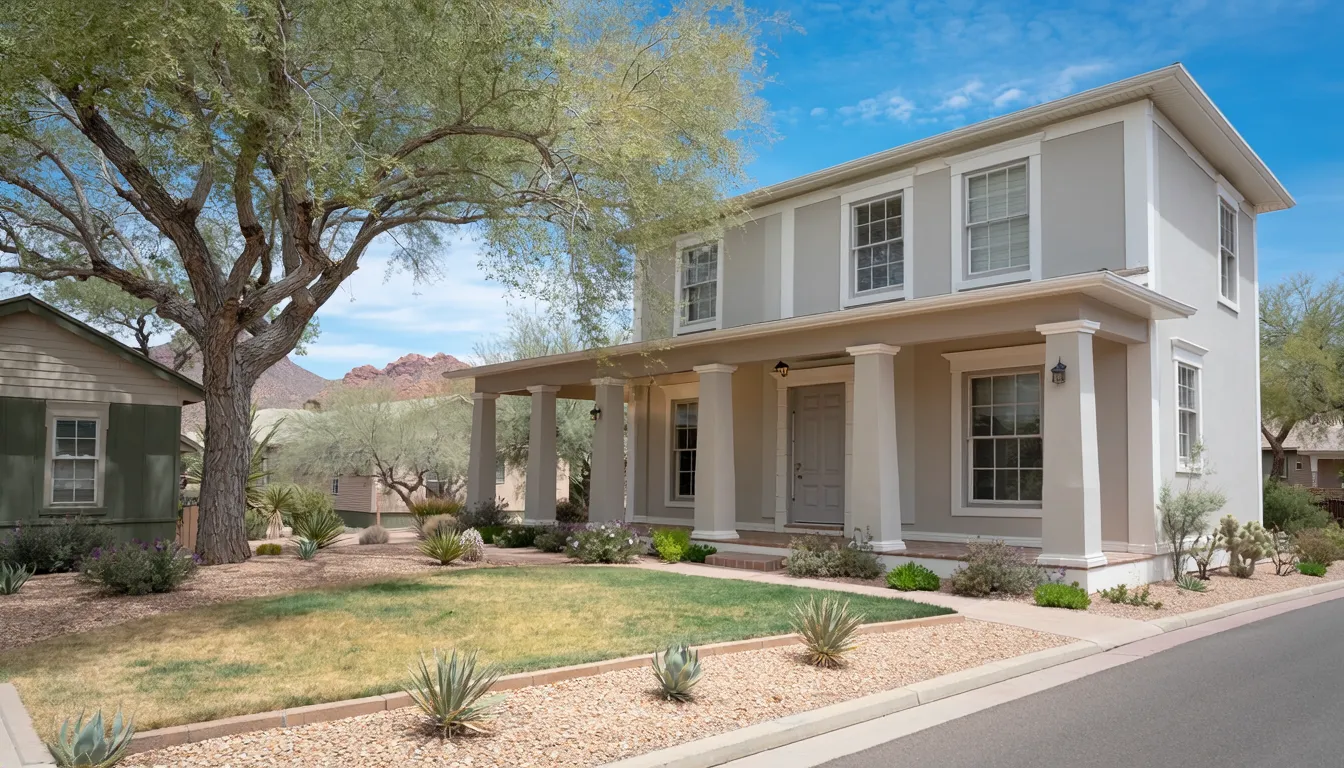
That dynamic is reshaping Cottonwood’s identity. What was traditionally a family-oriented town – the place where locals moved when they needed a Home Depot or a high school – is now attracting luxury construction and second-home buyers who would have concentrated solely on Sedona a few years ago.
A Budget That Buys Different
The Verde Valley spans several small communities – Sedona, Cottonwood, Clarkdale, Cornville, Camp Verde – each with populations well under 20,000. Unlike the Phoenix metro, where large national builders add hundreds of units at a time, new construction here is modest in scale, which limits how much inventory accumulates.
Nisreen Hawley, a real estate agent with Berkshire Hathaway HomeServices Arizona Properties who has worked the Verde Valley since 1999, describes the typical conversion from Sedona buyer to Cottonwood buyer as a process of recalibration. A client with a budget just under a million dollars might tour homes in Sedona and compile a growing list of renovations. When buyers keep finding things they’d want to change rather than feeling immediate enthusiasm, Hawley asks whether they’re willing to look 15 minutes away in Cornville or 25 minutes away in Cottonwood.
The pitch works partly because the two towns are functionally interdependent. Someone living in Cottonwood drives to Sedona for hiking and golf; someone living in Sedona drives to Cottonwood for shopping, dining, and medical appointments. “When you live in the city, driving 20, 25 minutes from one place to another is not really a big deal,” Hawley says. “And it’s not really a big deal here.”
A Market Leaning Toward Buyers
Current conditions across the Verde Valley are tilting modestly in buyers’ favor. Sellers are offering more concessions and agreeing to more repairs than they have in recent years, according to Hawley, driven in part by higher interest rates that have made buyers more cost-conscious about their total out-of-pocket expenses.
The most common friction point in transactions is the inspection period. Hawley says deals tend to fall apart when sellers refuse to address any repair items after an inspection report comes back. Buyers carrying higher mortgage payments have less room for post-closing expenses. “If a seller comes back and doesn’t want to take care of things, the buyers are not as comfortable with moving forward,” she says.
Interest rate buydowns have also become a standard request. Buyers are asking for closing credits they can apply toward reducing their rate – a concession that has become part of the negotiating baseline rather than an unusual ask.
Relocation Patterns
The buyer pool draws heavily from Southern and Northern California, Colorado, Texas, and – less predictably – Hawaii. A recent transaction Hawley handled involved a family relocating from Fort Collins, Colorado, who coordinated the sale of their home there with a purchase in Cottonwood, settling near schools and amenities that fit their family’s needs.
Short-term rentals remain a secondary market compared to primary and second-home purchases, but the segment is growing. Hawley points to a listing on Main Street in Cottonwood – a historic home renovated on a television show, with five bedrooms and three separate living areas – as representative of properties that perform well as vacation rentals, largely because of their proximity to wine tasting rooms, galleries, and the Verde Canyon Railroad.
Legislation around short-term rentals is a closely watched issue. In April 2026, the Arizona Supreme Court ruled that an HOA could not restrict an owner’s right to operate a short-term rental if the restriction was not in the community’s covenants before the 2016 state law took effect. That ruling reinforced property owners’ rights, which matters in a market where many part-year residents use rental income as part of a longer-term retirement plan. Hawley says the buyers she works with are not large corporate purchasers. “We’re seeing really great couples who have a plan – three-year, five-year, ten-year plan,” she says. “They’re buying and renting now, and eventually it will be their retirement home.”
What Investors Should Know
For investors considering the Cottonwood market, Hawley draws a clear distinction between two strategies. Short-term rental investors should prioritize proximity to tourist attractions – kayaking, hiking, the railroad, the museums – since vacationers do not want to travel far from those activities. Long-term rental investors planning an eventual retirement move should focus on properties in good condition with newer mechanical systems, so they are not facing major replacements within five to ten years. Planned unit developments with clubhouses and recreation centers are particularly popular for this approach, according to Hawley.
Insurance considerations vary by location. Cottonwood’s planned developments generally do not face elevated fire or flood insurance costs, but properties near Oak Creek or the Verde River in Sedona can carry significant flood zone premiums, and fire insurance in Sedona’s canyon areas can run high.
Hawley describes the market as steady rather than volatile. Year-over-year activity has been consistent, with modest gains and no sharp swings – a pattern she attributes partly to the structural characteristics of a small, tourism-supported market that does not depend on the same job-growth drivers as metro areas. The Verde Valley did not experience the same inventory glut and foreclosure wave that hit metro markets during the 2008 downturn, and Hawley says current lending standards – which require buyers to qualify at higher rate thresholds even when using adjustable-rate mortgages or buydowns – make a repeat of that cycle unlikely. “Everything’s a little bit up,” she says. “But there’s no drastic swing up or down.”
For buyers weighing Sedona against its neighboring towns, the calculus is straightforward: a dollar stretches further in Cottonwood, the daily drive between the two is short enough to be routine, and seller concessions are more available now than they have been in recent years.
About the Expert: Nisreen Hawley is a real estate agent with Berkshire Hathaway HomeServices Arizona Properties, covering the Verde Valley of northern Arizona, including Cottonwood and Sedona, and has worked the market since 1999.
This article is based on information provided by the expert source cited above. It is intended for general informational purposes only and does not constitute legal, financial, or real estate advice. Readers should conduct their own research and consult qualified professionals before making any real estate or financial decisions.