While Sarasota’s overall real estate market has cooled, with price declines of 6-13%, the luxury segment has remained resilient. This contrast highlights deeper dynamics that set high-end buyers apart from the broader residential market.
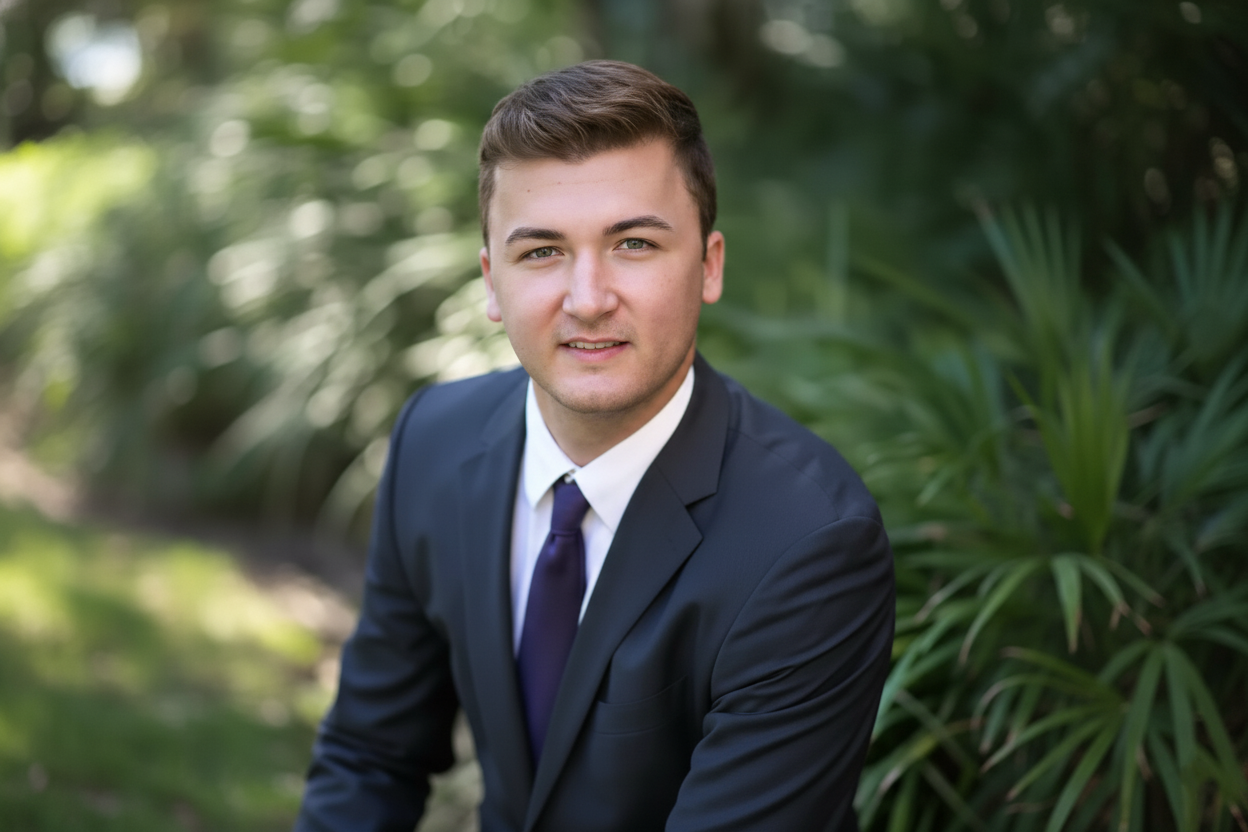
The luxury market for properties above $3 million has stayed stable, fueled primarily by cash buyers seeking lifestyle changes rather than investment gains. “Most of the people that come down here, 95% of my sales were actually cash deals, and they’re buying because of the change of lifestyle,” says Vladislav Konatar, Managing Broker and Owner of KONA REALTY. “They’re not buying to invest. They’re buying to come and enjoy Florida really.”
This predominance of cash transactions shields luxury buyers from interest rate fluctuations that have affected lower price tiers. Unlike investment-driven markets, these buyers take a long-term view. “They don’t really care if the market goes up tenfold or it comes down tenfold,” Konatar says. “Usually most of the clients will think about longer term—if my kids are gonna sell it, then they can worry about the price at this point.”
Market Segmentation Highlights Divergent Patterns
Sarasota’s market exhibits clear distinctions across price ranges. Properties under $1 million face the most pressure, especially from remote workers returning to offices and sellers who bought at recent peak prices. Many sellers in this segment accept 20-30% discounts to facilitate quick sales, though most still break even due to low original purchase prices.
The $1-2 million segment endures moderate pressure, as owners prioritize liquidity over maximizing returns. “Real estate is not how they make money,” Konatar says of this group. “They make money in different businesses. So those clients seem to be the only ones who are actually dropping the price.”
In contrast, properties above $3 million continue to attract buyers willing to pay premium prices for homes with distinctive features.
Hurricane Impact Shifts Development Focus
The hurricanes of 2024 had a significant effect on Sarasota’s luxury market. The storms exposed weaknesses in older construction, accelerating a shift toward new development with enhanced resilience.
“The main issue was the houses, or the properties, they were not built to code—all their houses really were not built to withstand that type of hurricane,” Konatar says. Developers are now building with pilings and advanced systems designed to handle severe storms, and buyers are willing to pay a premium for these improvements.
The hurricane aftermath also prompted a notable migration. Many waterfront property owners, rather than rebuilding, are now seeking inland options. “I’m also seeing a huge shift, because I think we were the only ones who had a huge inventory inland, still close to downtown, and we kept getting all the buyers that had these huge properties on the water,” Konatar observes.
Insurance costs have become a major factor, jumping from $1,000-2,000 annually to $10,000 or more for waterfront properties. This sharp increase weighs heavily on purchase decisions and on choices between renovating or replacing homes.
Condo Market Faces Challenging Headwinds
A major shift is underway in luxury housing preferences, with condominiums losing ground despite their previous popularity. High HOA fees, now commonly $5,000-10,000 per month, are steering buyers toward single-family homes.
“At one point, condos were selling like hotcakes,” Konatar recalls. “For me to sell a 1,500 square foot condo for $2 million was piece of cake. I could move it in a week or two, but to sell a house of 1,500 square feet at that kind of price point, it was almost impossible.”
Now, buyers prefer houses that offer double the space at similar prices, without ongoing HOA obligations. This trend is affecting both boutique developments with 10-15 units, where costs are shared among fewer owners, and large buildings with extensive amenities that require significant operational budgets.
Development Pipeline Reflects Strategic Priorities
Despite general uncertainty, major luxury developments are still progressing. Branded projects from Ritz-Carlton, St. Regis, and similar luxury hospitality companies continue to see strong sales, with prices reaching $2,000 per square foot and above.
“I think the name is selling the actual units,” Konatar says, noting that for many buyers, brand recognition outweighs specific quality considerations.
Developers are taking a longer-term perspective, aware that projects requiring four to five years for completion will enter a changed market environment. “Most of the projects will take four or five years to actually finish, and so they don’t care what’s happening in this very moment,” Konatar says. “They really care what’s going to happen the next four or five years.”
This long-term outlook has enabled well-capitalized developers to acquire land and development rights at notable discounts. Current conditions allow for purchases at 20-30% below peak pricing, positioning these projects well for future cycles.
Evolving Buyer Demographics and Seasonal Trends
The luxury buyer profile in Sarasota is also evolving with the seasons. After the hurricane, the first half of the year saw mostly local buyers relocating from damaged waterfront properties. Out-of-state buyers were more cautious, waiting to see the long-term effects.
Unexpectedly, summer 2024 brought strong activity. “I’m having a better season summer now in summer than I had in season January,” Konatar notes, describing a reversal of the usual Florida real estate pattern.
Recent months have seen growing interest from buyers in New York, Boston, Atlanta, and Chicago, as well as increased activity from Miami-based developers and investors expanding northward.
Technology and Adaptation Remain Key
Konatar’s approach emphasizes technological adaptation and in-house capabilities, moving away from traditional brokerage models. This strategy has proven valuable since the rise of social media and continues with the adoption of AI and digital marketing tools.
“I was one of the first people to actually advertise in my town on social media and different magazines,” he says. The ability to adapt quickly to new technologies and market shifts, while maintaining control over marketing and sales, provides a competitive advantage in a rapidly changing market.
Looking Ahead
As Sarasota enters its traditional selling season, indicators point to continued strength in the luxury segment. Pent-up demand from buyers waiting for interest rate improvements may fuel increased activity, while the ongoing demand for new, hurricane-resistant properties supports premium pricing for suitable inventory.
The market’s core characteristics—cash buyers seeking lifestyle changes rather than investment returns—provide a foundation of stability that sets Sarasota’s luxury segment apart from more speculative markets. This base, combined with ongoing development and shifting buyer preferences, positions the market for continued activity despite broader economic uncertainties.
For luxury developers and real estate professionals, understanding these nuanced dynamics is crucial for successful positioning in Sarasota’s evolving landscape. The ability to respond to changing buyer priorities, insurance challenges, and construction standards will shape the next phase of growth in the city’s high-end market.
In summary, Sarasota’s luxury real estate sector remains strong, even as the broader market cools. The resilience of the segment is driven by cash buyers focused on lifestyle, a shift toward new and resilient construction, changing preferences away from condos, and continued investment in branded developments. These factors, along with evolving buyer demographics and the adoption of new technologies, ensure that Sarasota’s luxury market stands apart and is well-positioned for the future.
This article was sourced from a live expert interview.
Every month we conduct hundreds of interviews with active market practitioners - thousands to date.
Artificial intelligence is quickly becoming more than just a buzzword in real estate. It is actively changing how agents build and maintain client relationships. Cyrus Mohseni, Co-Founder an...
“Today, architects are doing more than their previous generation – smaller teams doing more work, handling more responsibilities, and interacting with more groups,” reflects Et...
Victoria’s residential real estate market has reached a period of relative stability, with conditions that industry veteran Tony Joe describes as balanced, a notable change from the rapid ...
The hospitality industry’s intricate legal environment has found a specialized advocate in David Helbraun, whose unconventional journey from teenage bartender to founding chairman of t...
Connecticut is ending its decades-old Transfer Act, a law widely seen as a major obstacle to property transactions, and replacing it with a release-based cleanup program that gives buyers, s...
“Nobody knows what’s happening in Florida real estate better than Florida’s Realtors®,” states Tim Weisheyer, the 2025 president of Florida Realtors®, the nation’s la...