


The real estate industry is witnessing a fundamental shift in how teams collaborate and share information, according to Trisha Roy of Open Spaces International Inc., who points to new commun...

San Francisco Bay Area Housing Market Splits as Single-Family Homes Surge and Condos Decline

Written by:
Date:
12 Mar 2026
Share via Facebook

Share via Linkedin

Share via X

Copy to clipboard

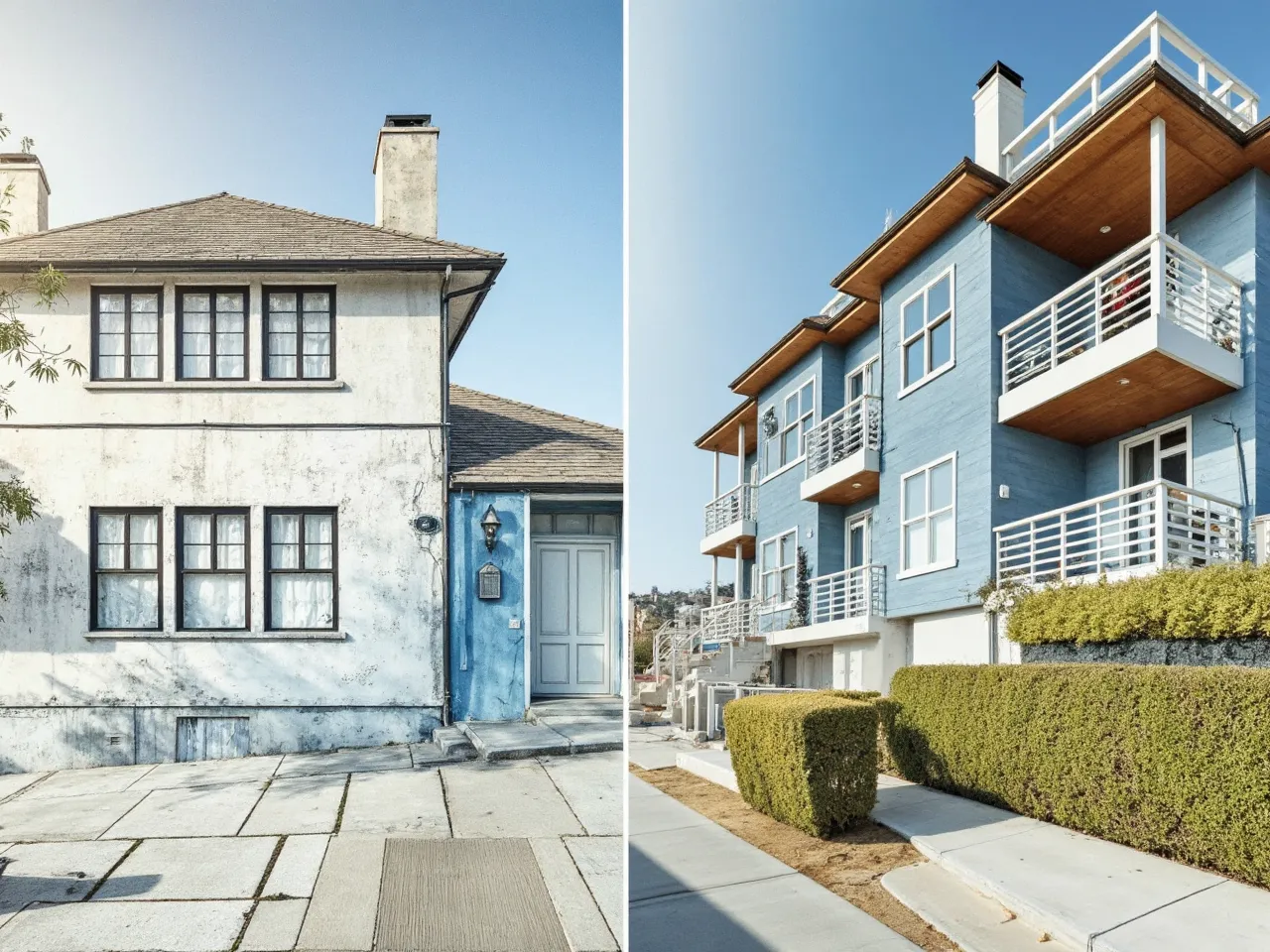
The Bay Area housing market has split into two sharply different tracks. Single-family homes priced above $2 million are now selling for more than their 2022 peaks, while condos and townhomes in some areas have dropped as much as 30 percent from their highs. According to Spencer Hsu, Team Lead at eXp Realty, this divide is not a temporary effect of higher mortgage rates but a sign that homeownership is becoming increasingly limited to the region’s highest earners.
“The higher end market, like more of the single family, $2 million up, which is kind of the median when it comes to single family, are doing really, really well and have continued to have an increase in prices,” Hsu says. “Versus other options, like smaller condos and townhomes, which are historically the starter homes, that market has not been good, and that continues to be in a kind of low slash decline.”
This contrasts with national patterns. While cities such as Austin have seen home prices fall by about 30 percent from their peaks, Bay Area single-family home values have continued to climb despite higher borrowing costs. Hsu attributes this resilience to the concentration of tech wealth and the surge in stock market gains tied to AI companies and venture capital, which has created a larger pool of liquid, high-income buyers.
Why the Starter Home Market Faces Persistent Weakness
The drop in condo and townhome prices appears to be structural rather than cyclical. Traditionally, these properties served as starter homes for first-time buyers, but many are now sitting on the market or selling at steep discounts due to a lack of qualified buyers.
“We see a weakness likely in those starter home markets, where you’ll be able to get discounts, because there’ll be more options and fewer buyers for it,” Hsu says. Sellers in this segment often face a difficult choice: accept a loss, rent out the property, or hold off on selling.
Many owners are choosing to become landlords rather than sell at a loss, encouraged by strong rental demand even as purchase demand falls. This has produced a growing number of reluctant landlords who keep units off the for-sale market, reducing inventory for potential buyers and adding to rental supply. Hsu notes that many owners remain anchored to their purchase price, unwilling to accept lower current values even when market data confirms the decline. “Not everybody wants to be a landlord, but if they can’t hit a number that is more than what they bought, they’re psychologically not wanting to do it,” he says.
How Concentrated Tech Wealth Is Driving Single-Family Price Growth
Demand for single-family homes is being driven by buyers with significant stock-based wealth, particularly from the technology sector. Hsu points to the rapid rise of private companies generating hundreds of millions in recurring revenue as a major source of buyer liquidity. Many of these firms, focused on AI and related fields, are creating new millionaires who can pay premium prices for the limited housing supply.
“There are plenty of companies that you have never even thought of or heard of…they’re younger, private companies that may already be doing hundreds of millions of dollars of annual recurring revenue in the shortest amount of time in history,” Hsu says.
This influx of wealth is concentrated among a small pool of buyers, intensifying competition for single-family homes in desirable neighborhoods. Prices in this segment continue to rise while affordability worsens for everyone outside the top income brackets. Return-to-office mandates are also increasing demand for homes with shorter commutes. Hsu observes that traffic congestion has returned to or surpassed pre-pandemic levels, pushing more buyers to seek homes near major employment centers and further driving up prices in those areas.
How the Rental Market Is Absorbing Displaced Buyers
As single-family homes become less accessible and starter home prices fall, more would-be buyers are turning to the rental market. Hsu expects rents to keep rising as this pool of renters grows. “I expect that will keep rising in price, because as buyers on the fence, either they don’t have a great job or they have an unstable job, they’re going to rent and they’re going to be paying more in rent,” Hsu says.
The rental market is absorbing both displaced buyers and owners who convert unsellable condos and townhomes into rentals. This dynamic is increasing demand for rentals while reducing inventory in the for-sale starter home segment, putting upward pressure on rents across the region.
One Investor’s Strategy: Value-Add Rebuilds in the Single-Family Segment
Reflecting his market outlook, Hsu is focusing his own investments on single-family properties where he can add value through major renovations or rebuilds. He is currently working on a project involving either a teardown or a large addition, aiming to capitalize on the gap between land value and construction costs.
“I would buy a smaller place. I recommend either a big addition or a teardown. And I am doing that as we speak,” Hsu says. He sees this approach as one of the few ways to generate meaningful returns in a market where passive appreciation may not keep pace with entry costs. This strategy relies on the expectation that single-family land values will continue to rise and that construction costs will remain lower than the prices of comparable finished homes. For investors willing to navigate construction and permitting, this remains one of the few paths to outperforming the broader market.
Why the Bay Area’s K-Shaped Market Shows No Signs of Closing
Hsu does not expect the divide between single-family and starter home performance to close anytime soon. “Unless something catastrophic happens, we’ll continue to see a K-shaped market, where the people that have the money will continue to have more money, and they will be able to do whatever they want,” he says.
The Bay Area has effectively become two distinct markets: single-family homes driven higher by concentrated tech wealth, and condos and townhomes struggling to find buyers. This divide is shaping both ownership and rental trends and is likely to define the region’s housing landscape for the foreseeable future.
Similar Articles
Explore similar articles from Our Team of Experts.

Perspectives, Residential Real Estate, Commercial Real Estate, Market Analysis & Policy, Industry News
St. Joseph’s housing market is using a state incentive program to address local housing shortages and support development, according to Kelly Ewalt, Development Director for the city, St. ...
Home Inspections Become the Breaking Point for Undercapitalized Vacation Rental Buyers in Gatlinburg
Vacation rental deals in Gatlinburg are increasingly collapsing during the home inspection phase, according to Deanna Workman, a Realtor with Century 21 Legacy GP. But Workman says this tren...

