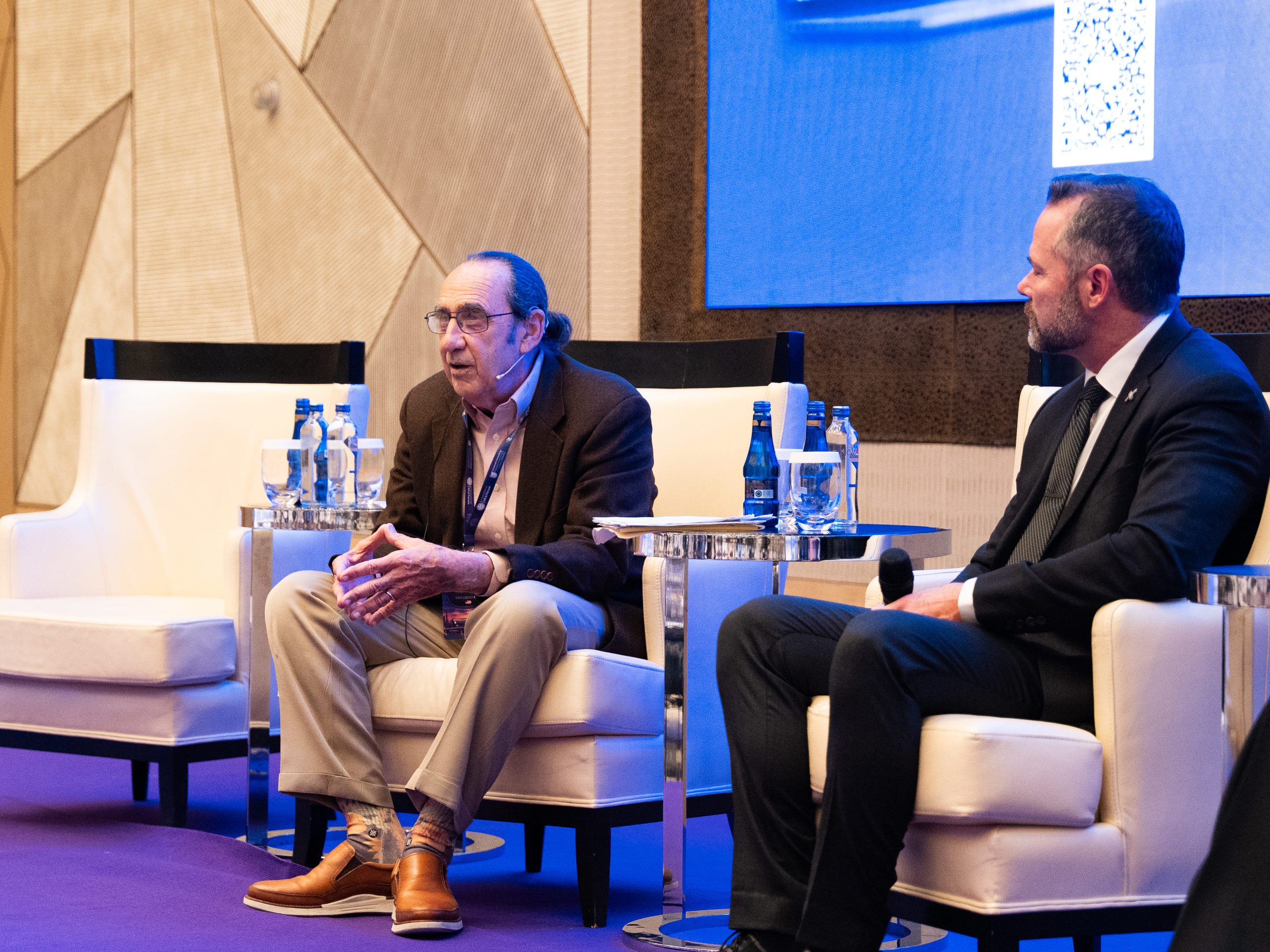
Saul Klein, CEO of San Diego Multiple Listing Service (SDMLS), joined MLS leaders from around the world at the 4th International MLS Forum, held November 16-17, 2026, at Raffles Istanbul. SDMLS is one of the founding signatories of the Global Data Exchange (GDX), a network that lets real estate organizations share listing data across borders.
Speaking with KeyCrew at the Forum, Klein says the case for GDX in his market starts with geography. “San Diego is an international city. It’s a border town, and people like to come to San Diego and buy property in San Diego,” he says. “If we can make our listings in San Diego visible to a global community, how great is that for the people who own real estate in San Diego and for the real estate professionals?”
SDMLS is one of two MLSs, or multiple listing services, in San Diego County. An MLS is a shared database where brokers contribute their listings and cooperate to match properties with buyers. SDMLS serves about 55% of the county’s real estate professionals, and a data share with the county’s other MLS gives agents who list and sell in San Diego access to all of the county’s listings.
Klein has been a licensed California broker for about 50 years. He was part of the original Realtor.com team, created the e-PRO certification for the National Association of REALTORS® (NAR), and was hired by NAR in 1995 to introduce Realtors to the internet.
About a year ago, SDMLS became one of roughly five organizations to sign the original GDX memorandum of understanding (MoU), an agreement to work together on cross-border listing data. Klein says the group has since grown to 25 signatories, and that he got involved after RealtyFeed, one of the Forum’s organizers, approached him about the need for a global data standard.
How GDX Puts San Diego Listings In Front Of Global Buyers
The Global Data Exchange is a federated network, built on data standards from the Real Estate Standards Organization (RESO), that lets MLSs, associations, brokerages and technology providers share public listing data across borders. It is not a central database or a portal: each partner keeps ownership of its own listings and decides which partners can display them.
For SDMLS, GDX can give San Diego listings international exposure, putting them in front of buyers abroad who are already drawn to the region. Klein believes more people would buy across borders if they had better information. “I never really thought that I would buy a piece of property in another country, but if I knew more about it, maybe I would,” he says. “And there are a lot of people who, if they knew more about it, maybe they would.”
That information also makes cross-border buying less risky, he says. “If we can begin to have more understanding, particularly in the data and the way the data is presented, that can lead to understanding the business and the culture and the way real estate is listed and sold,” Klein says. “That will make the whole process more transparent, which will surface risk.”
Participating organizations already exchange data on about 30 standardized fields, Klein says, and each one operates as a “node” that sets its own rules. “This will get bigger and better over time,” he says.
Why Local Control Matters To San Diego MLS
Joining GDX does not open SDMLS data to everyone. Each partner decides whom it shares with, which Klein calls a major benefit of the way the network is organized.
He explains it with a hypothetical. “If we want to share our data with Italy, we can. And if we don’t want to, then we don’t have to,” Klein says. “And if Italy wants to share its data with us, they can.”
He compares the model to the way banks cooperate. “I bank at Wells Fargo, but I could go to a Bank of America kiosk and get money out. It’s not Bank of America’s rules, it’s Wells Fargo’s rules, because that’s my bank,” he says. “All these banks have created a federation, and they share back and forth. It’s kind of the same idea.”
For Klein, that handshake between partners protects local decision-making. “It’s local rules, so we don’t give up our autonomy and our ability to make the rules around our data,” he says. “To me, that’s the best way to do it.”
Shared standards make those handshakes workable. Because U.S. MLSs were created separately, Klein notes, “what I might call a bedroom, and the abbreviation I might have for a bedroom, might be different than the abbreviation you have.” That forced technology companies to customize every application, which is why RESO standards became “a critical piece” and why GDX applies the same approach across borders.
Why Klein Wants To Help Other Markets Build MLSs
Beyond San Diego’s own listings, Klein says GDX supports a larger goal: helping spread the MLS model to countries that don’t have one. In North America, the major consumer portals get their listing data from MLSs, which serve as what the industry calls a “single source of truth.” Elsewhere, he says, the order is reversed.
“Most of the other parts of the world have portals, and now they’re trying to get multiple listing services,” Klein says. “So we’re trying to help other countries understand this concept of a single source of truth, and from that, feed the portals. Then everybody benefits.”
He is clear that the goal is not to export the U.S. system as it is. “Our intention is not to take the system that we have and spread it around the world,” he says. “People have different cultures, different business practices, different contracts. We haven’t done it right every step of the way, and hopefully other countries can learn from the mistakes we’ve made.”
Klein also links MLS transparency to access to financing. In the United States, he says, buyers can purchase with 5 to 10% down partly because appraisers can rely on transparent transaction data, which gives lenders confidence. “What if we can spread that across the world,” he says, “and make financing more available for people that want to buy property globally?”
Klein has attended every International MLS Forum, from Paris and Milan to Toronto and this year’s edition in Istanbul, and says the relationships built there are what move GDX forward. “You build trust and confidence, you build relationships with people, and you’re able to help one another,” he says. “The more friends we make, the more confidence and trust we have, the greater the probability that we’ll be able to take this idea of MLS [around the globe].”
About The International MLS Forum
The International MLS Forum brings together MLS leaders, real estate organizations and technology providers from around the world to build more connected, transparent property marketplaces. The 4th edition, organized by RESO, ADRES and RealtyFeed, took place November 16-17, 2026, at Raffles Istanbul.
This article is based on information provided by the expert source cited above. It is intended for general informational purposes only and does not constitute legal, financial, or real estate advice. Readers should conduct their own research and consult qualified professionals before making any real estate or financial decisions.
Disclosure: This article was created by KeyCrew in a paid partnership with The International MLS Forum.