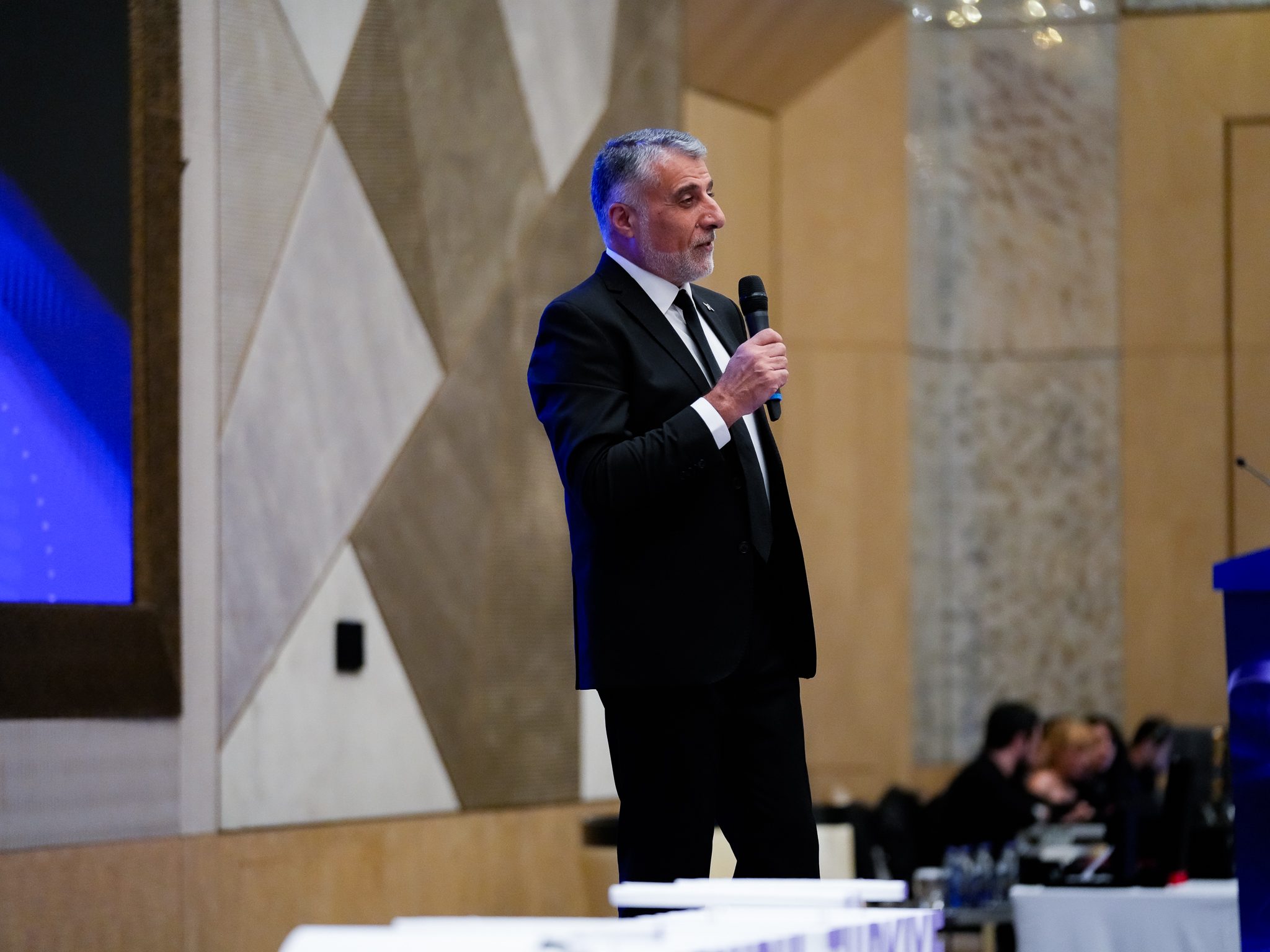
Ali Memar, President of the International MLS Forum and Chair of Ambassadors for the Global Data Exchange (GDX), joined real estate leaders at the 4th International MLS Forum, held November 16-17, 2026, at Raffles Istanbul. One of the Forum’s original organizers, Memar says GDX, the cross-border listing data network launched at last year’s Forum, is gaining “huge momentum.”
That demand reaches beyond the network itself. Memar says enough countries want to host the Forum that its venues could already be set for the next decade.
“I could sign the venues for the next 10 years, in 10 different countries,” Memar says. “We have that many countries interested in moving forward today.”
Memar has been part of the Forum since its first edition in Paris in December 2023. He is also president of New Jersey MLS.
Since Paris, the Forum has moved to Milan, Toronto and now Istanbul.
From the start, Memar says, the goal was to explain the multiple listing service (MLS) model to markets that have never had one. In the U.S., listings flow from the MLS through IDX (Internet Data Exchange) to brokerage websites and portals. Outside the U.S. and Canada, he says, that system largely doesn’t exist, and in most countries agents aren’t licensed.
“Our mission was to make sure people outside the U.S. and Canada understand, first, what an MLS is and what an MLS does for the business,” Memar says. “There is a better way to market a property and a better way to sell it.”
How Memar’s Ambassadors Are Bringing New Markets Into GDX
The Global Data Exchange (GDX) is a federated network, built on data standards from RESO, the Real Estate Standards Organization, that lets MLSs, associations, brokerages and technology providers share public listing data across borders. It is not a central database or a portal: each partner keeps ownership of its own listings and decides which partners can display them.
Memar chairs the GDX ambassador program, which started when GDX launched last year. Before then, the Forum relied on board members representing individual countries. Today, ambassadors find developers, brokers and agents in their own markets and introduce them to GDX and the Forum, whether or not those markets have an MLS.
Memar, who has traveled to more than 55 countries, says every market he has visited has people working as agents, licensed or not. Those are the professionals the ambassadors aim to reach.
“Our first mission is to make sure everybody has access to the right, correct data,” Memar says. “That’s where our ambassadors come in.”
According to Memar, GDX now connects 26 organizations in more than 12 countries, and interest keeps growing. “GDX is definitely getting momentum. Huge momentum,” he says. “I get calls every day, I get emails every day, and people approach me at the conferences I attend.”
Why GDX Matters To U.S. Agents, Too
GDX is not only an international tool, Memar says. At a recent NAR (National Association of REALTORS®) event in New Orleans, a large brokerage owner asked him what GDX offers a firm with no agents in Abu Dhabi or Saudi Arabia.
His answer came from his own market. New Jersey MLS and OneKey MLS, just across the river in New York, both joined GDX last month, he says. Through GDX, he can also see listings in Miami, where many buyers from the New York area retire.
“A lot of people from New Jersey, New York and Connecticut retire in Florida, and we get a lot of referrals to Miami and Orlando,” Memar says. “Before, I had to call an agent and ask them to send me five or 10 listings because I had a buyer. Now, as a member of GDX, I have access to Miami listings.”
For agents in the Northeast, that means less time chasing listings from other markets and faster service for clients who are relocating. “It’s not just international,” Memar says. “It’s domestic as well.”
Why Cooperation Matters In Markets Without An MLS
In many countries, Memar says, agents have no shared system. Instead of cooperating, they place listings on commercial portals and compete for the same properties.
“Agents place their listings on the portals, and they pay dearly for it, because the portals are very expensive,” he says.
An MLS changes that by letting agents work together on a sale: one agent takes the listing, and the others bring buyers. Memar says that cooperation is what markets without an MLS are missing most.
“Instead of fighting over one listing, one of them can get the listing and the rest can promote it and sell it to their buyers,” he says. “Besides the data, cooperation between agents is the most important part of an MLS, and it doesn’t exist in countries that don’t have one.”
He compares those markets to cooking with whatever is in the pantry. “You open your fridge, see three items and cook something with them. It’s not necessarily the best food you have,” he says. “When it comes to real estate data, the MLS is the way to go.”
Memar arrived at the 4th International MLS Forum, held November 16-17, 2026, at Raffles Istanbul, after a 64-hour journey that included three flight cancellations out of New York. Asked how he keeps showing up, his answer is simple. “This is my passion. This is what I enjoy,” he says. “I want people to enjoy this as much as we do, because we are helping people manage their business better. Follow us, see where we’re going and come attend our conferences.”
About The International MLS Forum
The International MLS Forum brings together MLS leaders, real estate organizations and technology providers from around the world to build more connected, transparent property marketplaces. The 4th edition, organized by RESO, ADRES and RealtyFeed, took place November 16-17, 2026, at Raffles Istanbul.
This article is based on information provided by the expert source cited above. It is intended for general informational purposes only and does not constitute legal, financial, or real estate advice. Readers should conduct their own research and consult qualified professionals before making any real estate or financial decisions.
Disclosure: This article was created by KeyCrew in a paid partnership with The International MLS Forum.