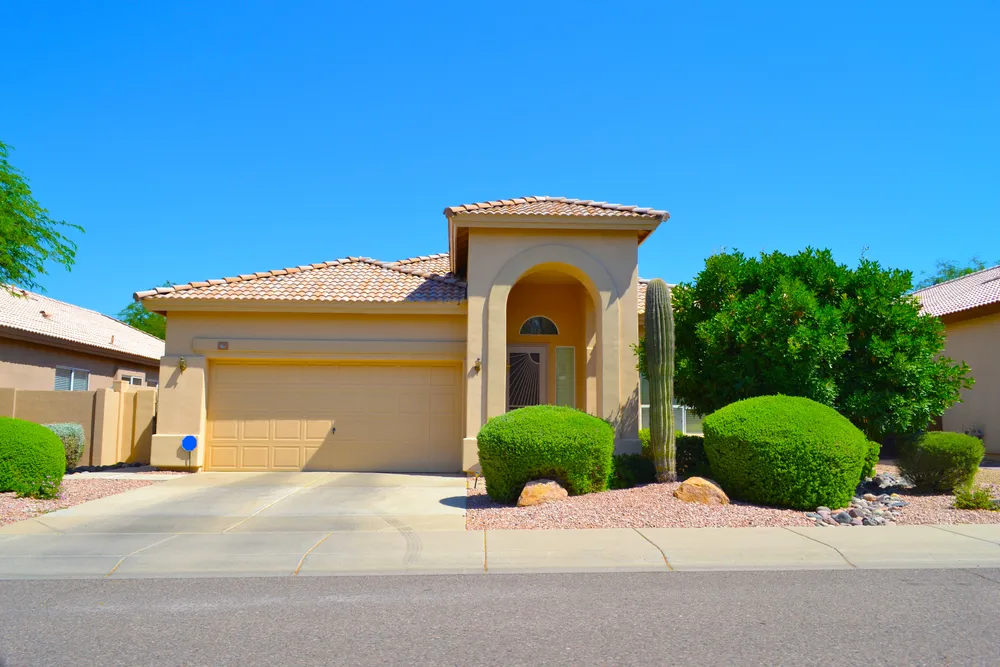
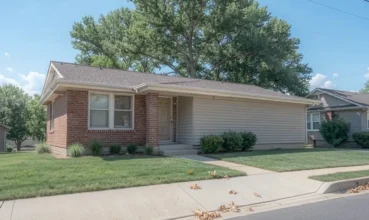
A condo or townhouse looks like the cheapest way into Arizona’s East Valley, until the HOA bill arrives. In a growing number of communities, monthly association fees have climbed high enough to wipe out the purchase-price discount that drew budget-conscious buyers to condos in the first place. In some cases, a single-family home down the street now carries a lower total monthly payment.
Mindy Jones, who leads the Amy Jones Group, a residential real estate team brokered with Real Broker in the southeast valley of Arizona, says the effect is already visible in listing times. Condos and townhouses with elevated HOA costs are taking noticeably longer to sell, while single-family homes with modest association dues continue to move.
Why the Fees Keep Climbing
Much of the East Valley’s condo and townhouse stock dates to the 1990s. Jones notes that those properties are now hitting the age where major systems need replacing. Roof replacements, plumbing overhauls, and infrastructure upgrades all cost money, and HOA boards pass those costs along through higher monthly dues.
The result is a widening gap between what a condo buyer pays in association fees and what a single-family buyer pays. A buyer facing a “$200 or $300 HOA fee” on a condo can go down the street and find a single-family home with a $75 monthly fee – a difference of $125 to $225 every month that could instead go toward qualifying for a larger mortgage.
Jones says that gap “can increase your buying power significantly if you stay on the single-family side.” A condo priced $30,000 below a nearby house may actually cost more to live in each month once association dues are factored in.
Condition Adds a Second Penalty
The age problem does not stop at the HOA bill. Many older condos also need interior updates – kitchens, bathrooms, flooring – that newer single-family inventory does not. Jones says “the condition of the properties, it has to be good” for them to compete. Units that need work while also carrying a high monthly fee face a steep disadvantage.
For sellers, this creates a difficult bind. Investing in renovations does not reduce the HOA fee buyers will see on their loan estimate. And for buyers, a condo that needs work plus carries a $300 monthly association fee is competing against turnkey single-family homes in a market where new construction communities offer rate buy-down incentives that pull total payments even lower.
Some communities are adapting. Jones points to active-adult communities in the area that have brought younger residents onto their HOA boards, redirecting spending toward modernized amenities – upgraded fitness centers, pickleball courts, refreshed common areas. Those investments can help a community compete for buyers. But across the East Valley’s aging condo stock, rising fees remain a drag on demand.
A Market That Is Not One Market
The HOA challenge plays out differently depending on location. Jones says the Valley “is definitely not a single market” – six cities in the East Valley currently operate as seller’s markets, meaning more buyers are competing for homes than there are listings available. Chandler and Gilbert are among the strongest. But farther from the urban core, where new construction adds inventory steadily, conditions tip toward buyers.
That geographic split matters for condo sellers. In a seller’s market with limited single-family inventory, a condo with moderate HOA fees can still attract interest. In a buyer’s market where single-family alternatives are plentiful, the monthly-cost comparison becomes harder to win.
How to Compare What You Are Actually Paying
The most useful number when comparing options is not the list price – it is the total monthly cost, including principal, interest, taxes, insurance, and HOA fees. A condo with a lower purchase price and a $300 monthly HOA fee may land surprisingly close in total monthly payment to a single-family home listed $50,000 higher with a $75 fee.
Jones says her team now routinely builds monthly-payment comparisons into the pricing guidance they give both buyers and sellers, specifically to surface this gap before it catches anyone off guard. She applies the same approach when a resale home sits near a new construction community: rather than comparing list prices, her team compares what monthly payments look like after the builder’s rate incentives are factored in.
About half of East Valley transactions currently include seller concessions, according to Jones, averaging roughly $10,000 to $15,000 per deal. Buyers are using those concessions primarily toward rate buy-downs with their lenders, which further shifts the monthly-payment math on either property type.
For buyers willing to do the arithmetic, the opportunity is concrete: a single-family home that appears more expensive on the listing sheet may cost the same or less to own each month, and every dollar of that payment builds equity rather than covering someone else’s roof replacement.
About the Expert: Mindy Jones leads the Amy Jones Group, a 15-agent residential team brokered with Real Broker, covering the East Valley of Phoenix, Arizona.
This article is intended for informational purposes only and does not constitute legal, financial, or investment advice. The views and opinions expressed herein reflect those of the individuals quoted and do not represent an endorsement of any company, product, or service mentioned. Readers should conduct their own due diligence and consult qualified professionals before making any investment decisions.