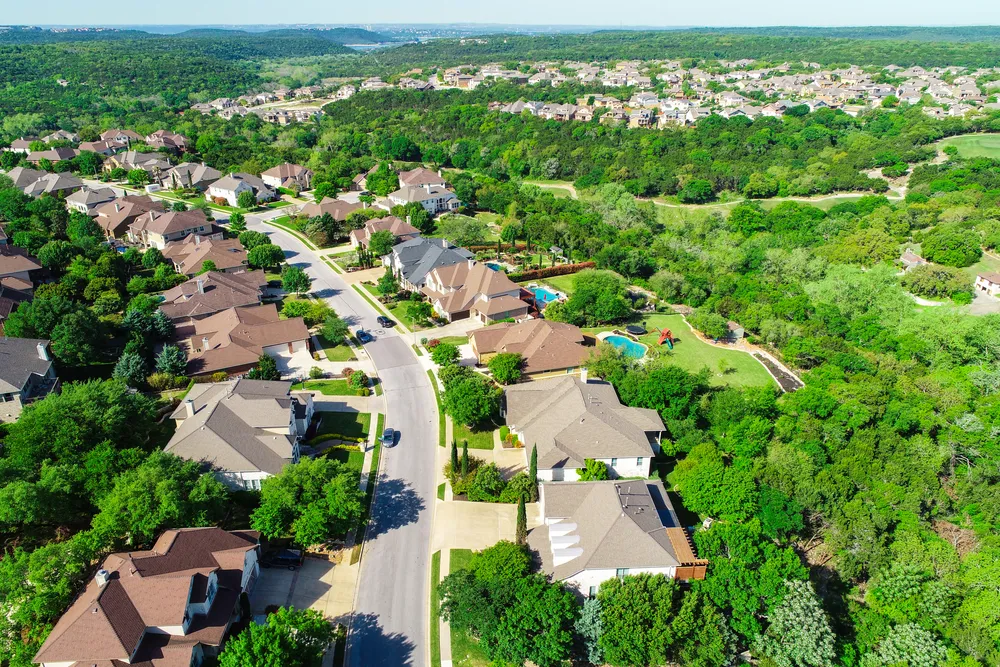
Austin’s median home price has dropped roughly 10% – from around $499,000 to $450,000, according to Laura Blessing, team leader of Blessed Life Realty Group at Keller Williams Realty. But that number obscures what confuses sellers: why one home on a given street sells in a week with competing offers while the house three doors down sits unsold for months. That block-by-block unpredictability is catching sellers off guard more than any single headline figure.
Blessing has been selling homes in Austin for more than 20 years. She says the confusion she hears from clients is less about whether the market is good or bad and more about why it seems to follow no pattern.
The Hyperlocal Puzzle
Blessing recounts a conversation with a client who could not make sense of their own street. “I don’t understand why this one home on the street sold for that much and then the other one spent days on the market and didn’t sell and it had more upgrades,” the client told her. That kind of whiplash is common in Austin right now.
The reason, Blessing argues, is that Austin’s market has become so fragmented that citywide or even zip-code-level data is nearly useless for pricing a specific home. “It really is just so hyperlocal that if you don’t dive into the data right around you, it can be really confusing,” she says.
Several forces drive this fragmentation. New construction in the suburbs competes directly with resale homes in some neighborhoods but barely affects others. New home builders have bought down mortgage rates to around four percent and include upgrades, putting direct pressure on older homes nearby. Buyer preferences vary sharply – some want amenity-rich communities with pools and trails, while others want acreage with no homeowners association. And interest rates, which have remained elevated since climbing toward eight percent, have made buyers extremely selective about where they spend.
A seller who prices based on what similar-sized homes sold for across Austin may land on a number that bears little resemblance to what buyers in their specific neighborhood will pay.
Why Resale Homes Are Losing to New Construction
The new-build competition has forced a specific calculation on resale sellers. Blessing says homes that are not updated before listing are drawing what she calls “investor level” offers from buyers who would otherwise move in – lowball bids that reflect the work the buyer expects to do, not the home’s potential value.
Her team now hires a stager for each listing and uses AI tools to analyze which finishes and fixtures draw the strongest buyer response in a given neighborhood – down to light fixtures, color palettes, and bathroom details. She presents clients with tiered options: do nothing and expect a lower offer, make targeted upgrades and aim for a mid-range price, or go all out for the top of the range.
“You need to take some of that equity out and put it into the home in order to get it sold,” Blessing says. Sellers who resist that message, she adds, tend to be the ones sitting on the market longest.
Timing as a Competitive Weapon
If location within the market has become hyper-specific, so has timing. Blessing says her team is already having conversations in the fall with clients who plan to list in February. The goal is to monitor local inventory so the listing hits the market when competition from other sellers in the same neighborhood is at its lowest.
“Timing is important more than ever,” she says. In a market where two nearly identical homes can produce wildly different outcomes, the week a home goes live may matter as much as the upgrades inside it.
Sellers who face a job relocation or a financial deadline do not have that luxury. Blessing recently helped one such client close an off-market sale by bringing cash investor offers directly, bypassing the public listing entirely. That route typically means a lower price, since cash buyers factor in their own costs. But Blessing says the broader point is that sellers need to understand all their options before committing to one path. “There’s not one way to sell in this market,” she says.
What This Means for Austin Sellers
The broad data – median prices, average days on market, inventory counts – is a starting point, not an answer. Two homes on the same block with the same square footage can produce completely different results depending on condition, timing, presentation, and which buyer segment happens to be active that week. Sellers in Austin who price and present based on citywide averages are the ones most likely to be surprised by what the market actually offers them. In Blessing’s experience, the sellers who do best are the ones willing to treat their specific street and specific week as the only market that matters.
About the Expert: Laura Blessing leads the Blessed Life Realty Group in Austin, Texas, with more than 20 years in the industry.
This article is intended for informational purposes only and does not constitute legal, financial, or investment advice. The views and opinions expressed herein reflect those of the individuals quoted and do not represent an endorsement of any company, product, or service mentioned. Readers should conduct their own due diligence and consult qualified professionals before making any investment decisions.