For decades, Rhode Island was a place people left. Residents raised families, built careers, and then retired to Florida, the Carolinas, or Arizona. That pattern has quietly reversed over the past six or seven years, and the effects are visible across the state’s housing market.
Matthew Patty, broker and team leader at the Matt Patty Team within Real Broker LLC, operates Real Vision Properties across Rhode Island, Massachusetts, and Connecticut. With roughly 95 agents and offices in Cranston and Warwick, his team has a ground-level view of a market caught between rising demand and limited supply.
Why Buyers Are Choosing Rhode Island
Buyers from New Jersey, suburban Boston, and New York City are discovering that Rhode Island offers a comparable quality of life at a meaningful discount. Patty estimates that those coming from New Jersey pay about 50 to 60 percent less on housing, while Boston-area transplants save roughly 30 to 35 percent.
Rhode Island is smaller than many individual counties in Texas or California, a fact out-of-state buyers frequently underestimate. Workers willing to commute to Boston can find a three-bedroom home with a half-acre lot and a pool for under a million dollars in northern Rhode Island — a trade-off many are increasingly willing to make.
Cumberland earned recognition as one of the hottest zip codes in the country by at least one national ranking. Providence has undergone a notable revival after a difficult stretch following the 2008 housing crash, driven in part by immigrant communities — particularly Latino residents — who invested in neighborhoods like Elmwood and the West End. “Providence is starting to show up on best small cities in America lists,” Patty says. “It’s a great food city. There’s a music scene.”
Low Inventory Slows Transaction Volume
Despite strong demand, transaction volume has softened. The cause is a persistent inventory shortage creating a standoff between would-be sellers and a market they are reluctant to re-enter as buyers.
Active single-family listings in Rhode Island have fluctuated between 650 and 850 over the past year. Patty estimates a balanced market would require closer to 2,000 to 2,500 listings. That gap keeps prices elevated.
Baby boomers are a key piece of the puzzle. Many own larger homes that no longer fit their needs but are staying put rather than relocating. “They’re holding firm because they’re unsure about the likelihood they’re going to be able to find another house,” Patty says. The lock-in effect — where homeowners are reluctant to trade a low mortgage rate for today’s financing costs — compounds the hesitation.
The market still favors sellers, but with less intensity. List-to-sale price ratios hover around 100 percent, down from 110 percent during 2021 to 2022. Well-priced listings still attract multiple offers, though two or three — and sometimes up to five — bids are now more common than the 25-offer situations that briefly became the norm. “As long as you price the home properly and present it accordingly when you first list it, you’re probably going to get what you want for it,” Patty says.
Where Deals Break Down
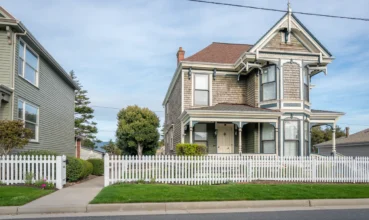
Rhode Island’s older housing stock — many homes built between 1900 and 1970, particularly around Providence and Woonsocket — means inspections are the most common point of failure. Buyers paying more than expected for a home that needs work often struggle to accept deferred maintenance.
“The more you’re paying for something, the more you expect out of it,” Patty says. “Even if your contract is for market value, sometimes people feel it’s so much more expensive than it was a few years ago that they want everything to be perfect, which is obviously unrealistic when you’re dealing with a house that might be a hundred years old.”
Investor Strategy
For investors considering Rhode Island, Patty draws a clear distinction between buy-and-hold and fix-and-flip strategies.
Buy-and-Hold: Go Bigger
On the buy-and-hold side, Patty steers clients away from one- and two-family properties. Cash flow on smaller residential rentals has become difficult to achieve after accounting for repairs, financing, and vacancy. His recommendation is to target four-, six-, and eight-unit apartment buildings, where per-door economics work more favorably and vacancy risk is spread across more units.
For investors sitting on appreciated smaller properties, Patty encourages 1031 exchanges as a path to scale. A two-family home purchased in 2016 for $200,000, with $100,000 in improvements, now worth $600,000 with $250,000 remaining on the mortgage, could generate roughly $300,000 in exchangeable equity. Deployed into a $1.2 million multifamily asset, that capital produces meaningfully better returns.
Commercial real estate pricing in Rhode Island has not moved significantly over the past six or seven years, while residential prices have nearly doubled in some segments — an entry point that no longer exists on the residential side.
Fix-and-Flip: Look Off-Market
For fix-and-flip investors, the MLS is producing some opportunities, and foreclosure activity is beginning to pick up. The best deals, however, come through off-market channels: auctions, direct-to-seller outreach, and private networks.
Policy and Rate Risks Ahead
Beyond inventory constraints, the most significant near-term risk Patty identifies is local policy. Proposed rent control measures in Providence, along with other legislation he views as unfriendly to development, represent a potential headwind for a market that has only recently regained momentum.
“If they go and try to kill it off by doing things like rent control or community first right of refusal acts, that will hurt our market,” Patty says. He is involved with a coalition of housing providers working to educate policymakers on the consequences of such measures. He believes the current proposals are likely to be defeated but notes that the same proposals keep returning — an issue warranting attention from anyone with exposure to the Providence market.
Patty noted that any meaningful decline in interest rates would likely unlock pent-up supply on the sidelines, increasing transaction volume while potentially moderating price growth.
Market Outlook
Rhode Island’s housing market has moved well beyond its reputation as a place people leave. Rising demand from out-of-state buyers, a constrained supply that continues to support prices, and growing investor interest in higher-density properties all point to a market in the middle of a structural shift rather than a temporary cycle.
The challenges ahead are real. Inventory remains far below what a balanced market requires, policy proposals in Providence could slow the development momentum the state has built, and interest rates continue to shape what buyers and sellers are willing to do. How those variables resolve over the next year will determine whether Rhode Island’s growth broadens or stalls.
What is clear is that the state’s small size, relative affordability, and improving urban core have placed it on the radar of buyers and investors who would not have considered it a decade ago. For those paying attention to where people and capital are moving, Rhode Island is no longer easy to overlook.
About the Expert: Matthew Patty is the broker and team leader of the Matt Patty Team within Real Broker LLC, operating Real Vision Properties across Rhode Island, Massachusetts, and Connecticut. His team includes roughly 95 agents with offices in Cranston and Warwick, Rhode Island.
This article is based on information provided by the expert source cited above. It is intended for general informational purposes only and does not constitute legal, financial, or real estate advice. Readers should conduct their own research and consult qualified professionals before making any real estate or financial decisions.