The Washington, DC commercial real estate market is often associated with its proximity to federal agencies and Fortune 500 headquarters. For The Ellitan Group, however, success comes from b...

Real Estate Veterans Launch Dual Franchise Model for a Changing Market

Written by:
Date:
30 Jan 2026
Share via Facebook

Share via Linkedin

Share via X

Copy to clipboard


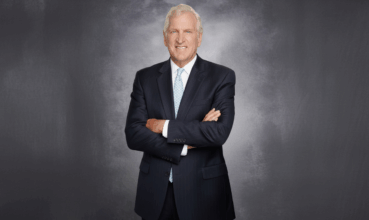
The real estate franchise landscape is undergoing significant change as experienced leaders seek alternatives to the dominant national brands. Jay Olshonsky, a 43-year commercial real estate veteran and former CEO of NAI Global, has placed himself at the forefront of this shift by acquiring Sperry Commercial Real Estate and partnering in the Sea Glass residential franchise. His approach unites two targeted brands under one leadership team, aiming to serve both lifestyle-focused residential markets and local commercial clients.
A Career Shaped by Industry Change
Olshonsky’s career reflects the changing face of real estate over the past four decades. He held key management roles at CBRE, including running its Washington, D.C. office, before serving as president and CEO of NAI Global from 2012 to 2024. At NAI Global, he led a network of independently owned commercial real estate firms across more than 40 countries, building operational scale and global reach.
After leaving NAI Global in 2024, Olshonsky founded Forty Two Plus LLC, a consulting firm advising residential and commercial brokerages on growth, operations, and strategy. This consulting work led directly to his latest venture.
In late 2025, Olshonsky partnered with Nick Vanassche, owner of Sea Glass, to acquire Sperry Commercial Real Estate. The pair now operates both the Sea Glass residential brand and the Sperry commercial brand, each targeting distinct but complementary market segments.
“We’re building for the next 20 years, not just the next few,” Olshonsky says, emphasizing the long-term vision behind the partnership. Vanassche, at 39, brings a younger perspective and experience in property technology, complementing Olshonsky’s decades of industry leadership.
Lifestyle-Driven Residential Expansion
Sea Glass sets itself apart by focusing on lifestyle markets rather than competing directly with national mega-brands. Founded in the U.S. Virgin Islands, the brand targets buyers and sellers who prioritize lifestyle over job-driven relocations.
“Sea Glass was born out of the residential real estate of the Caribbean. All of the real estate where Sea Glass was born is around lifestyle. People live on the islands not because there are huge job opportunities. They want a lifestyle. They want to be near the water,” Olshonsky explains.
This strategy has shaped Sea Glass’s franchise footprint, which includes Martha’s Vineyard, Amelia Island, Fort Myers, the mountain regions of Virginia, and the Charleston coast. New franchise opportunities are under consideration in Newport, Rhode Island, and along Connecticut’s shoreline. Recent inquiries have come from the California coast, Ozark lakes, Finger Lakes, and ski towns, all reinforcing the brand’s focus on lifestyle-driven locations.
Commercial Real Estate with a Local Focus
Sperry Commercial Real Estate operates with 42 franchisees and targets local and regional markets that are often overlooked by industry giants such as CBRE, JLL, and Cushman & Wakefield. The brand avoids direct competition with these firms by focusing on non-institutional clients and transactions, providing services tailored to local business owners and investors.
“We want to really cater to places where we’re not competing with CBRE, Jones Lang LaSalle, or Cushman & Wakefield. Really more on the local, non-institutional aspects of commercial real estate,” Olshonsky says.
This approach allows Sperry to serve communities and clients who may not receive personalized attention from larger firms. The focus is on practical, relationship-based brokerage rather than large-scale institutional deals.
Appeal for High-Performing Teams
Both Sea Glass and Sperry offer high-performing real estate teams the chance to move beyond traditional team structures and become complete franchise owners. Olshonsky says the franchise model gives these teams control over their businesses while providing essential infrastructure.
“To a top-performing team, to become a franchise, they get to own their own business and control every aspect of it. It gives them a business-in-a-box. We have all the tools and different things to help you quickly establish that,” he says.
Franchisees benefit from systems for onboarding, marketing, legal compliance, and training, but retain control over commission splits and daily operations. The network effect is powerful in lifestyle markets: buyers and sellers in one Sea Glass market often have connections to others, creating natural referral opportunities.
Technology as a Competitive Edge
Both brands prioritize technology integration to support franchisees and keep pace with rapid industry changes. Olshonsky notes that technology adoption is no longer optional, as artificial intelligence, automation, and advanced lead generation reshape how real estate is conducted.
“If anything is changing faster than anything, it’s technology in everything, but in particular, in real estate. You can’t ignore it anymore. If you’re not paying attention to what really can be done, someone’s going to use it and be better than you,” he says.
Franchisees receive access to vetted third-party technology solutions at reduced costs, including customer relationship management, marketing automation, and AI-driven lead generation. Vanassche’s involvement in other property technology ventures gives the brands insight into future trends and tools.
Operational Efficiencies with Distinct Brands
Although Sea Glass and Sperry maintain separate brands, staff, and client bases, they share specific operational resources to improve efficiency. Areas such as legal compliance, banking, HR, and marketing benefit from shared processes and vendor relationships.
“These are separate brands and separate identities, separate staffing,” Olshonsky clarifies. “But where we can share or where we can synergize, we will. There are areas in franchising where legal requirements apply – if you’re doing one, it’s just as easy to do two.”
Olshonsky serves as CEO of both entities, while each maintains its own president to oversee day-to-day operations. This structure allows for coordinated strategy while preserving each brand’s market focus.
Early Momentum and Expansion Plans
Initial market response to the dual franchise model has been strong. The companies are actively pursuing franchise growth using a mix of technology-driven lead generation and traditional marketing. They are seeing interest from teams seeking to build equity and autonomy within a structured system.
“We are finding that there is pent-up demand based on the initial responses we’re getting. There are people interested, and we’ve had lots of inquiries saying ‘that sounds like something I might want to be interested in,’” Olshonsky reports.
The immediate focus is on supporting existing franchisees and expanding both networks by targeting qualified teams and operators. Olshonsky prioritizes consistent execution, noting that decision-making in real estate rarely carries life-or-death consequences. “Nobody dies on any decisions we make. So let’s keep moving to the next one,” he says, referencing a lesson from a former colleague.
Timing and Market Opportunity
This dual-franchise approach comes as the real estate industry faces a generational transition and increased consolidation among the most prominent brands. Many firms remain owned by older generations, and Olshonsky sees a clear opportunity to attract new leaders seeking alternatives to mega-brokerages.
“Most real estate firms are owned by people older, and that is a generational shift that’s coming. I can’t tell you it’s one year or two years, but it’s coming,” he observes.
By combining Olshonsky’s experience with Vanassche’s perspective and technology background, the brands are positioned to serve both established and emerging real estate professionals who want to build something of their own.
A Middle Path for the Next Era
For agents and teams seeking to avoid the limitations of large national companies without sacrificing infrastructure, the Sea Glass and Sperry model offers a middle ground. Both brands provide the systems and support of larger organizations while focusing on the personal service and local knowledge valued by independent operators.
As the real estate market adapts to new technologies, shifting consumer priorities, and leadership changes, Olshonsky’s dual-franchise strategy bets on the enduring importance of specialized market expertise and entrepreneurial ownership. The early interest from potential franchisees suggests strong demand for alternatives that balance scale with flexibility and a tailored approach.
Looking ahead, Olshonsky and Vanassche aim to expand both networks while maintaining the core values of personal service, market specialization, and operational autonomy. In an era of consolidation and rapid change, their dual-franchise strategy offers a clear model for how experienced leaders can shape the next chapter of real estate.
Similar Articles
Explore similar articles from Our Team of Experts.



Industry Profiles, Industry News, Commercial Real Estate, Market Analysis & Policy, Real Estate Investment
The Phoenix industrial real estate market is undergoing a significant shift as investors re-enter the scene, motivated by stabilizing interest rates and appealing prospects in off-market tra...