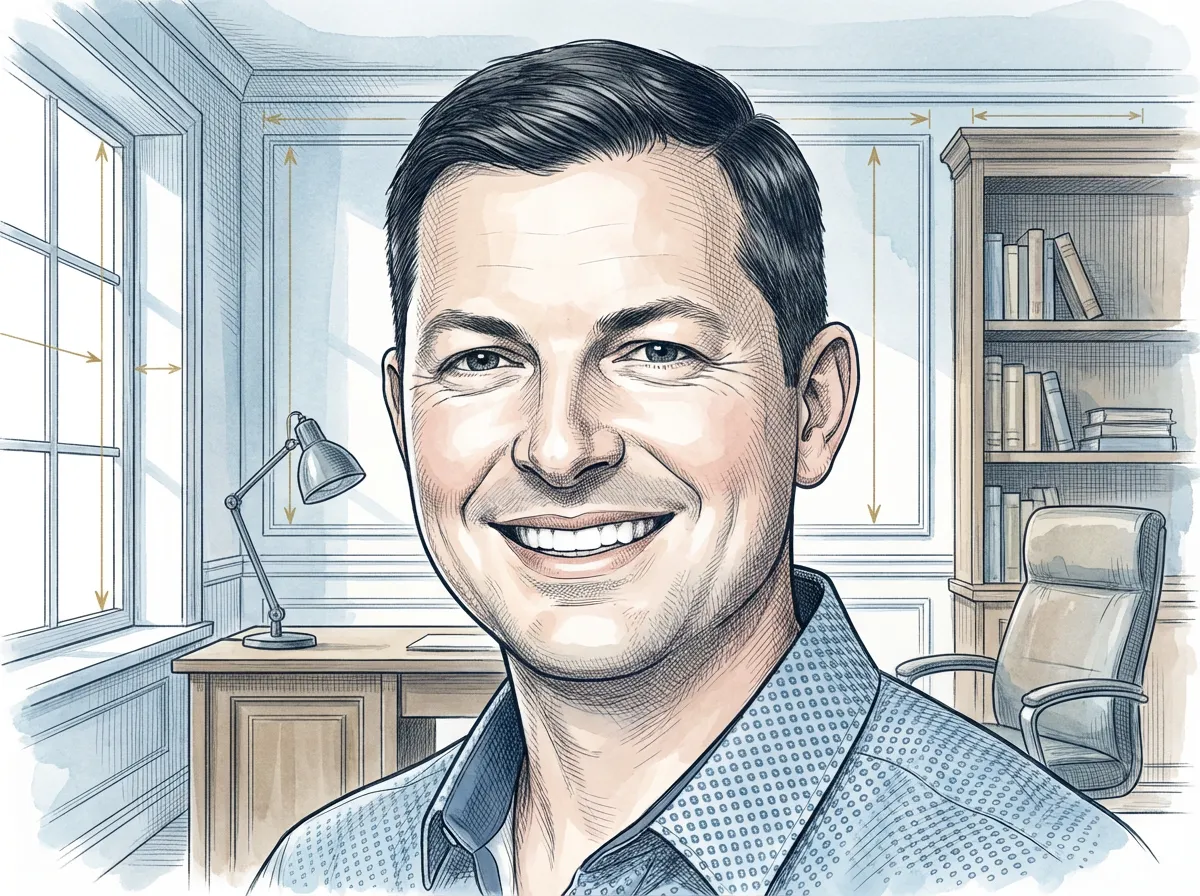
The real estate industry has long struggled with a high failure rate, with nearly 90% of agents leaving the business. For Ricky Carruth, now Chief Housing Analyst at RLTYco and Chief Ambassador of the American Real Estate Association, statistic reflects a deeper issue in how agents are trained to succeed. After losing everything during the 2008 financial crisis and rebuilding his career to become a top-performing agent in Alabama, Carruth now coaches agents to rethink their approach. His core message is simple: long-term success comes from understanding people, not mastering sales techniques.
“Our job as an agent is not to sell houses,” Carruth says. “It’s to help people do what they already want to do, for their reasons.”
Real Estate’s High Failure Rate
Traditional real estate training focuses on transactions. Agents are taught how to generate leads, handle objections, and close deals. While these skills matter, they often miss the bigger picture: why clients are making decisions in the first place.
Carruth argues that this gap explains why so many agents struggle. A transaction-first mindset treats each deal as isolated, with success tied to immediate results. In contrast, a relationship-driven approach builds long-term stability by focusing on people instead of individual sales.
Transactions Start With Life Events
At the center of this shift is a simple insight: real estate transactions are driven by life changes, not property features.
“A listing is a written agreement in which a property owner hires you to solve a problem,” Carruth explains. “Something is going on in their life that’s causing them to sell. They don’t just wake up and decide to sell for no reason.”
These triggers often include major events such as job relocations, family changes, financial decisions, or shifts in lifestyle. The property is not the starting point. It is part of the solution.
This perspective changes how agents engage with clients. Instead of focusing on pricing or market data first, effective agents ask better questions. “What’s happening in your life that’s leading you to make this move?” Carruth says. The answer shapes every step that follows.
Relationships Outperform Leads
The shift from transactions to relationships also changes how agents build their business over time.
Carruth emphasizes what he calls “compounding relationships,” where consistent communication creates long-term opportunities. Instead of chasing new leads every day, agents focus on staying connected with the people they already know.
“The year you make a million bucks will not be from the leads you got that year,” he says. “It’s from all the leads you got in the years leading up to it.”
This approach relies on consistency rather than complexity. Simple systems, such as regular outreach, help agents remain visible and relevant. Over time, this builds trust and keeps them top of mind when clients are ready to act.
“When you do it every week on the same day, people see consistency, dependability, and honesty,” Carruth says. “It does the heavy lifting for you at scale.”
Fundamentals Outlast Market Cycles
A relationship-driven strategy also creates resilience. While markets rise and fall, real estate activity never stops entirely.
Carruth points out that even during major economic downturns, millions of homes are sold each year in the United States. This reinforces a key idea: market conditions may influence volume, but they do not eliminate opportunity.
“If the market’s down, your business doesn’t have to be down,” he says. “Deals happen every single day, no matter what’s going on.”
Agents who focus on relationships and consistent communication are better positioned to navigate uncertainty. Their business is not tied to short-term fluctuations but to long-term trust.
Technology Widens the Gap
As technology and artificial intelligence reshape the industry, the gap between high-performing agents and struggling ones is growing.
Carruth notes that many agents currently have no active listings or transactions. At the same time, those who adapt are able to handle more clients and close more deals in less time.
“Technology and communication tools are advancing so fast,” he says. “Agents who adapt can gain market share, while the rest are left behind.”
Rather than replacing agents, these tools amplify existing habits. Agents who already prioritize relationships and consistency benefit the most, while those relying on outdated methods fall further behind.
About the Expert: Ricky Carruth is a real estate coach and former top-performing agent based in Alabama. After rebuilding his career following the 2008 financial crisis, he has spent years training agents to focus on relationship-driven growth and long-term business fundamentals.
This article is based on information provided by the expert source cited above. It is intended for general informational purposes only and does not constitute legal, financial, or real estate advice. Readers should conduct their own research and consult qualified professionals before making any real estate or financial decisions.