Land investors have historically had two options: buy raw acreage and wait years for appreciation, or skip the asset class because of the carrying costs. That binary is changing. As lending standards tighten and interest rates stay elevated, a growing share of land transactions are structured so the seller, not a bank, acts as the lender. That generates income from the point of sale rather than years down the line.
The shift shows up across the land-investing niche. Guides on seller financing, owner financing, and no-credit-check purchases have proliferated as buyers who can’t clear bank underwriting look for alternatives. Sellers, meanwhile, are discovering that offering terms moves inventory faster and closer to asking price. It’s a structural response to tighter credit conditions, not a single investor’s innovation. Still, it’s easiest to see in the mechanics of how individual practitioners run it.
Mark Podolsky, founder of Frontier Equity Properties, has closed more than 6,500 land deals using this model and offers one detailed account of how the math works in practice.
Why Land Banking Fails
The traditional land-banking model deserves the skepticism it gets: acquire a large parcel, hold it through years of negative cash flow, and wait for development pressure to create appreciation. The land produces nothing in the interim, and property taxes accrue the entire time. “If I were a financial advisor, I would say it’s a terrible investment for you, and you shouldn’t do it,” Podolsky says of that specific approach.
The critique is aimed at a strategy, though, not the asset class. According to Podolsky, that distinction often gets lost. Land banking’s poor track record gets generalized into a dismissal of raw land altogether, while a structurally different approach goes largely unexamined.
The Seller-Financing Alternative
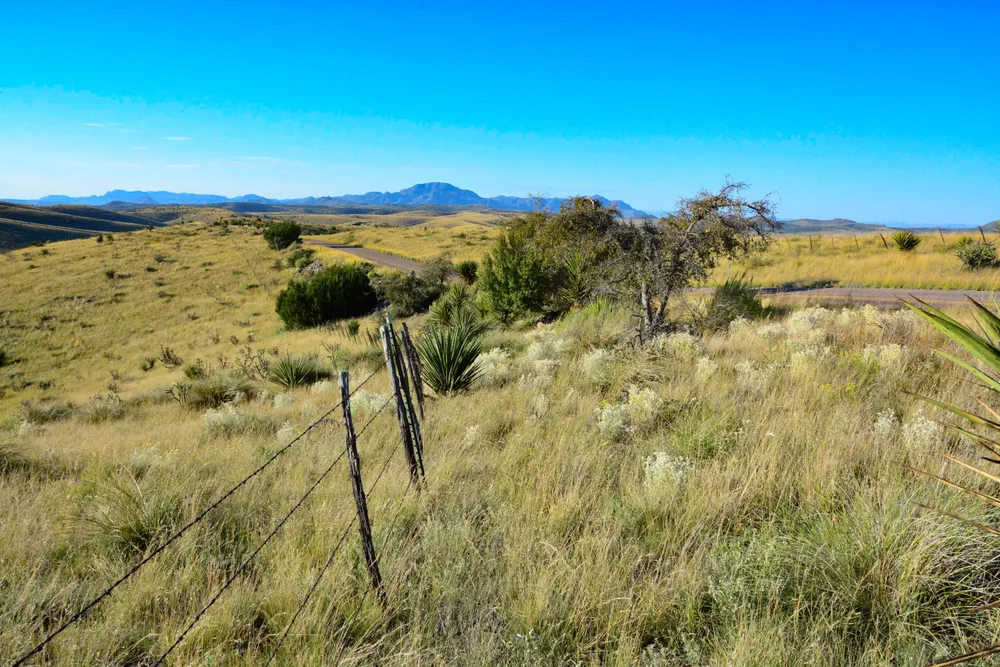
Rather than waiting on appreciation, this model generates cash at the point of sale. An investor acquires distressed parcels at a steep discount, often parcels where owners owe back taxes and risk losing the land at auction. The investor then resells using seller financing, structured to return the purchase price immediately and produce recurring income afterward.
Sourcing land through tax delinquency is itself a documented acquisition channel in this space. Counties across the country auction tax-deed and tax-lien properties every year specifically because owners have fallen behind on payments, and investors have built entire playbooks around bidding at those sales.
Podolsky describes one deal this way: a five-acre parcel purchased for $2,500, against comparable sales of about $10,000. He resold it for a $2,500 down payment, recovering his acquisition cost immediately, followed by roughly $399 a month at 9% interest over 60 months. Because the down payment recovers the cost basis up front, the investor has no net capital at risk during the note period. The monthly payments become yield on a position that has already paid for itself.
Podolsky compares the cash flow to a rental property, minus tenant management, maintenance, and landlord-tenant compliance. Because no dwelling is involved, he says the arrangement falls outside Dodd-Frank and SAFE Act requirements that govern residential seller financing, reducing the legal overhead relative to financing a house.
Where Buyer Demand Concentrates
Recreational, off-grid, and investment-oriented land purchases have been drawing sustained buyer interest in specific regions, and Podolsky’s own acquisition and resale focus tracks that pattern. He calls his primary target markets the “Sunshine states”: Arizona, Nevada, New Mexico, Colorado, Texas, and lower-cost parts of California and Florida. He also cites Midwest growth markets like Missouri, Tennessee, and Oklahoma.
Buyer profiles Podolsky describes range from military families relocating to rural properties, to remote workers seeking acreage, to recreational users and other investors. “I’ve never been stuck with a piece of raw land,” he says. “There’s literally a pig for every barn.” When parcels go to market, his disposition sequence runs from neighboring landowners, to an existing buyers list, to Facebook marketplace groups, and finally to land-specific platforms.
Inflation Drives Acquisition Costs
Land’s fixed supply has made it a commonly cited inflation hedge, and rising acquisition costs are one of the more concrete signs of that dynamic playing out at the ground level. Podolsky says parcels that cost $2,500 in some counties a year ago now run closer to $10,000, pushing resale prices higher for end buyers.
That, in his account, has shifted the market into a phase where land is easier to buy than to sell. Sellers are more willing to transact at current prices, but buyers need more time, or more favorable terms, to close. His adjustment has been extending loan terms to keep monthly payments affordable, while holding the down payment and interest rate steady. He says buyer pushback on financing terms hasn’t materialized: down payments, monthly amounts, and sell-through rates have held steady year over year.
A Common Early Mistake
According to Podolsky, first-year land investors tend to fail in one of two ways. The first is stopping deal flow after a single acquisition: sending mail, waiting six to eight weeks for responses, buying one parcel, and then not mailing again, which cuts off the pipeline the business depends on. “Now I’m Chick-fil-A with no chicken because I’ve literally stopped my deal flow,” he says. The second is inadequate market education: not understanding comparable sales, county-level dynamics, or due diligence requirements before committing capital.
Seller financing didn’t emerge because one investor found a clever workaround. It’s a response to a lending environment that has made traditional land loans harder to get, at a time when fixed land supply keeps the asset attractive against inflation.
Podolsky expects technology, AI in particular, to make sourcing and underwriting land deals cheaper and faster across the industry. At the same time, the underlying appeal stays the same regardless of who’s running the deal. “People will always want a real asset, and they’ll always want a good deal,” he says. “As long as those two things remain true, I think we’re in a good market, and we’re in a good niche.”
About the Expert: Mark Podolsky is the Founder of Frontier Equity Properties. This firm acquires distressed and tax-delinquent land parcels and resells them to end buyers on seller-financed terms.
This article is intended for informational purposes only and does not constitute legal, financial, or investment advice. The views and opinions expressed herein reflect those of the individuals quoted and do not represent an endorsement of any company, product, or service mentioned. Readers should conduct their own due diligence and consult qualified professionals before making any investment decisions.